Al-Alimi Reaffirms Pledge to Restore State Authority After Coastal Collapse

Yemen’s Presidential Leadership Council chairman Rashad al-Alimi reaffirmed on Sunday, September 13, that battlefield reversals would not change the goal of restoring state authority nationwide, following the collapse of government defences along the western coast and the Houthis’ reported advance to Bab al-Mandab.
Describing recent territorial shifts as temporary, Al-Alimi stressed the importance of unified decision-making, military cohesion and regaining the initiative. His remarks came during telephone calls with presidential council members, the prime minister, military commanders and local officials to review developments on the frontlines, combat readiness and the government’s response to the Houthi escalation.
Against that backdrop, Al-Alimi said the course of the wider conflict would be determined by resolve, a common objective and the ability to learn from setbacks and rebuild strength. His emphasis on cohesion and maintaining the state’s declared objectives suggests an effort to prevent the coastal losses from undermining the broader campaign or being accepted as a permanent territorial settlement.
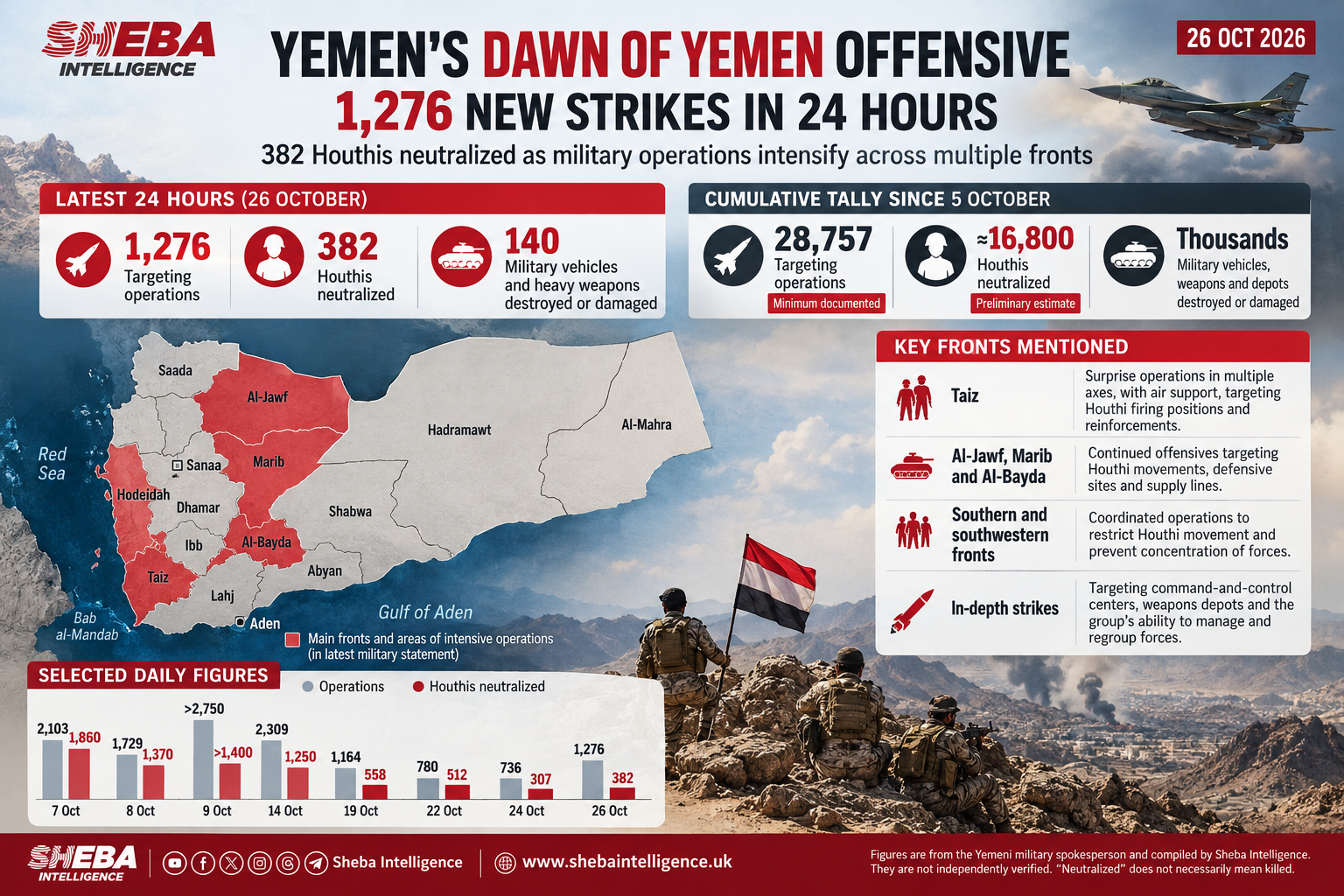
He praised the role of the air force and drones in supporting ground troops and targeting Houthi military capabilities, alongside operations in Marib, Al-Jawf, Taiz, Al-Bayda and Al-Dhalea.
That emphasis on operations across several fronts echoed the National Defence Council’s earlier position that the military response would not be confined to one area and that temporary Houthi advances would not give the group the right to impose lasting political or territorial changes. The military had also announced a targeting zone around Mokha, signalling preparations for intensified operations against Houthi movements following the withdrawals.
The latest remarks also followed Al-Alimi’s September 10 appeal to European diplomats for stronger international support, when he linked Yemen’s defence of Bab al-Mandab to the protection of global trade and energy supplies. He warned against allowing the strait to become another Hormuz or Yemen to serve as a platform for Iranian geopolitical pressure.
Alongside the military response, Al-Alimi called for coordinated security, political and economic efforts to keep state institutions functioning. He instructed the government and local authorities to maintain basic services, pay public-sector salaries, secure essential supplies and promptly implement the cabinet’s measures addressing the latest developments.