Bab al-Mandab at UN Security Council: Calls for Houthi Withdrawal, Deterrence and Tighter Arms Embargo Enforcement
Escalating threats to Bab al-Mandab and the Red Sea dominated an emergency UN Security Council meeting on Yemen on September 15, 2026, as Yemen called for stronger deterrence, the United States demanded Houthi withdrawal from seized territory, and Saudi Arabia warned against using international straits to exert pressure on the global economy.
The interventions reflected broad opposition to threats against shipping and attacks on civilians, but differing approaches to containing the escalation. Several countries pressed for an end to military support for the Houthis and stronger sanctions enforcement, while Russia and China emphasized de-escalation and negotiations.
Yemen: Strengthening the State to Protect Shared International Interests
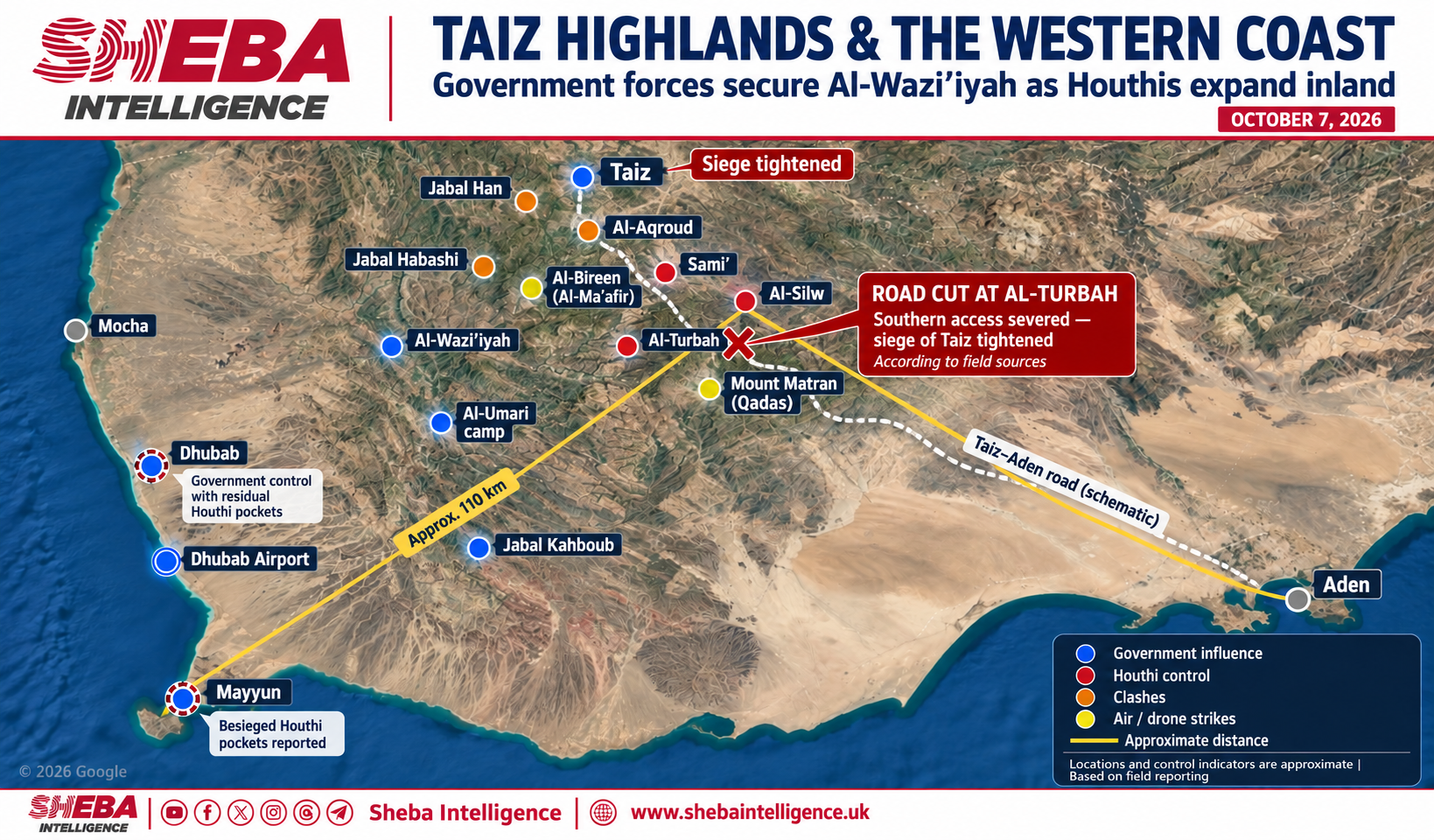
Yemen’s Permanent Representative, Abdullah al-Saadi, said developments along the western coast had moved beyond an internal crisis, threatening international trade, energy supplies and regional security. He said the government was reorganizing its capabilities and working to regain the initiative, while preventing the Houthis from turning their coastal presence into a permanent platform for threatening Bab al-Mandab.
Al-Saadi called for a deterrence framework combining effective enforcement of the arms embargo, disruption of financing and smuggling networks, restrictions on military technology and expertise, and stronger Yemeni armed forces, naval and coastguard capabilities.
He presented maritime security as a shared responsibility, arguing that Yemeni forces were bearing costs in defence of interests extending far beyond the country’s borders.
He also highlighted a less prominent risk: the potential emergence of interconnected extremist and criminal networks across both shores of Bab al-Mandab, extending the threat into the Horn of Africa. He linked attacks on Saudi Arabia and energy infrastructure to efforts to increase the international economic costs of pressure on Iran.
Saudi Arabia: Maritime Security Requires International Responsibility
Saudi Permanent Representative Abdulaziz Alwasil warned that the Houthis and their backers were pursuing the militarization of international straits to pressure global trade and supply chains. Protecting the Red Sea, Bab al-Mandab and the Gulf of Aden, he said, could not be left to regional states alone.
Alwasil pointed to the Kingdom’s launch of a multinational maritime defence coalition and reaffirmed its right to take measures to protect its territory and citizens.
He nevertheless linked a lasting response to maritime threats to stability in Yemen and a settlement of its conflict, reiterating Saudi support for Yemen’s unity, sovereignty and institutions.
Washington and London: Withdrawal and an End to Iranian Support
The United States demanded that the Houthis halt their advances, withdraw from seized territory and cease attacks. It reaffirmed support for Yemen’s government, accused Iran of arming, financing and directing the group, and called for an end to that support and effective implementation of Security Council resolutions 2140 and 2216.
The United Kingdom held the Houthis fully responsible for the escalation and affirmed the right of Yemen and Saudi Arabia to defend their security and sovereignty in accordance with international law.
London said Iranian support continued to enable Houthi attacks and argued that progress toward peace remained obstructed by the group’s military offensive, strikes against Saudi Arabia, threats to shipping and interference with humanitarian operations.
The statement provided clear political support for Yemen’s government, but did not itself constitute a pledge of new military intervention or a Security Council authorization.
European States Reject Restrictions on Maritime Passage
France called on Iran to stop arming the Houthis, rejected unilateral restrictions on passage through international straits, and reaffirmed its continued participation in the EU’s defensive naval operation, ASPIDES.
Greece opposed unlawful fees, prior authorization requirements and discriminatory restrictions on transit, while Denmark stressed that neither the Houthis nor Iran should be allowed to undermine freedom of navigation.
These positions carry particular significance amid concerns that territorial control along Yemen’s coast could be used to impose conditions on commercial shipping.
Bahrain and Latvia Focus on Sanctions Enforcement Gaps
Bahrain proposed expanding sanctions designation criteria to cover drone attacks, strengthening arms embargo enforcement mechanisms, and broadening reporting to document attacks on neighbouring states and their critical infrastructure.
Latvia argued that an arms embargo cannot serve its purpose without full and collective enforcement. It identified continued weapons transfers and other support, including from Iran, as factors sustaining the fighting.
The emphasis shifted attention from the existence of Security Council measures to their implementation and the disruption of supply networks.
Russia and China Emphasize a Negotiated Settlement
Russia directly urged the Houthis to stop threatening commercial vessels, but cautioned against hasty Council action, citing what it described as the misinterpretation of resolution 2722. Iran did not deliver a statement at the meeting.
Moscow reiterated support for inclusive UN-led political dialogue involving the Houthis, with an active role for regional states capable of influencing Yemen’s parties. Its position maintained the group’s place in a negotiated settlement while rejecting attacks on civilian shipping.
China focused on protecting civilians and critical infrastructure and returning to negotiations to address the underlying conflict. It expressed concern over deteriorating conditions around Bab al-Mandab and their impact on commercial shipping.
Displacement Rises as the Crisis Spreads Across the Red Sea
Assistant Secretary-General Khaled Khiari told the Council that at least 125,000 people had been displaced inside Yemen since the beginning of September, while approximately 2,300 people had reached Djibouti by September 14.
He described intensified fighting and a government counteroffensive, calling for civilian protection and safe, unimpeded humanitarian access.
On maritime traffic, Khiari said tracking data suggested commercial shipping flows through the Red Sea appeared unaffected at the time of his briefing, despite mounting risks and market concerns. His observation underscored the distinction between an escalating threat to the route and evidence of an actual interruption to shipping.