Continued Airstrikes on Yemen Signal Long U.S.-Houthi Conflict
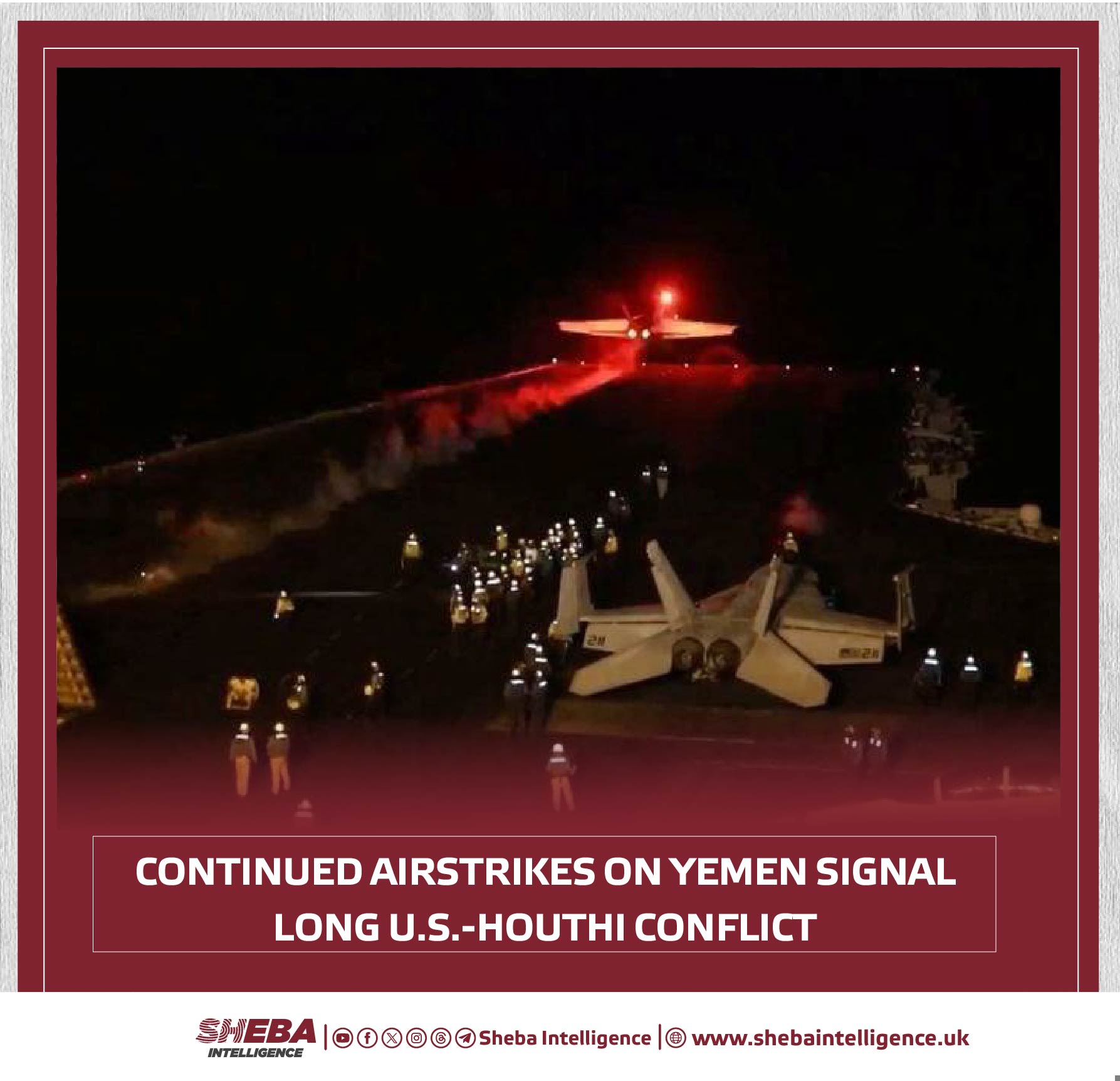
The U.S. military operations in Yemen have continued since last week as air strikes keep bombing several sites of the Ansar Allah (Houthi) group. The sixth aerial operation occurred on Friday when the U.S. Navy launched air raids on Houthi missile centers in Yemen.
A statement by the U.S. Central Command said today, "On January 19 at approximately 6:45 p.m. (Sanaa time), U.S. Central Command forces conducted strikes against three Houthi anti-ship missiles that were aimed into the Southern Red Sea and were prepared to launch."
It added, "U.S. forces identified the missiles in Houthi-controlled areas of Yemen and determined that they presented an imminent threat to merchant vessels and the U.S. Navy ships in the region."
Houthi-run media outlets said the "American aggression" launched two strikes on Al-Hudaydah city on Friday.
Lately, Sheba Intelligence has tracked the transfer of missiles from strategic depots in Sanaa to launch centers in Al-Hudydah, from which most missiles are fired toward ships in the Red Sea.
On Thursday, U.S. forces conducted strikes on two Houthi anti-ship missiles that were aimed at the Southern Red Sea and were prepared to launch, according to the U.S. Central Command.
Since Friday, January 12, the U.S. air strikes on the Iran-backed Houthis have not stopped. Three Houthi assaults on the Red Sea and the Gulf of Aden have been reported since the start of the U.S. air strikes.
While the U.S. began its strikes on Yemen to degrade the Houthi military capabilities, this American objective remains unfulfilled so far. This will push Washington to keep bombing Houthi sites, which is a recipe for a prolonged American operation in Yemen.
The Houthi leadership has belittled the impact of the U.S. airstrikes, asserting that such attacks have not damaged or ruined their military capabilities.
The Leader of the Houthi group, Abdulmalek Al-Houthi said in a broadcast speech on Thursday, "In the first round of [U.S.] raids,… the Americans portrayed to the world that they had targeted our missile launchers and missile capabilities. But they ultimately admitted that they had not achieved this goal."
According to Al-Houthi, the continuation of "the American-British aggression will contribute" to developing the group's military capabilities.
White House spokesman John Kirby said on Friday that the U.S. strikes have had "good effects on degrading some of these Houthi capabilities. However, he indicated that the Houthis still have some offensive capability. He said "additional options available" to confront the Houthi attacks.
President Joe Biden admitted on Thursday that the U.S. air strikes in Yemen are not actually affecting the Houthi military force. Yet he vowed to continue the strikes.
When Biden was asked whether the American aerial operations in Yemen have been "working." He replied, "Well, when you say 'working,' are they stopping the Houthis? No. Are they going to continue? Yes." This may be explained that the American airstrikes which had been conducted have not destroyed the Houthi capabilities, and more strikes will be launched to realize the desired goal.
The Houthi involvement in the Gaza-Israel war has enabled the group to mobilize more fighters. On Friday, the group organized a military maneuver in Manakha District in Sana'a province under the slogan "Ready for the Battle of the Promised Conquest and Holy Jihad."
According to the Houthi-run Saba News Agency, heavy weapons in the maneuver were used to bomb the enemy's virtual targets and destroy its positions in a large geographical area in the mountains.
The Iran-backed Houthis say their attacks on shipping lanes in the Red Sea are aimed at pressuring Israel to end its war on Palestinians in the Gaza Strip.