Enemy Neutralization: The Strategy of Yemen's Warring Sides After the Breakout of the Hamas-Israel War
The parties to the conflict in Yemen have begun attempting to get rid of tensions on multiple fronts, believing that stopping the internal strife now is vital to prevent losses in light of the military developments taking place in the region, particularly the Israeli war on Gaza, which broke out after Hamas fighters broke into Israeli settlements bordering the Gaza Strip October 7.
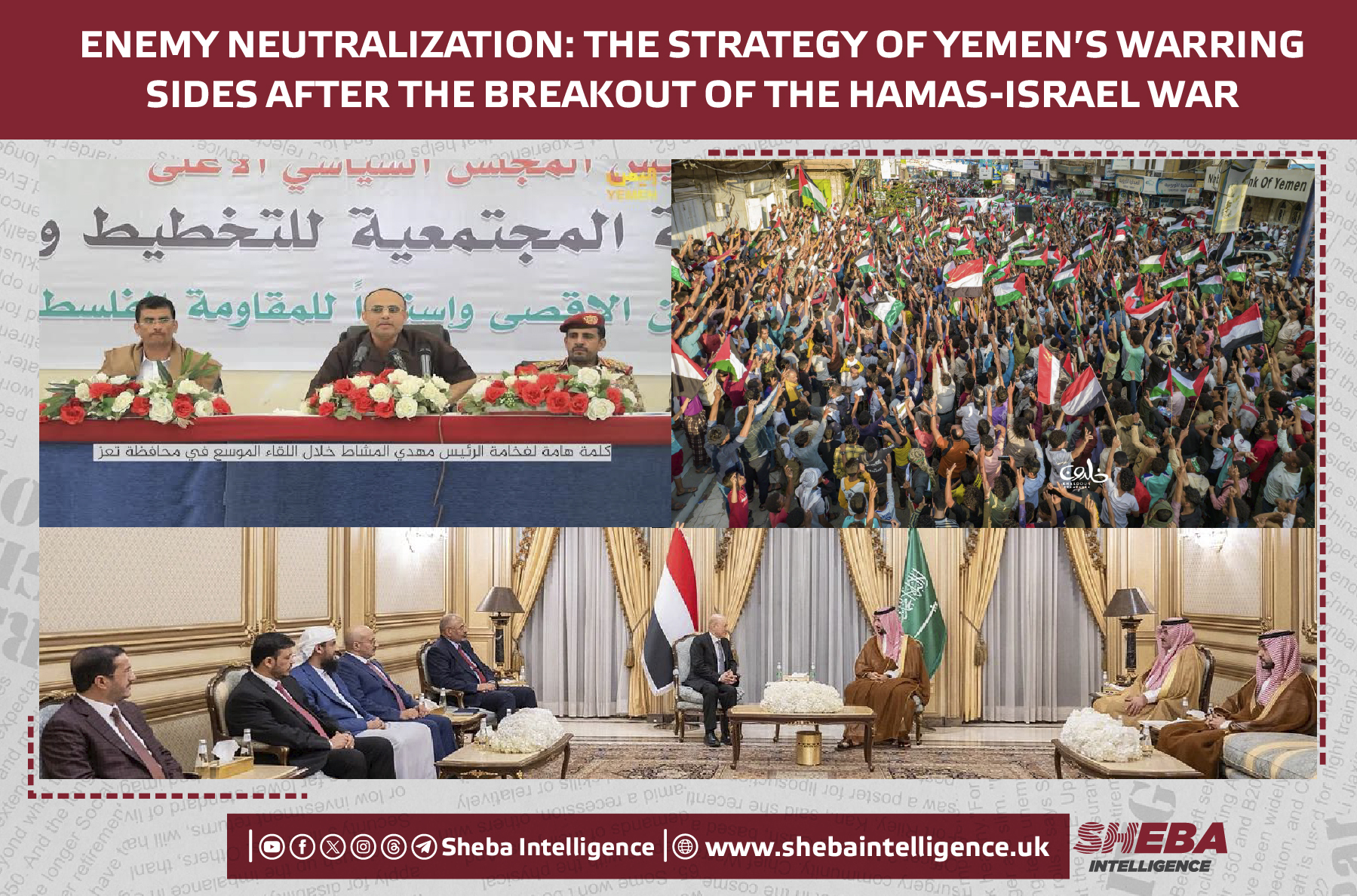
The Houthis are busy monitoring Bab al-Mandab and the Red Sea in preparation for strikes on American forces if Iran and Hezbollah enter the war against Israel. Therefore, the group seeksto overcome tensions with their rivals surrounding Bab al-Mandab. That is why the head of the Houthi Supreme Political Council chose Taiz to announce a peace initiative.
Al-Mashat said his initiative intends to "end all military fronts from all sides in Taiz in a way that contributes to the stability of the province and spares it conflict".
He indicated that the initiative will stop hostilities, neutralize the province, and and Taiz willbe managed jointly by the Houthi group and the Yemeni government.
This initiative is the first of its kind by the Houthis since their takeover of the capital, Sanaa in 2014. Over the past years, they had not shown their willingness to run territories in cooperation with their opponents.
The Houthis' message appears to be directed to the internationally recognized government and the Islah Party, which they accuse of controlling the city of Taiz.
Observers say the Houthis want to neutralize the government forces in the Taiz axis if they decide to attack Bab al-Mandab and block the movement of international forces there or if the Houthis are exposed to naval attacks by international forces.
Forces on Yemen's West Coast have not welcomed the Houthi initiative. Tareq Saleh, the commander of the West Coast Forces and a member of the Presidential Leadership Council (PLC), said Wednesday on platform X that he supports all the efforts made by Saudi Arabia and the international community to achieve peace in Yemen. He does not believe in any Houthi initiatives.
However, Taiz governor Nabil Shamsan described the Houthi initiative as "a vague maneuver" that the Houthis will use to justify their targeting of Taiz.
Saudi Arabia is mainly concerned with the situation in Yemen, especially the repercussions of any move by Iran or its allies in Yemen and the region. Saudi Arabia is concerned that the Houthis will exploit the chaotic events in the region and fire missiles and drones under the pretext that the kingdom has not implemented its pledges.
After the Aramco attack that targeted the Abqaiq and Khurais refineries in September, Riyadh changed its strategy. It moved from direct war with the Houthis to containing to avoid more losses.
Israel's war on Gaza pushed Saudi Arabia to work harder on achieving peace with the Houthi group through direct negotiation. Therefore, Defense Minister Khalid bin Salman rushed to an urgent meeting with the Presidential Leadership Council (PLC) to push it to accept a peace roadmap with the Houthis.
On Tuesday, Farj Al-Bahsani, a deputy head of the PLC, said the negotiators who will engage in direct talks with the Houthis had been nominated. He said the peace roadmap focuses on the ceasefire, normalizing the situation, and reopening ports and airports. So far, it remains unclear when the Houthi and government delegations will meet.
While some officials express hope about peace, others say the peace deal with the Houthis is not possible. Defense minister Muhsen Al-Daeri said Thursday that the Houthis allege they have the divine right to govern people and do not recognize the other party. Accordingly, he said, it is impossible to reach an agreement with the Houthi group, no matter how much peace efforts are made.