Exclusive: Houthis Mobilize in Al-Jawf and Marib to Contain Al-Rayyan Tribal Crisis
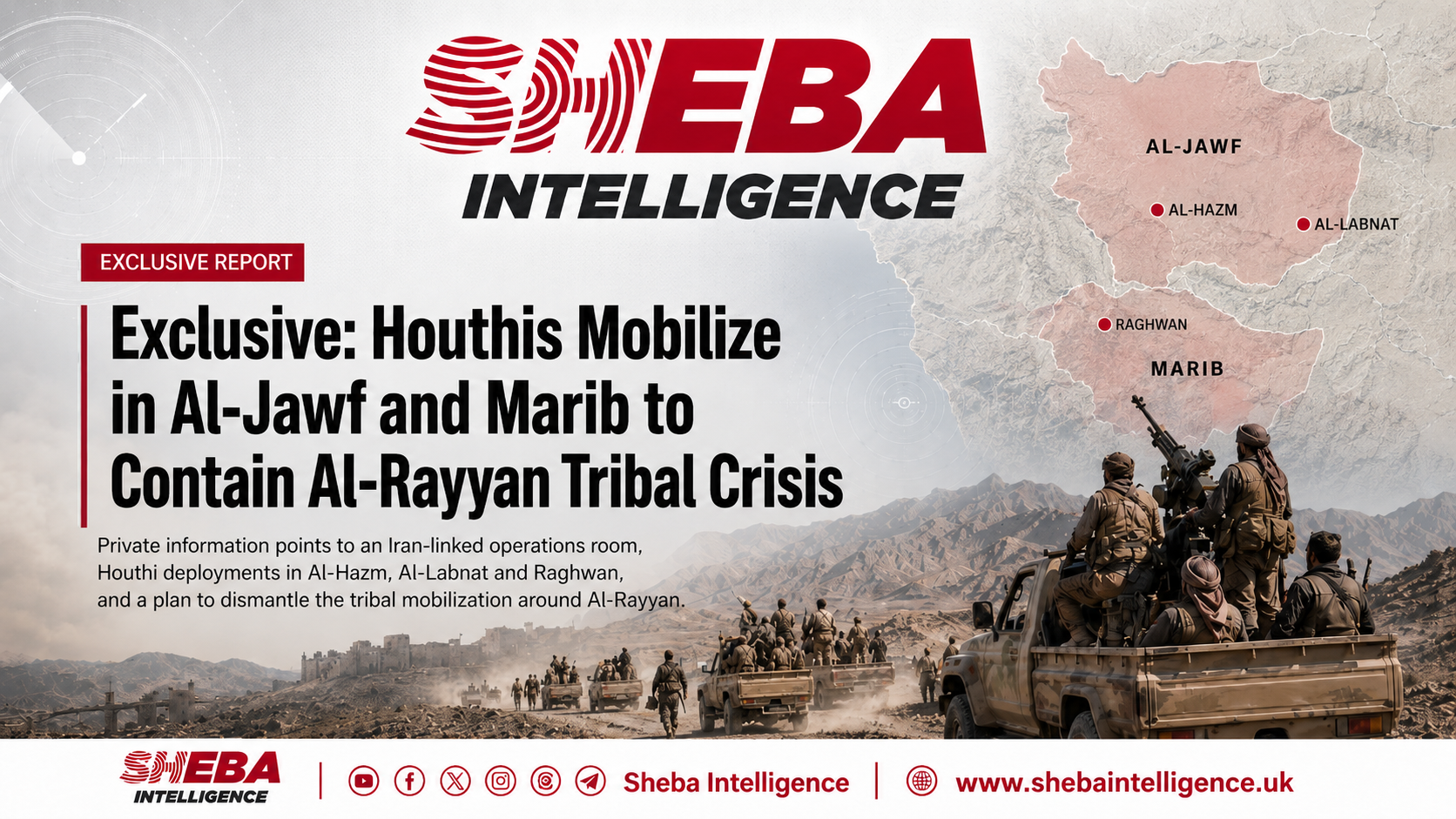
Exclusive information points to an Iran-linked operations room, Houthi deployments in Al-Hazm, Al-Labnat and Raghwan, and a plan to dismantle the tribal mobilization around Al-Rayyan before it develops into a wider armed challenge.
The Houthis are preparing for a broader security and military operation in Al-Jawf and Marib as the tribal crisis in Al-Rayyan continues to place the group under growing internal pressure, according to private information obtained by Sheba Intelligence.
The crisis centers on the case of Mira Saddam, whose fate has become a rallying point for tribal groups gathered in Al-Rayyan, in Al-Jawf governorate. The tribes have demanded that the Houthis reveal her fate and hand her over. Tribal sources say the group has fallen into a difficult position: handing her over could ease the confrontation, while refusing to do so has increased suspicions that she may have been killed, tortured or subjected to severe abuse.
The Al-Rayyan mobilization has become more than a local tribal pressure point. It is now seen by the Houthis as a potential trigger for wider tribal or military unrest inside their areas of control, especially if the gathering succeeds in forcing the group to retreat or concede. Sources say the Houthis fear that a successful tribal challenge in Al-Jawf could become a model for similar uprisings in other areas, particularly where resentment has grown over arrests, forced mobilization, economic pressure and the dominance of Houthi security networks.
Exclusive information indicates that the Houthis have mobilized forces in Raghwan in Marib, and in Al-Labnat and Al-Hazm in Al-Jawf. The deployments appear designed to contain the tribal mobilization, prevent it from expanding, and prepare for a possible offensive toward areas east of Al-Jawf that remain under government control.
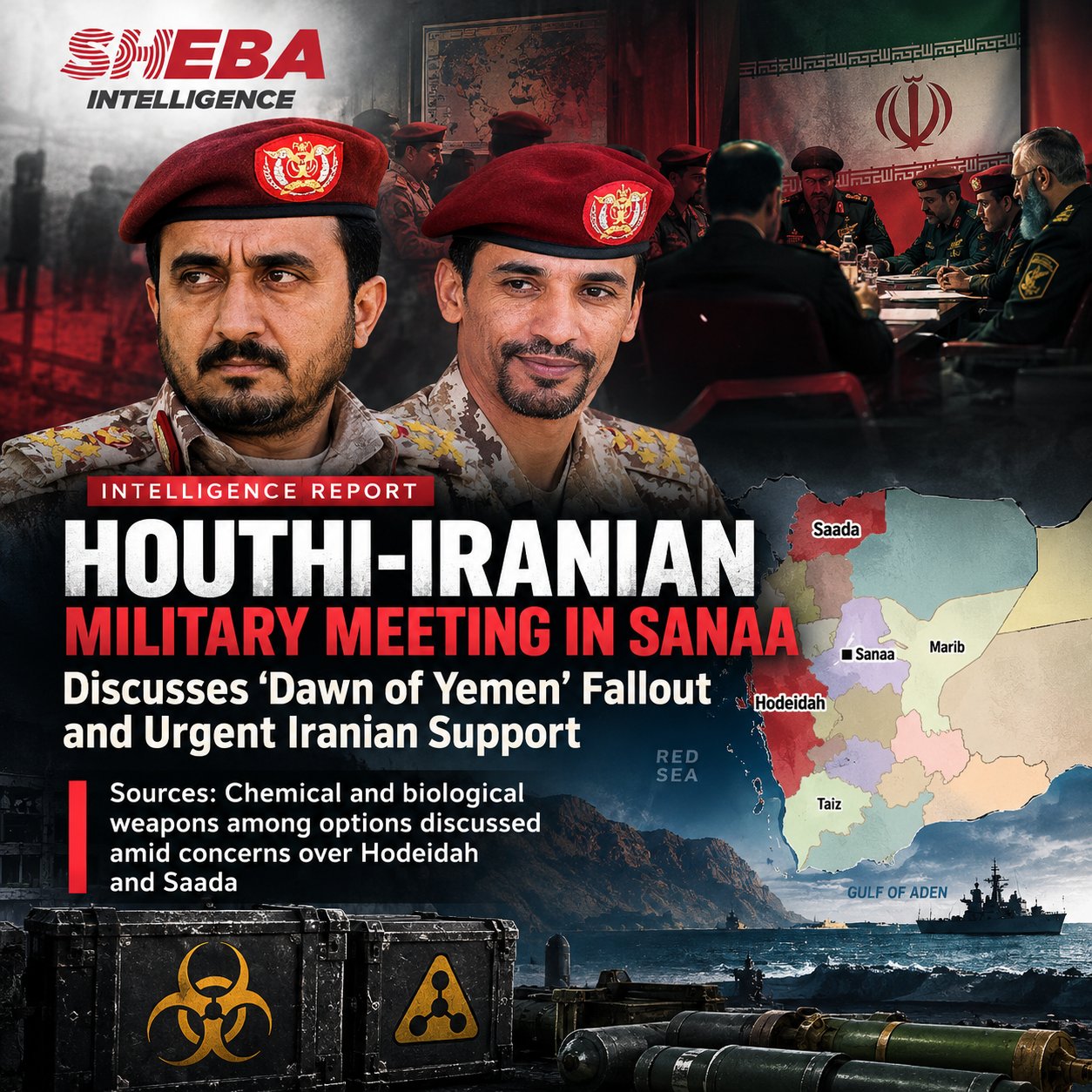
According to the information, a special operations room has been formed to manage the escalation. It is reportedly supervised by a senior figure linked to Iran’s Islamic Revolutionary Guard Corps, believed by sources to be Abdul Reza Shahlai, alongside Iran’s new representative or ambassador to the Houthis in Sana’a, Ali Mohammed Ramadhani, whose name has also appeared in some sources as Ali Mohammed Rezaei.
The reported Iranian presence around the operations room suggests that Tehran may be involved not only in the political messaging surrounding the latest Iran–Sana’a flight dispute, but also in shaping the Houthi response to the tribal crisis. The information remains sensitive, and Sheba Intelligence presents it as source-based reporting that requires further independent verification.
The same information indicates that senior Houthi commanders Abu Ali al-Hakem and Yusuf al-Madani have been assigned to lead the operation. Its objectives reportedly include dismantling the tribal mobilization in Al-Rayyan, weakening tribal cohesion through penetration and internal pressure, taking control of Al-Rayyan and eastern Al-Jawf areas, and increasing military pressure on Marib and the oil and gas zones around it.
The Houthis appear to be pursuing two parallel internal tracks. The first is based on infiltration, pressure on tribal figures and attempts to divide the Al-Rayyan mobilization from within. The second is based on military mobilization around Al-Jawf and Marib in preparation for a possible attack. However, the effectiveness of infiltration alone appears limited unless the group either reaches a tribal settlement or moves toward direct military action.
A direct Houthi attack would carry major risks. If the Houthis launch an assault on Al-Rayyan or eastern Al-Jawf, government forces could exploit the moment to open supporting fronts. Such a move could also create conditions for wider regional or international support to deter Houthi advances, especially if the operation threatens Marib or oil and gas infrastructure.
The geography of the current mobilization increases the stakes. Raghwan lies on a sensitive northern approach to Marib, while Al-Hazm and Al-Labnat are linked to the military and logistical map of Al-Jawf. Any Houthi movement across these areas could pressure government-held zones in eastern Al-Jawf and create new risks for Marib’s strategic energy belt, including oil and gas facilities and routes connected to Safer.
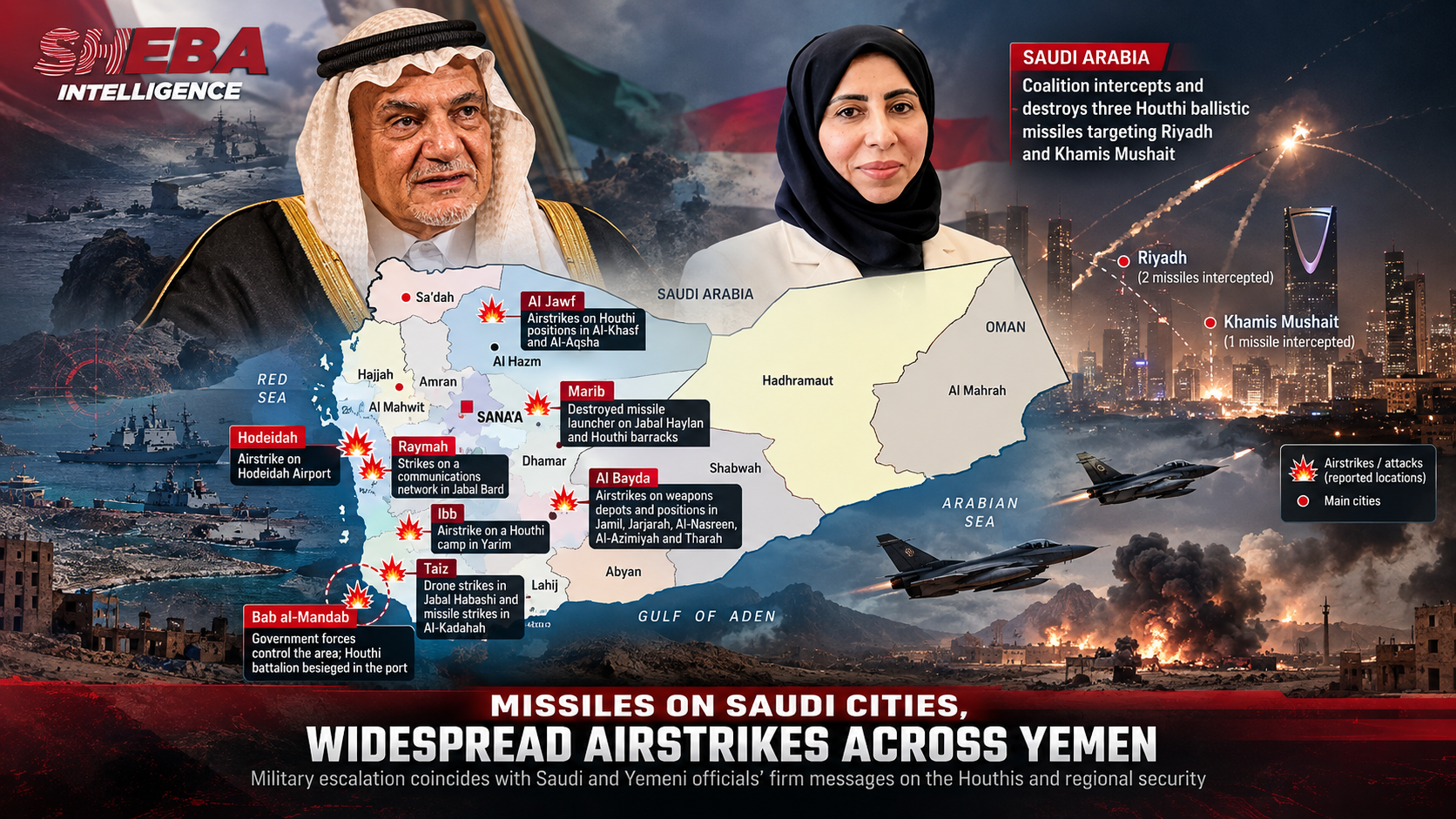
This internal pressure coincides with a wider pattern of Houthi military repositioning. Sheba Intelligence has recently reported continued hidden strikes against Houthi military sites in Sana’a, Amran and Hajjah, including suspected targets linked to storage sites, command rooms, communications points, drone-related assets and missile facilities. The limited nature of these incidents, their apparent precision and the absence of clear claims of responsibility suggest that the Houthis are facing pressure on sensitive military nodes even as they try to project strength externally.
The Red Sea front adds another layer. Sheba Intelligence previously reported that the Houthis were planning a naval maneuver simulating the closure of Bab al-Mandab, a move that fits the group’s broader strategy of using maritime pressure as a political and military tool. The group has also continued to use Red Sea escalation as a way to increase its regional leverage and connect Yemen’s internal conflict to wider regional confrontations.
The mobilization track is also not new. Sheba Intelligence has reported earlier Houthi plans to recruit up to 100,000 fighters amid uncertainty surrounding U.S.-Iran talks and Red Sea tensions. That recruitment plan, combined with current moves in Al-Jawf and Marib, suggests that the group is preparing for simultaneous pressure on several fronts rather than a single isolated confrontation.
The timing of the Al-Rayyan crisis is also important. It is unfolding at the same time as the dispute over the direct Iranian flight to Sana’a, Houthi threats against Saudi Arabia, and the Saudi-led coalition’s warning that it will respond with force to any attempt to target the Kingdom or violate Yemen’s sovereignty. This overlap makes the Houthi leadership appear caught between two pressures: an external escalation track with Saudi Arabia and the coalition, and an internal tribal challenge that could spread if not contained.
The broader picture suggests that the Houthis are trying to convert a local tribal crisis into a wider political and regional confrontation. By tying Sana’a Airport to Iran, threatening Saudi Arabia, and mobilizing near Marib and Al-Jawf, the group appears to be seeking to project strength and shift attention away from internal vulnerability. Yet the Al-Rayyan crisis reveals a serious domestic pressure point: the Houthis are facing a tribal challenge that cannot be easily solved through propaganda or external escalation.
The next phase will depend on three connected variables: whether the Houthis move from mobilization to attack in Al-Jawf or Marib, whether the tribal gathering in Al-Rayyan expands or fractures under pressure, and whether the dispute over Iran–Sana’a flights creates a wider military or security response. If these tracks escalate together, Yemen could face a dangerous new round of confrontation linking local tribal unrest, Iranian influence, Red Sea militarization and the struggle over Marib’s strategic energy zone.