Major Houthi Build-Up Toward Mokha Raises Risk of Bab al-Mandab Push
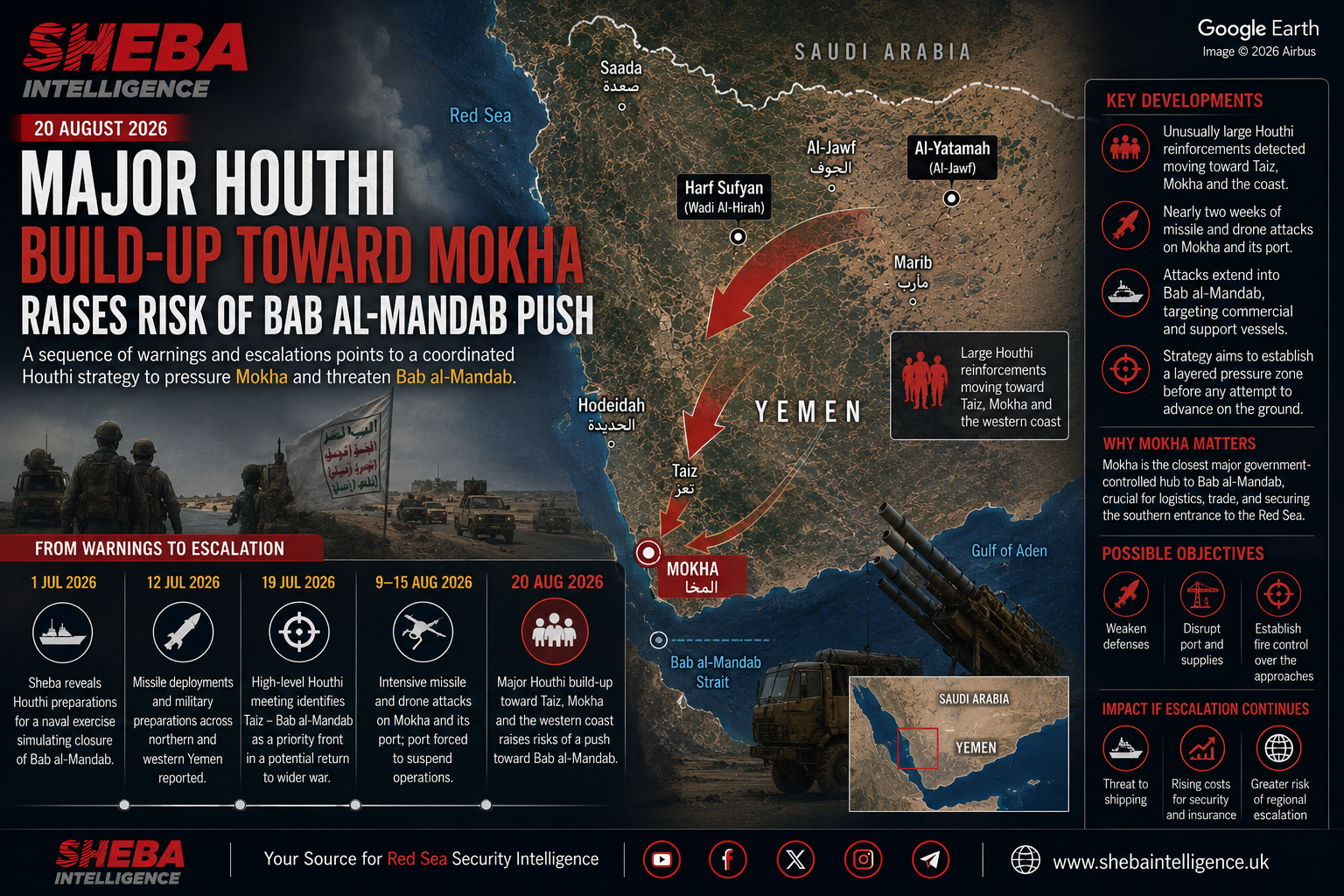
The Houthis have deployed major military reinforcements toward Taiz, Mokha and Yemen’s western coast, according to information obtained by Sheba Intelligence, adding to earlier indications that the group intends to increase military pressure on areas leading to the Bab al-Mandab Strait.
Sources described the latest reinforcements as unusually large compared with previous movements toward the western front. They include personnel and military assets moving toward axes linked to Taiz and Mokha.
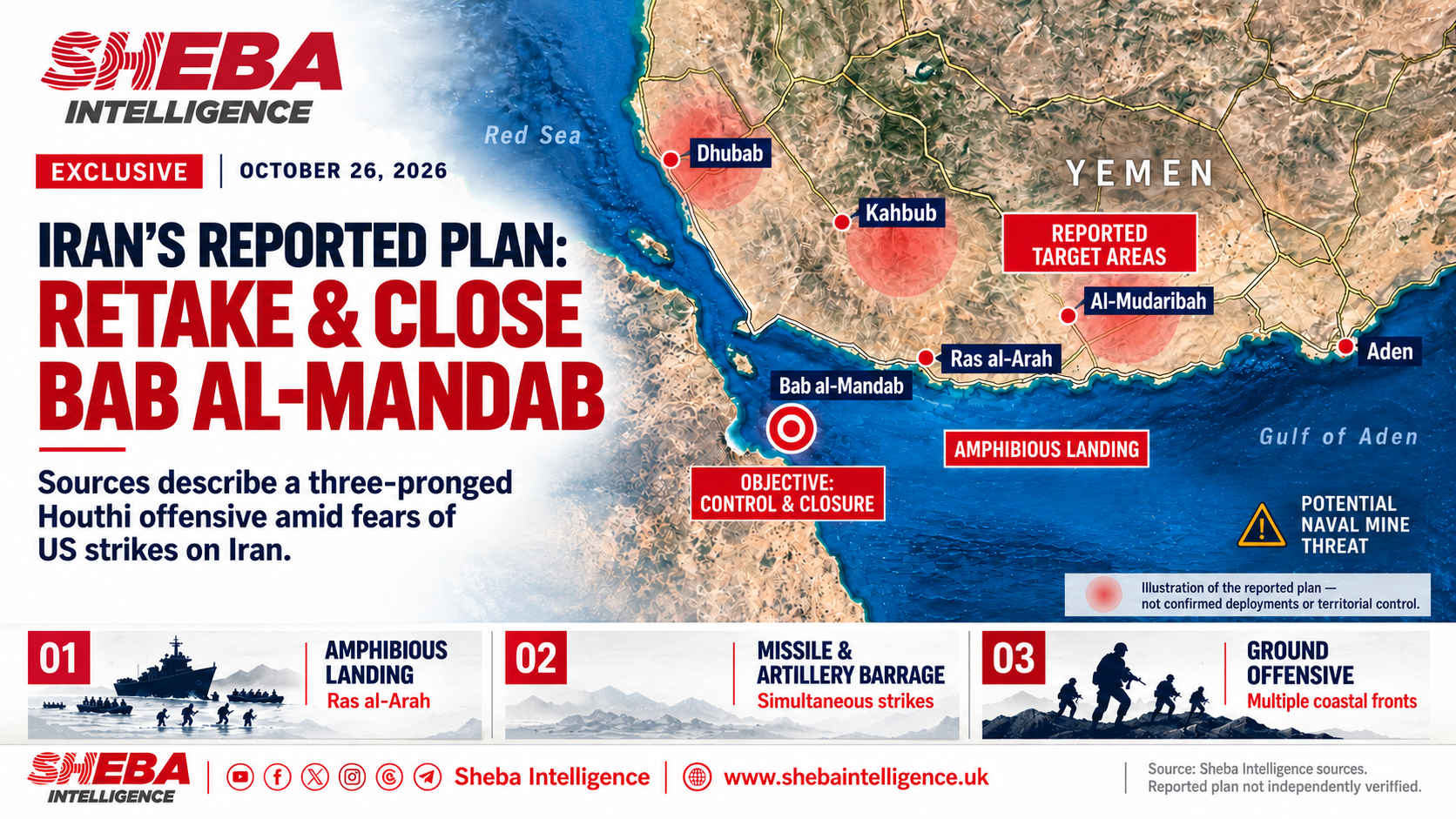
The information indicates that the Houthis remain determined to reach areas closer to Bab al-Mandab and seize positions from forces currently deployed along approaches to the strait.
Sheba has not independently verified that a ground offensive toward Bab al-Mandab has begun. However, the scale and direction of the movements make the western coast one of the key fronts to watch in the current escalation.
From Attacks on Mokha to Pressure on the Strait
The reinforcements follow nearly two weeks of sustained Houthi attacks on Mokha and its port.
The escalation began on August 9 with a coordinated missile and drone assault. According to the Yemeni military, seven people were killed and 30 wounded, while government air defences intercepted 11 drones.
Subsequent strikes continued against Mokha and its port, eventually forcing the port to suspend commercial and maritime operations. The port administration initially reported more than 25 missile strikes, seven deaths and approximately $16 million in damage, before later government estimates placed the losses considerably higher.
Sheba Intelligence previously linked the sequence of attacks on Mokha, its port and the maritime corridor around Bab al-Mandab, assessing them as part of a campaign combining pressure on government forces along the western coast with maritime threats in the southern Red Sea.
The report noted that Mokha’s location makes it one of the most important government-held positions close to Bab al-Mandab, allowing the Houthis to connect battlefield pressure on government forces with maritime operations in the southern Red Sea.
Sheba Previously Warned of the Taiz–Bab al-Mandab Axis
The latest movements also fit a pattern Sheba Intelligence has been tracking since July.
On July 19, intelligence sources told Sheba intelligence that a high-level meeting in Sanaa had identified three priority theatres for potential high-impact military operations: Marib–Al-Jawf, Taiz–Bab al-Mandab, and Yemen’s border with Saudi Arabia.
The report identified the Taiz–Bab al-Mandab axis as one of the principal fronts in a potential return to a wider war.
The information at the time pointed to preparations that could enable the Houthis to improve their positions along routes leading toward the western coast and Bab al-Mandab, linking inland ground operations with maritime escalation.
Bab al-Mandab Preparations Predated the Current Escalation
Signs of a broader Houthi focus on Bab al-Mandab emerged even earlier.
On July 1, Sheba Intelligence revealed preparations for a naval exercise on Yemen’s western coast simulating the closure of the Bab al-Mandab Strait, accompanied by the movement of missiles and drones toward coastal positions south of Hodeidah and preparations involving drone-launch infrastructure.
The information provided one of the earliest indications that the Houthis were treating Bab al-Mandab as a distinct operational theatre rather than simply an extension of their Red Sea maritime campaign.
On July 12, Sheba Intelligence reported additional missile deployments and military preparations across northern and western Yemen that appeared linked to contingency plans involving both the Saudi border and Bab al-Mandab.
Fire Control Before Territorial Control
The central question is whether the latest build-up is intended to support a direct ground advance toward Mokha and Bab al-Mandab or reinforce a strategy based primarily on sustained firepower.
Sheba Intelligence assessed on August 14 that a rapid Houthi seizure of Bab al-Mandab would require breaking through multiple defensive lines and sustaining exposed supply routes toward the coast.
A more achievable initial objective could therefore be to weaken forces around Mokha, disable the port, exhaust defensive capabilities and establish sustained fire pressure over the approaches to the strait.
That assessment also cited information about Houthi reinforcements moving from Dhamar and other areas toward Taiz and the western coast. The latest information suggests that this pattern has continued and expanded.
Why Mokha Matters
Mokha occupies a strategically important position between the inland Taiz fronts and the southern entrance to the Red Sea.
Its port supports civilian commerce as well as the logistical network associated with government forces along the western coast. Sustained pressure on the port therefore has consequences beyond direct physical damage: it can disrupt supplies, consume defensive resources and increase the cost of maintaining government positions close to Bab al-Mandab.
The maritime dimension has also become increasingly visible during the latest escalation, with attacks extending to vessels inside Bab al-Mandab, indicating that the pressure surrounding Mokha is no longer confined to land targets.
Commercial shipping, however, continues to transit the strait, and there is no indication that the Houthis have established physical control over Bab al-Mandab.
A Shift to Watch
The latest build-up does not yet establish that the Houthis are preparing an immediate offensive to seize Bab al-Mandab.
It does, however, add a new ground-force indicator to a sequence documented by Sheba Intelligence over recent weeks: naval preparations in July; the identification of the Taiz–Bab al-Mandab axis as a priority front; intensive missile and drone attacks on Mokha in August; disruption of the port; attacks extending into the maritime corridor; and now major reinforcements moving toward the western front.
Taken together, these developments indicate that the contest over Bab al-Mandab is increasingly extending beyond the maritime domain.
The more immediate risk may be an attempt to establish a layered pressure zone around Mokha and the approaches to the strait, combining missiles, drones, maritime attacks and ground-force concentration before any potential attempt to advance territorially.