
Houthi Ambitions: Bab al-Mandab, Marib’s Oil and Pressure on Saudi Arabia
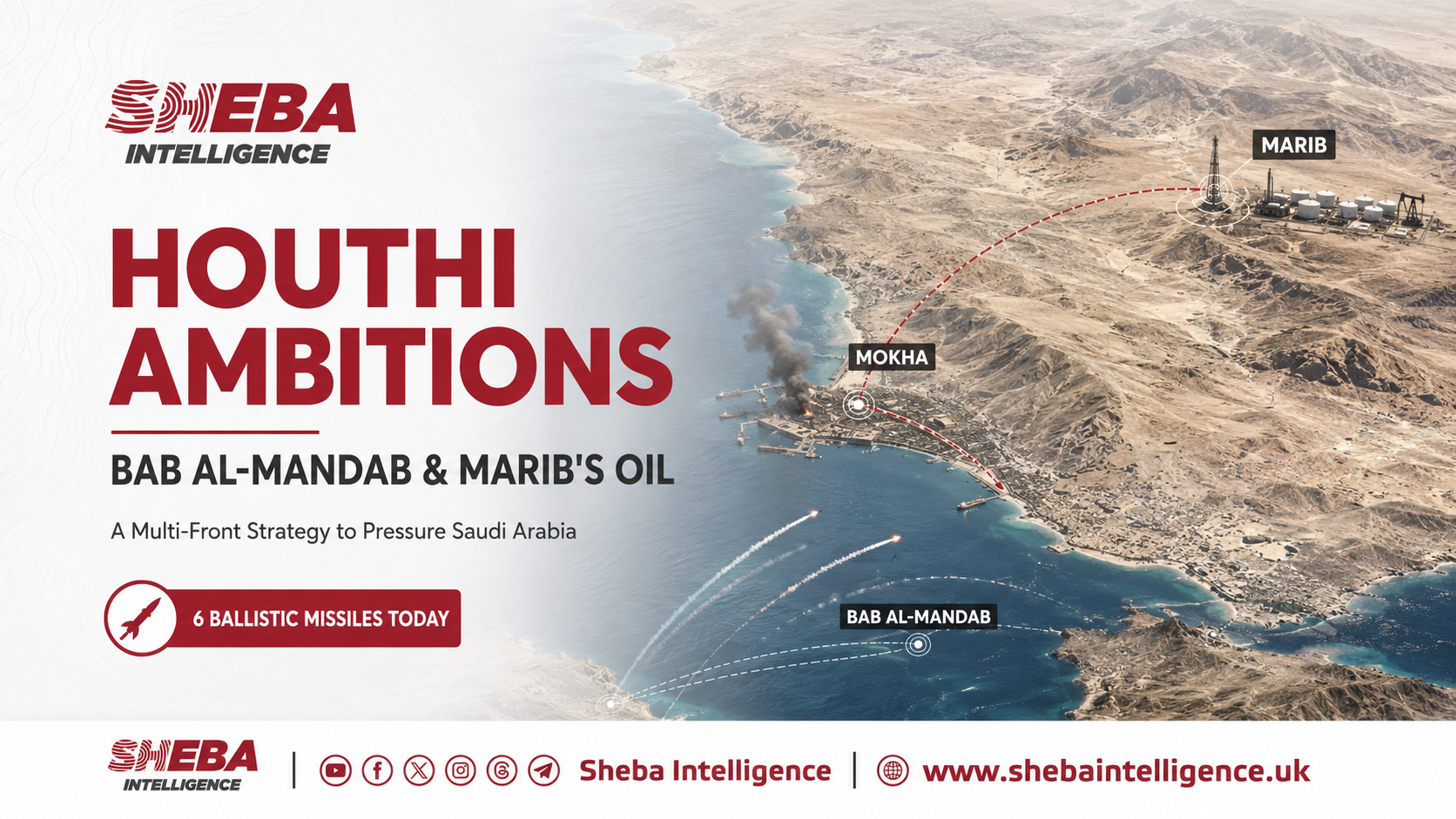
Six ballistic missiles struck Mokha port today, causing a fire and adding to a sustained Houthi campaign involving missiles, drones and explosive boats. The escalation suggests an attempt to weaken government forces on the western coast, disrupt the port and expand the Houthis’ leverage over Bab al-Mandab.
Mokha is more than a civilian and commercial facility. It is a logistical hub for government-aligned forces and a maritime gateway supporting their presence along the western coast. Repeated attacks could limit supplies, damage local infrastructure and prepare the ground for a broader offensive from western Taiz toward the coast.
Reports of Houthi reinforcements moving from Dhamar and other areas toward Taiz and the western coast reinforce this assessment. However, capturing Bab al-Mandab would require breaking several defensive lines and maintaining exposed supply routes. The more immediate objective may therefore be to establish fire control over the area: disabling Mokha port, threatening nearby shipping and forcing maritime operators to treat the Houthis as a de facto authority over the southern Red Sea.
Marib: The Economic Front
The western-coast escalation is unfolding alongside renewed fighting in Marib, where government forces have targeted Houthi positions and fortifications.
Marib remains the government’s main military and economic stronghold in northern Yemen. Control of its oil and gas resources would weaken government revenues, give the Houthis access to strategic energy assets and open routes toward the oil-producing eastern governorates.
The campaign therefore appears to connect two strategic goals: control of Yemen’s principal energy resources in Marib and leverage over international shipping through Bab al-Mandab. Achieving either objective would strengthen the Houthis’ position in future negotiations; achieving both would fundamentally alter Yemen’s balance of power.
Pressure on Saudi Arabia
Bab al-Mandab has become more important to Saudi Arabia as instability in the Strait of Hormuz increases reliance on Red Sea export routes, particularly shipments moving through the East–West Pipeline to Yanbu.
By threatening Mokha, nearby shipping and the southern entrance to the Red Sea, the Houthis are targeting this alternative route. The objective is not necessarily to close the strait physically. Raising insurance costs, disrupting vessel movements and demonstrating the ability to strike Saudi-linked shipping may be enough to increase economic and political pressure on Riyadh.
Iran’s Wider War
The escalation also serves Iran’s confrontation with the United States. Pressure at Bab al-Mandab complements Iran’s leverage in the Strait of Hormuz, placing two major energy corridors under simultaneous threat.
For Tehran, the Houthis provide a means to widen the conflict without concentrating all operations around Iranian territory. For the Houthis, the regional war creates an opportunity to pursue local territorial ambitions while presenting their operations as part of a broader confrontation.
Assessment
The immediate danger is not necessarily a rapid Houthi capture of Bab al-Mandab, but the gradual establishment of control through sustained firepower. Disabling Mokha port, exhausting air defences and threatening commercial vessels could produce strategic effects without territorial occupation.
The Yemeni military’s most effective response would be to prevent the Houthis from concentrating forces against Mokha or Marib. Coordinated pressure across Marib, western Taiz, the western coast, Al-Dhalea, Lahj and the northern fronts would force the group to divide its manpower, drones, artillery and missile support.
Opening multiple fronts under unified command could turn the current escalation against the Houthis. Their advantage depends on concentrating firepower against selected targets; simultaneous pressure across the front lines would stretch their reserves, disrupt reinforcement routes and reduce their capacity to sustain offensives against both Bab al-Mandab and Marib.