
Airstrikes Target Seized Weapons as Houthis Press Attacks After Coastal Gains
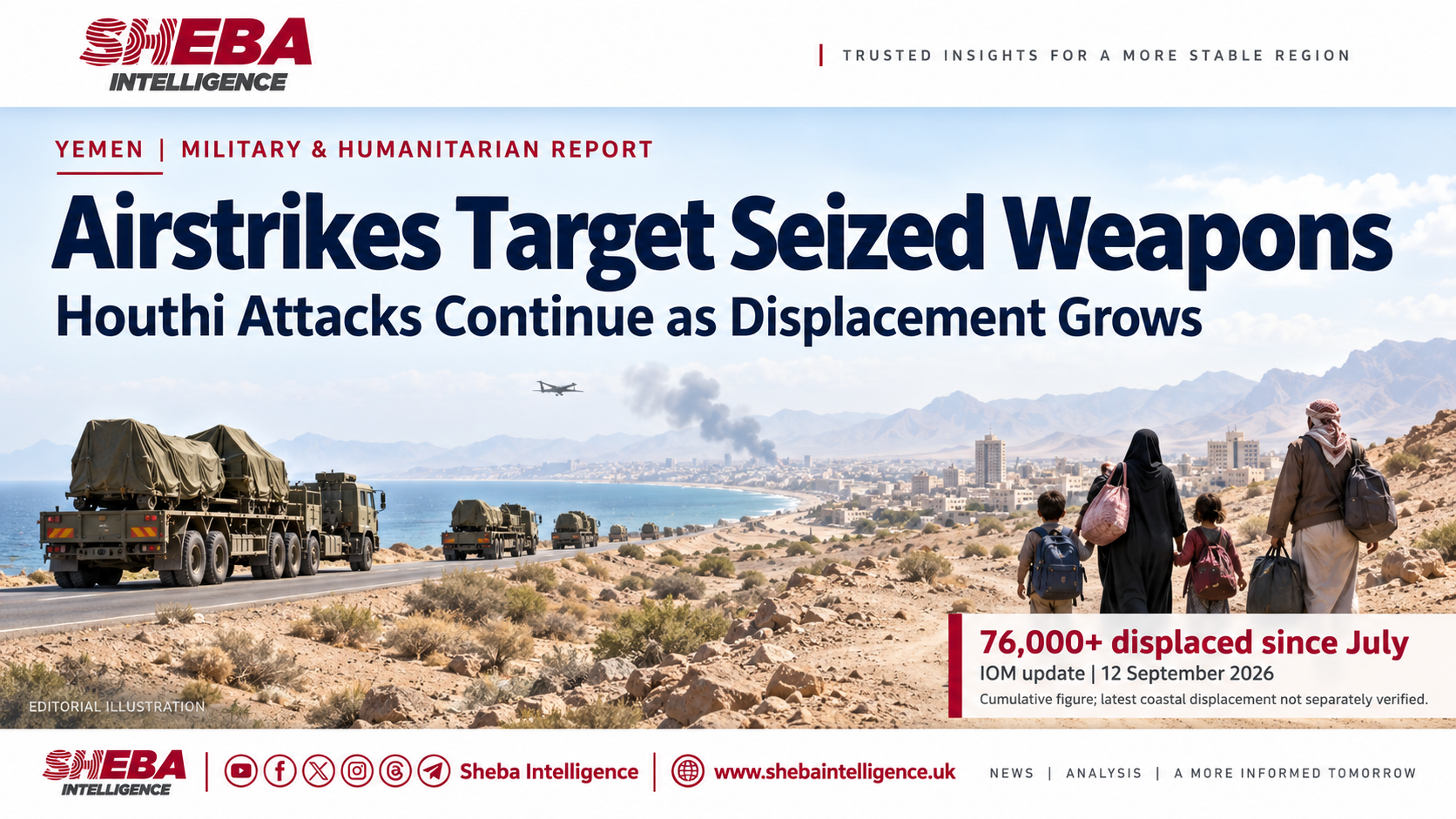
Sources report heavy weapons moved to Sanaa and Saada, while government leaders seek to regroup troops and address growing displacement.
Coalition aircraft have struck trucks carrying weapons seized by Houthi forces from National Resistance bases on Yemen’s western coast, sources told Sheba Intelligence, as the group continued attacks across several fronts following its rapid territorial gains.
The fighting has been accompanied by further displacement toward Aden and government efforts to accommodate troops withdrawing from the coast. An International Organization for Migration update dated September 12 put cumulative displacement since July at at least 76,000 people, but no independently verified count was available for those fleeing the latest developments in Mokha and Dhubab or arriving in Aden over the past two days.
Strikes Hit Weapons Transfers
Sources said the airstrikes targeted trucks carrying heavy and medium weapons, mostly along the Mokha–Taiz road. However, they said the Houthis had already moved substantial quantities of heavy weapons to Sanaa and Saada within the first 24 hours after taking Mokha.
The number of trucks hit and the amount of equipment destroyed were not established. The scale of the weapons transfers could not be independently verified.
Sheba Intelligence previously reported, citing a military source, that heavy weapons captured on the coast were being moved to Sanaa and Saada, while fighters, vehicles and lighter equipment were sent toward Al-Jubah and Al-Abdiyah in southern Marib. The latest accounts provide additional details about the timing of the transfers and strikes against the convoys.
The strikes follow the Yemeni military’s designation of a targeting zone around Mokha, accompanied by warnings for civilians to avoid the Taiz–Mokha road and stay away from Houthi personnel, equipment and gathering points.
Attacks Continue Across Dispersed Fronts
Information received by Sheba Intelligence indicates that Houthi attacks have continued in western Taiz, southern Marib and Al-Jawf, with recent assaults extending to Al-Mudarabah in Lahj governorate. The group has also launched missiles toward areas of Saudi Arabia, according to the same information.
The attacks come as the Houthis consolidate control over territory estimated by Sheba Intelligence at between 5,000 and 6,000 square kilometres following their recent advances. The estimate remains preliminary, with front lines shifting and the boundaries of control not fully verified.
The reported attacks in Lahj are consistent with earlier reporting by Sheba Intelligence, citing intelligence sources, about Houthi plans to push toward the Al-Arah coast after taking Dhubab and Mayun Island. Those sources said the aim was to consolidate the group’s position around Bab al-Mandab and disrupt government forces regrouping nearby. The full details of the reported plan have not been independently verified.
Continued attacks across geographically dispersed fronts suggest an effort to exploit the coastal gains and complicate government attempts to regroup. Whether the Houthis can sustain that pressure while securing newly captured territory remains unclear.
Displacement Grows, Latest Coastal Exodus Uncounted
At least 76,000 people have been displaced since July, according to the IOM update dated September 12. That cumulative figure covers a broader period and should not be read as a count of people displaced solely by the latest fighting in Mokha and Dhubab.
Information available to Sheba Intelligence points to further movement toward Aden, but the sources reviewed did not provide an independently verified count of people fleeing the two coastal districts or reaching Aden during the past two days.
Separately, Djibouti’s ambassador to Saudi Arabia, Dya-Eddine Bamakhrama, reported the arrival of approximately 1,400 people displaced from conflict areas along Yemen’s coast. That figure is being reported separately because any overlap with existing displacement totals has not been established.
The continuing movement of civilians is adding to shelter, water and healthcare needs in receiving communities. A comprehensive assessment of the latest arrivals and assistance provided was not available.
Leaders Seek to Regroup Coastal Forces
Media figures affiliated with Tariq Saleh, a Presidential Leadership Council member and commander of the National Resistance, reported that he had arrived in Riyadh. No confirmed details were available about his meetings or their outcome.
In Marib, council member Sultan al-Aradah described events on the coast as “painful and regrettable,” while saying advances and setbacks were part of warfare. He announced that a dedicated camp had been prepared to receive military personnel arriving from Mokha.
The announcement provides a concrete indication of arrangements to accommodate troops who left the coast, alongside broader public appeals for cohesion.
Fellow council member Othman Mujalli called for resolve, strength and unity, saying the sacrifices of government fighters were essential to overcoming the current challenges.
Their remarks follow the National Defence Council’s earlier position that Houthi territorial gains would not establish a lasting political settlement by force and that the military response would extend beyond a single front.
Government Pledges Civilian Protection
Prime Minister Shaya al-Zindani said public safety remained the government’s foremost priority and that its responsibilities extended beyond responding to military developments.
Those duties included protecting lives, maintaining essential services, securing basic supplies and addressing the economic and humanitarian consequences of the escalation, he said.
The government now faces simultaneous demands to reorganise forces following the coastal losses and support communities receiving displaced civilians. The quantity and condition of weapons seized by the Houthis—and their potential deployment on other fronts—remain significant uncertainties in the next phase of the conflict.