
First in Seven Years: UN Security Council Issues Presidential Statement on Yemen, Affirms Saudi Arabia’s Right to Self-Defense
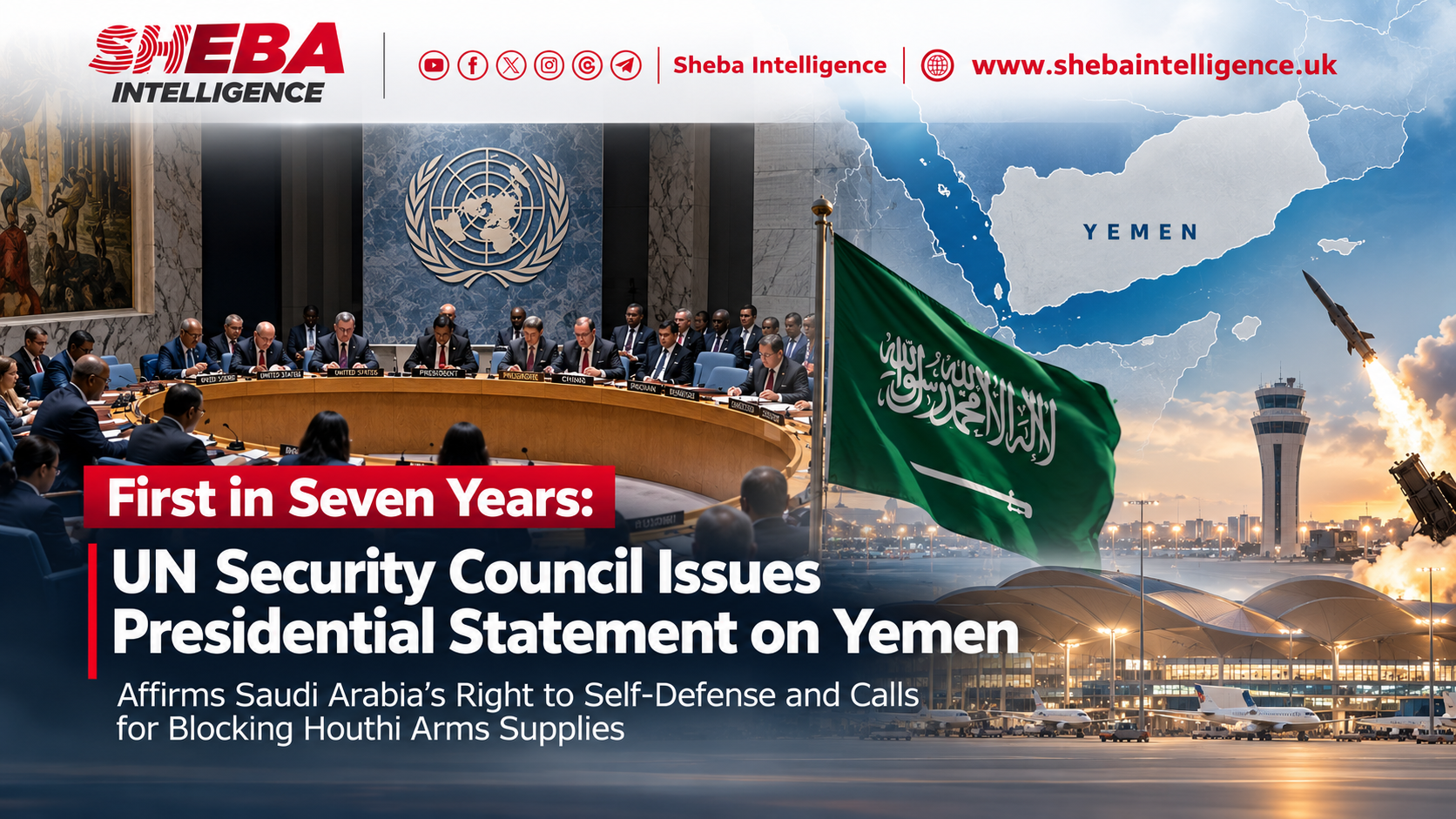
The statement, agreed by all 15 Council members, calls for preventing arms supplies to the Houthis and reaffirms support for Yemen’s internationally recognized government amid the ongoing Dawn of Yemen offensive.
The United Nations Security Council has issued its first presidential statement on Yemen since August 2019, marking a significant diplomatic development amid escalating Houthi attacks against Saudi Arabia and the ongoing military offensive by Yemeni government forces under Operation Dawn of Yemen.
The statement, adopted by consensus on Thursday, October 15, 2026, condemned Houthi attacks targeting Saudi airports, civilian infrastructure and oil facilities. It reaffirmed Saudi Arabia’s right to self-defense in accordance with international law and called for an immediate end to attacks against civilians and civilian infrastructure.
Saudi Arabia’s Ministry of Foreign Affairs welcomed the statement on Friday, particularly its condemnation of Houthi attacks on the Kingdom’s airports.
First Presidential Statement Since 2019
The statement marks the Security Council’s first presidential statement on Yemen since August 29, 2019, following more than seven years in which the Council addressed developments in the country through resolutions, press statements and other diplomatic mechanisms.
According to Security Council Report, which monitors the Council’s proceedings, the statement was adopted with the agreement of all 15 members, including the United States, Russia and China, despite differences over language concerning Houthi attacks on maritime navigation in the Red Sea.
The consensus is particularly significant given divisions among major powers over regional security and the conflict in Yemen.
Arms Restrictions and Support for Yemen’s Government
Beyond condemning the attacks, the Security Council emphasized the full implementation of Resolution 2216 (2015) and subsequent relevant resolutions.
It called for practical cooperation with Yemen’s internationally recognized government to prevent the Houthis from obtaining weapons, military equipment, technical assistance, training and financing that could support further attacks.
The Council also reaffirmed its commitment to Yemen’s unity, sovereignty, independence and territorial integrity, while emphasizing the importance of protecting commercial shipping in the Red Sea and Bab al-Mandab Strait.
These provisions carry particular significance amid longstanding allegations that the Houthis rely on cross-border procurement and smuggling networks to sustain and develop their missile and drone capabilities.
Yemen’s Position and Operation Dawn of Yemen
Yemen’s Ministry of Foreign Affairs published the Security Council statement, highlighting its condemnation of Houthi military escalation, recognition of Saudi Arabia’s right to self-defense and renewed support for the Yemeni government.
The Yemeni government had previously expressed full solidarity with Saudi Arabia following attacks on King Khalid International Airport in Riyadh.
President Rashad Mohammed Al-Alimi has also emphasized the interconnected security of Yemen and Saudi Arabia, maintaining that Operation Dawn of Yemen aims to restore state institutions and end the Houthi threat.
The Security Council’s statement comes as Yemeni government forces continue military operations across several fronts, while Houthi missile and drone attacks have targeted civilian facilities in Saudi Arabia.
The escalation has also extended to Yemen’s temporary capital, Aden, where Houthi forces launched a missile and drone attack against the Maashiq Presidential Palace on October 15.
Political and Security Implications
The statement’s significance lies in the Security Council’s return to a consensus-based presidential position on Yemen after more than seven years, linking Houthi attacks against Saudi Arabia with wider regional security concerns, maritime threats and restrictions on arms supplies to the group.
It also strengthens the diplomatic basis for demanding enforcement of existing international arms restrictions while reaffirming support for Yemen’s internationally recognized government and the country’s territorial integrity.
The agreement among all 15 Council members suggests a degree of international convergence on condemning Houthi cross-border attacks, despite continuing differences over the broader Yemeni conflict.
However, the presidential statement does not constitute a new military authorization for Operation Dawn of Yemen, nor does it independently impose additional sanctions. Instead, it reinforces existing international obligations and diplomatic positions at a time of escalating military and security tensions.