
Saudi Arabia Backs Tehran Talks to Prevent Renewed Regional War as Houthi Attacks Escalate
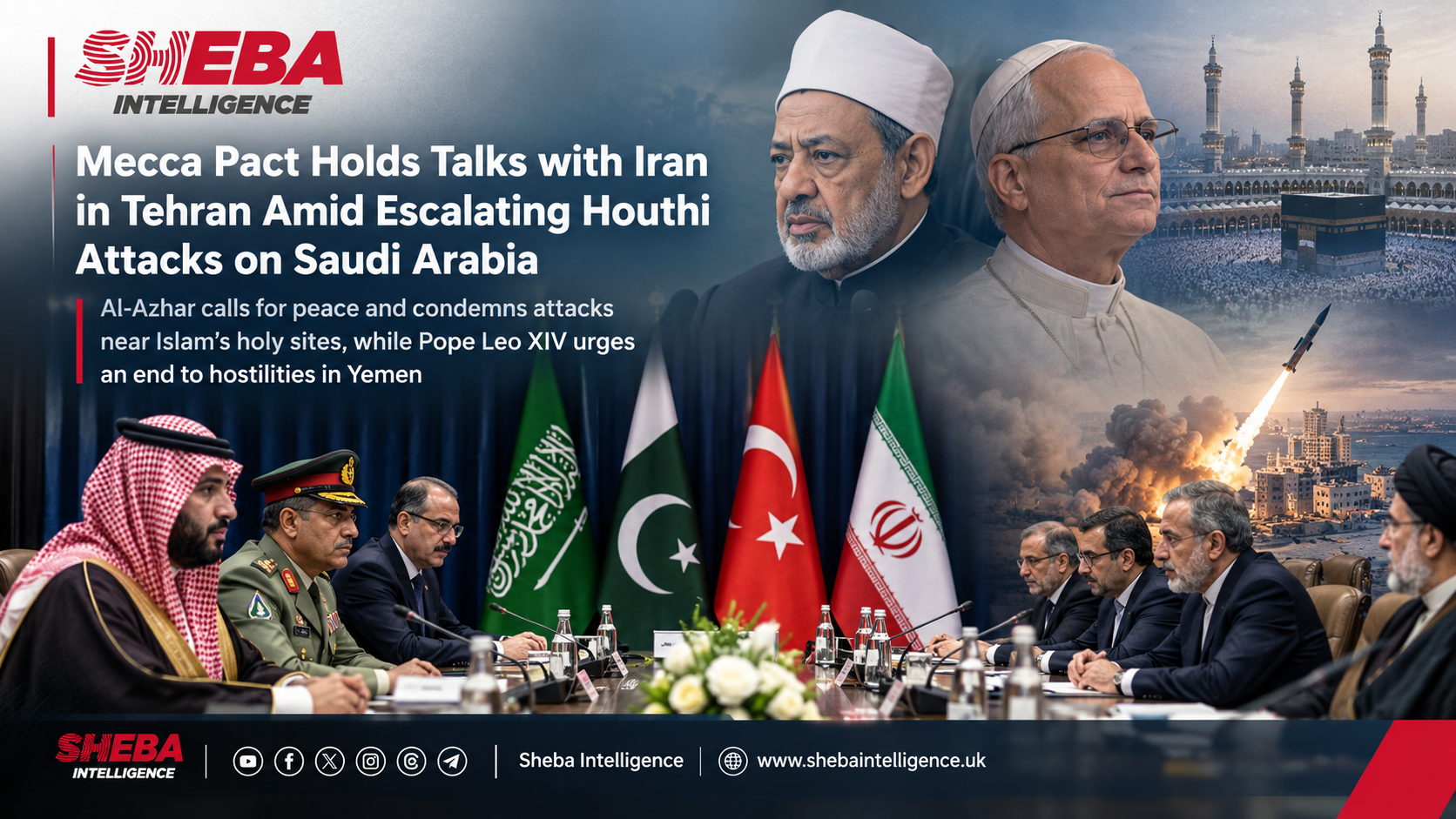
Riyadh stresses the Mecca Defense Pact’s central role in regional security, while Al-Azhar condemns attacks near Islam’s holy sites and Pope Leo XIV calls for peace in Yemen
Saudi Arabia reaffirmed its commitment to regional dialogue and de-escalation on Monday, announcing that Defense Minister Prince Khalid bin Salman’s visit to Tehran, alongside senior representatives of Pakistan and Türkiye, forms part of a coordinated diplomatic effort by the Mecca Joint Defense Pact to prevent renewed military confrontation and support negotiations aimed at resolving the regional crisis.
In an official statement issued on October 26, the Saudi Ministry of Foreign Affairs said the visit was intended to encourage dialogue and diplomatic solutions, reduce tensions among the parties to the current crisis, and support mediation efforts led by Qatar and Pakistan.
Riyadh emphasized the importance of opening channels of negotiation to prevent a return to military escalation and pave the way for an agreement that would end the crisis and restore security and peace to the region and the wider world.
The ministry also reaffirmed the central role of the Mecca Defense Pact countries in maintaining regional security and stability, stressing Saudi Arabia's commitment to working with all countries to achieve lasting peace.
The statement expressed Saudi Arabia's expectation that the parties to the crisis would respond positively and constructively to the visit and to the continuing diplomatic efforts of Qatar and Pakistan.
High-Level Talks in Tehran
The diplomatic mission brought together Saudi Defense Minister Prince Khalid bin Salman, Pakistan's Chief of Army Staff, Field Marshal Asim Munir, and Turkish intelligence chief Ibrahim Kalın for discussions with senior Iranian officials in Tehran.
The talks come amid heightened tensions between Iran and the United States, alongside continuing military escalation across the region.
Iranian officials have described the meeting as an opportunity to discuss regional security and explore arrangements that could reduce tensions and strengthen cooperation among regional powers.
The Saudi statement, however, placed particular emphasis on diplomatic engagement, the prevention of renewed military escalation, and the role of the Mecca Pact countries in regional stability.
Yemen and Houthi Attacks Form a Critical Backdrop
The Tehran meeting comes as Houthi missile and drone attacks against Saudi Arabia continue, raising concerns over the security of civilian infrastructure, religious sites, and strategic facilities.
The escalation coincides with ongoing Yemeni government military operations under Operation Dawn of Yemen, which has intensified fighting against Houthi forces on several fronts.
Reuters reported that the Tehran meeting represents the first high-level collective engagement between Iran and the Mecca Pact countries since the escalation of Houthi attacks against Saudi Arabia.
Media reports have also suggested that developments in Yemen, particularly Houthi attacks on the Kingdom, form part of the broader security discussions.
However, the Saudi Foreign Ministry's statement did not explicitly mention Yemen or the Houthis, and no official agreement concerning the cessation of Houthi attacks or Iranian commitments regarding Yemen has been announced.
Al-Azhar and Vatican Call for Peace
The diplomatic initiative coincides with appeals from prominent religious leaders for an end to escalating violence and greater protection for civilians.
Sheikh Ahmed Al-Tayeb, Grand Imam of Al-Azhar, condemned Houthi attacks targeting Saudi territory and areas near Islam's holiest sites, calling for their immediate cessation and emphasizing the need to protect religious sanctities and civilian lives.
Al-Azhar also called for the establishment of an urgent mediation committee comprising prominent Islamic figures to help contain the escalation and promote peace.
Meanwhile, Pope Leo XIV called on Sunday for an end to hostilities in Yemen, expressing concern over the worsening humanitarian situation, particularly in Taiz, where civilians continue to suffer from shortages of food, water, and medical care.
Yemen's Ministry of Foreign Affairs welcomed the Pope's appeal and underscored the importance of international efforts to alleviate civilian suffering and support peace.
The Tehran talks now represent an important diplomatic test for the Mecca Defense Pact, as its members seek to combine regional security coordination with negotiations aimed at preventing a wider confrontation.
Attention will increasingly focus on whether the diplomatic initiative produces concrete understandings on regional security and whether any subsequent commitments address Houthi attacks against Saudi Arabia, the conflict in Yemen, and threats to maritime security in the Red Sea and Bab al-Mandab Strait.