
Yemen Enacts Law Designating Houthis a Terrorist Organization After Unanimous Parliament Vote
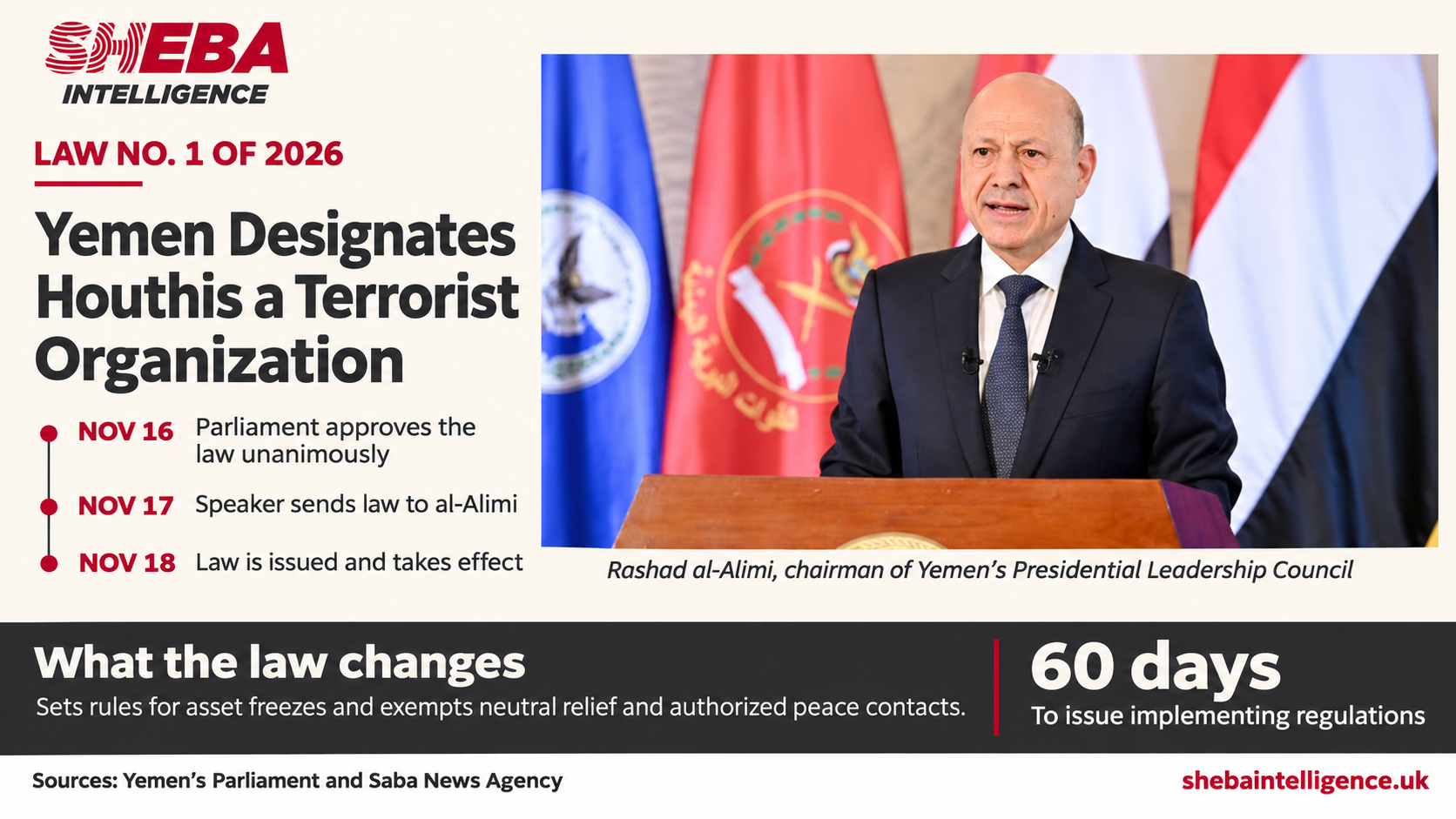
The law sets out procedures for listing individuals and entities and freezing their assets, while exempting neutral humanitarian aid and official peace talks.
Yemen’s Presidential Leadership Council Chairman Rashad al-Alimi on Wednesday promulgated Law No. 1 of 2026, designating the Houthi group a terrorist organization and criminalizing its activities and financing. The law took effect upon promulgation, two days after parliament passed it unanimously.
Parliament approved the final text on Monday, November 16, after two days of debate on its provisions. The following day, Speaker Sultan al-Barakani submitted the law to al-Alimi for promulgation. In a letter published by parliament, al-Barakani called for the law to be implemented and for regional and international support.
As of publication, Sheba Intelligence had found no direct official response from the Houthis or public statement from the United Nations on the law. No listings or asset freezes under the law had been publicly announced.
Asset freezes and affiliated entities
Yemen’s National Defense Council designated the Houthis a terrorist organization in October 2022. The new law establishes procedures for implementing the designation, including listing individuals and entities and freezing their assets. It applies to businesses, media outlets and civil organizations where their affiliation with the group is established. It also provides for administrative challenges and judicial appeals.
The law authorizes the prosecutor general to freeze the assets of listed individuals and entities when the legal conditions are met, while protecting the rights of third parties acting in good faith. Under Article 33, the location of assets in Houthi-controlled areas or their owners’ pursuit of lawful business there is insufficient grounds for a freeze.
Exemptions for humanitarian aid and peace talks
The law requires the government, the central bank and other relevant authorities to take steps to maintain the flow of food, medicine, fuel and aid to civilians. It exempts neutral humanitarian, medical and relief activities from criminal liability under the conditions it sets out. The exemption also covers contacts by government authorities or their authorized representatives for peace talks, ceasefires, detainee exchanges or efforts to address humanitarian issues.
Implementing regulations must be issued within 60 days of the law taking effect. They will set out, among other provisions, the rules for authorizing transactions necessary for humanitarian, medical and food-related purposes.