
IMF Says Escalation in Red Sea Could Adversely Affect Yemen's Economy
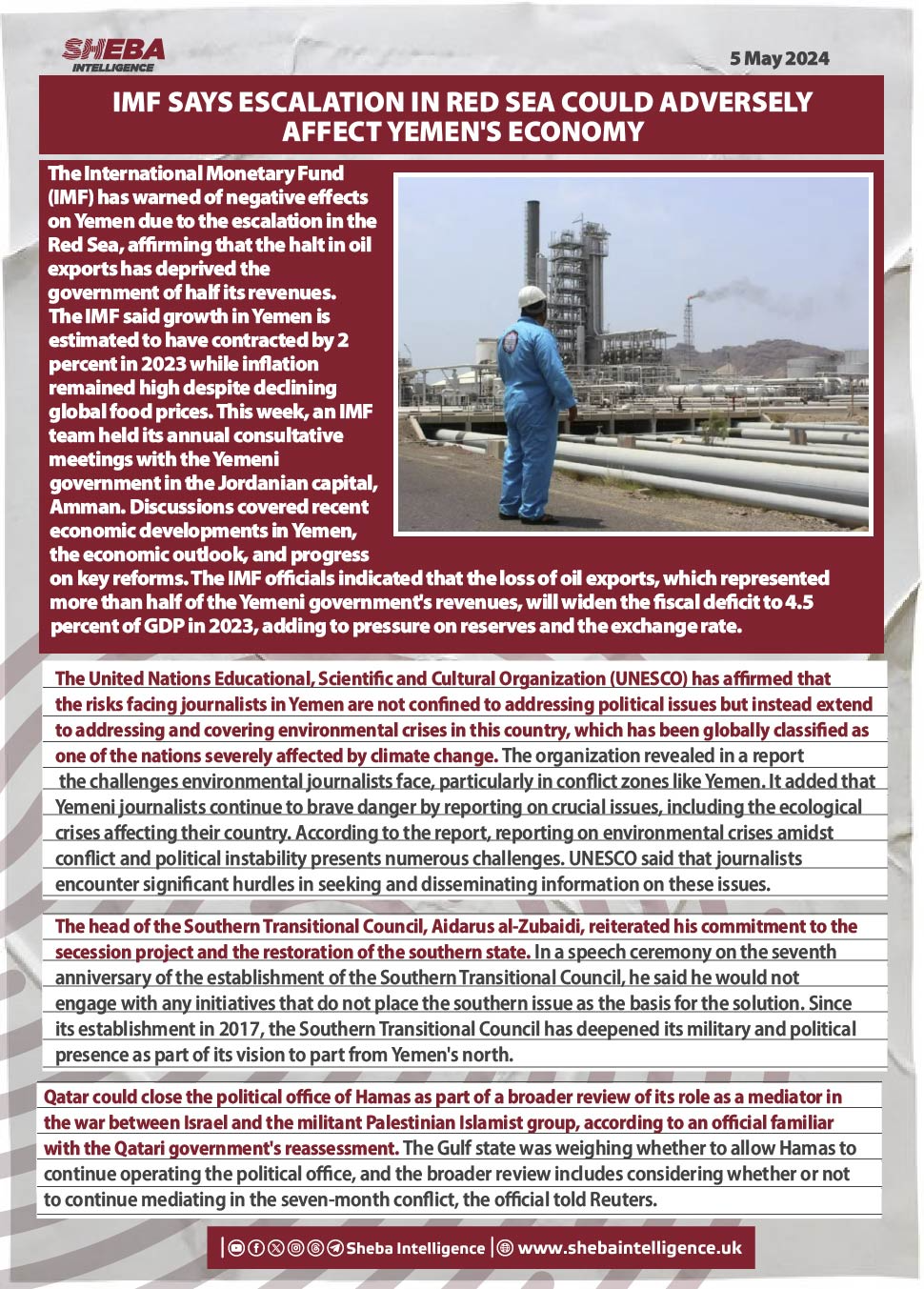
The International Monetary Fund (IMF) has warned of negative effects on Yemen due to the escalation in the Red Sea, affirming that the halt in oil exports has deprived the government of half its revenues. The IMF said growth in Yemen is estimated to have contracted by 2 percent in 2023 while inflation remained high despite declining global food prices. This week, an IMF team held its annual consultative meetings with the Yemeni government in the Jordanian capital, Amman. Discussions covered recent economic developments in Yemen, the economic outlook, and progress on key reforms. The IMF officials indicated that the loss of oil exports, which represented more than half of the Yemeni government's revenues, will widen the fiscal deficit to 4.5 percent of GDP in 2023, adding to pressure on reserves and the exchange rate.
The United Nations Educational, Scientific and Cultural Organization (UNESCO) has affirmed that the risks facing journalists in Yemen are not confined to addressing political issues but instead extend to addressing and covering environmental crises in this country, which has been globally classified as one of the nations severely affected by climate change. The organization revealed in a report the challenges environmental journalists face, particularly in conflict zones like Yemen. It added that Yemeni journalists continue to brave danger by reporting on crucial issues, including the ecological crises affecting their country. According to the report, reporting on environmental crises amidst conflict and political instability presents numerous challenges. UNESCO said that journalists encounter significant hurdles in seeking and disseminating information on these issues.
The head of the Southern Transitional Council, Aidarus al-Zubaidi, reiterated his commitment to the secession project and the restoration of the southern state. In a speech ceremony on the seventh anniversary of the establishment of the Southern Transitional Council, he said he would not engage with any initiatives that do not place the southern issue as the basis for the solution. Since its establishment in 2017, the Southern Transitional Council has deepened its military and political presence as part of its vision to part from Yemen's north.
Qatar could close the political office of Hamas as part of a broader review of its role as a mediator in the war between Israel and the militant Palestinian Islamist group, according to an official familiar with the Qatari government's reassessment. The Gulf state was weighing whether to allow Hamas to continue operating the political office, and the broader review includes considering whether or not to continue mediating in the seven-month conflict, the official told Reuters.