
Houthi Mobilization Statement: Calculated Escalation or a Sign of Internal Strain?
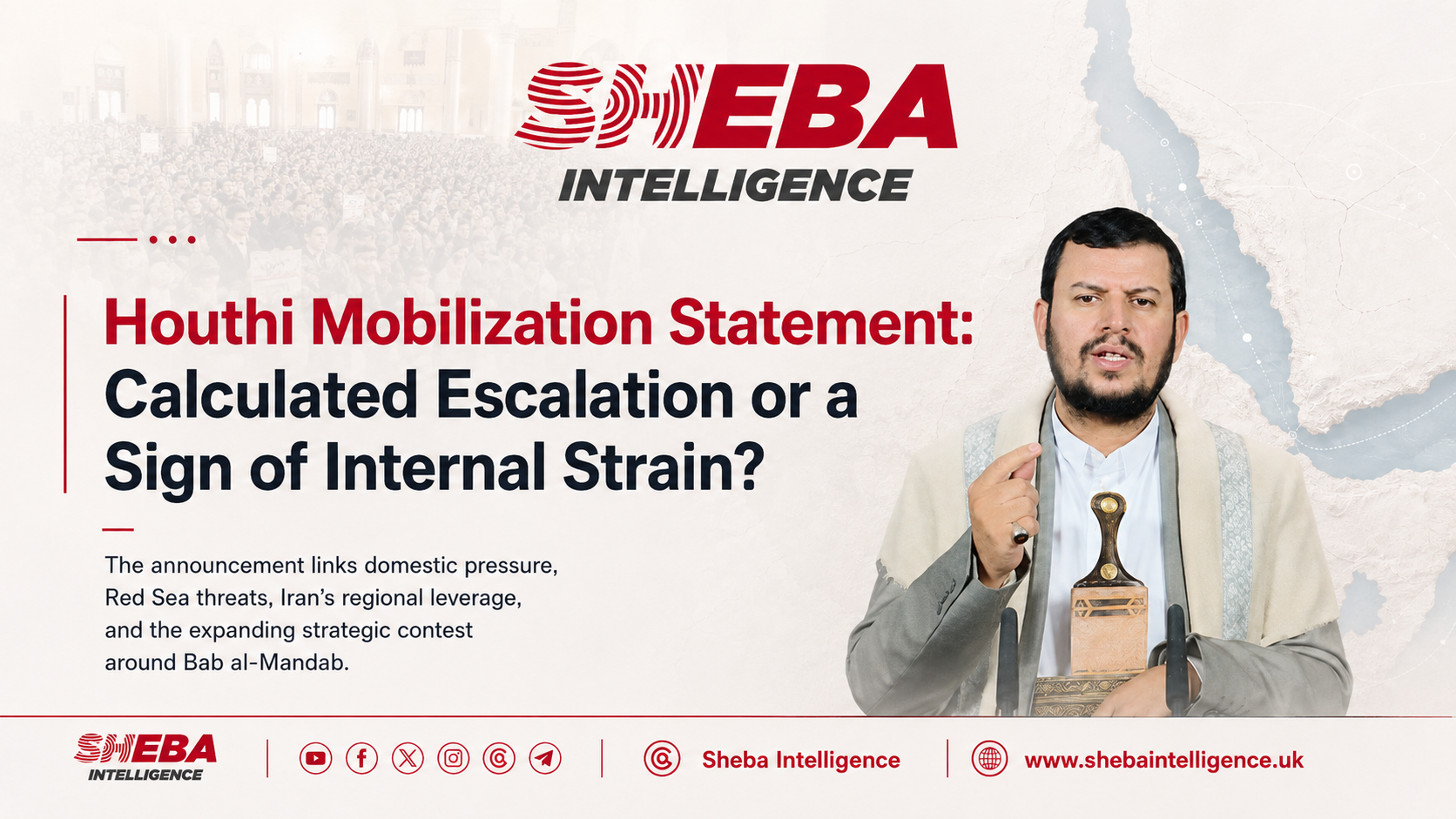
The Houthi General Mobilization Forces issued a notable statement declaring “full and immediate readiness” to support the group’s military forces with fighters, “expel occupiers,” end the siege, and restore what it described as the rights of the Yemeni people.
The statement came in response to a call by Houthi leader Abdul-Malik al-Houthi at the beginning of the new Hijri year. It claimed that the force trained, armed and organized under the General Mobilization structure had reached “hundreds of thousands” of members and “hundreds of popular military brigades.” It also urged wider enrollment in open military mobilization courses known as “Al-Aqsa Flood,” while reaffirming Yemen’s place within the so-called “unity of fronts” alongside Iran and the wider axis of resistance.
At first glance, the statement appears to be a military message. But its timing suggests a more complex reading. It should not be understood only as a declaration of readiness for war. It also reflects an attempt to manage internal pressure, reinforce recruitment, preserve deterrence, and reposition the Houthis within a shifting regional environment.
According to information obtained by Sheba Intelligence, the announcement coincides with a significant decline in the group’s economic revenues, growing public frustration in Houthi-controlled areas due to poverty and economic collapse, and signs of declining motivation among some fighters on the fronts. The group also appears to be facing pressure on parts of its arms-smuggling capacity and is reportedly working to create or activate alternative trafficking networks.
This gives the mobilization message a dual function. Externally, it warns local, regional and international actors that the Houthis retain the ability to escalate. Internally, it seeks to redirect social anger away from economic failure, taxation, deteriorating services and the collapse of living conditions, and toward a familiar narrative of siege, occupation and national confrontation.
The Red Sea context is central to this reading. The statement comes after renewed Houthi threats against Israeli-linked maritime navigation in the Red Sea. These threats revived the group’s attempt to use Bab al-Mandab and the Red Sea as pressure points in the wider confrontation involving Israel, Iran and the so-called axis of resistance. The language of “full readiness,” “supporting the army with fighters,” and joining the “unity of fronts” links the domestic mobilization campaign to a broader regional posture.
However, available maritime-security indicators require caution. A recent JMIC advisory circulated through UKMTO channels noted that Houthi rhetoric had increased, but that no associated operational indicators or targeting activity had been observed at that stage. This distinction is important. The Houthis are clearly raising the threat level rhetorically, but open-source maritime indicators do not yet confirm a full return to sustained attacks.
The announcement also comes as U.S.–Iran talks move through a fragile and uncertain phase. Any progress between Washington and Tehran could reduce the need for direct regional confrontation, but it could also push Iran-aligned actors to preserve leverage before any broader understanding is shaped. In this context, Yemen remains one of Tehran’s most important pressure cards along global maritime routes. The Houthi statement can therefore be read as a reminder that the Red Sea front remains available for escalation if regional calculations change.
At the same time, Israeli threats and the growing strategic discussion around Somaliland and the port of Berbera add another layer. Reports about Israeli interest in a security foothold near Bab al-Mandab have likely reinforced Houthi claims that Yemen is facing a widening regional encirclement. Whether such plans materialize or not, the Somaliland file gives the Houthis additional material to justify mobilization and portray the southern entrance of the Red Sea as a new front in the confrontation with Israel and its partners.
This is particularly relevant because Sheba Intelligence has previously reported on Houthi-linked transfers of Iranian military technology to armed actors in Sudan. That reporting pointed to a wider pattern in which Yemen is not only a destination for Iranian weapons and expertise, but may increasingly function as part of a cross-border conflict economy connecting the Red Sea, the Horn of Africa and African war zones.
In this context, the latest mobilization statement may be less a sign of unchallenged strength than a sign of strategic stress. The Houthis are raising the rhetoric of war at a moment when their economic base, recruitment capacity and smuggling networks appear to be under pressure.
The most likely assessment is that the statement represents calculated pressure rather than an immediate decision to launch a large-scale war. However, it should not be dismissed as empty rhetoric. The Houthis still possess tools of escalation: missiles, drones, maritime threats, recruitment structures, ideological mobilization networks and cross-border smuggling channels.
The statement is therefore best understood as controlled escalation under pressure. It is shaped by internal economic strain, declining recruitment incentives, pressure on smuggling routes, renewed Red Sea tensions, the uncertainty surrounding U.S.–Iran talks, and the group’s desire to remain a decisive actor in the Bab al-Mandab equation.
The key indicators to watch are whether the statement is followed by actual troop movements, intensified recruitment campaigns, renewed front-line activity, maritime threats, missile or drone launches, or new messaging from the Houthi military command rather than only the mobilization structure.
For now, the announcement appears to be both propaganda and pressure. It is propaganda in its attempt to reframe internal economic failure as a national and regional battle. But it is also real in the sense that the Houthis retain the capacity to turn rhetoric into limited escalation if they decide that the political, military or regional environment requires it.