
Puntland Rejects Federal Security Intervention as Somalia’s Political Rift Deepens
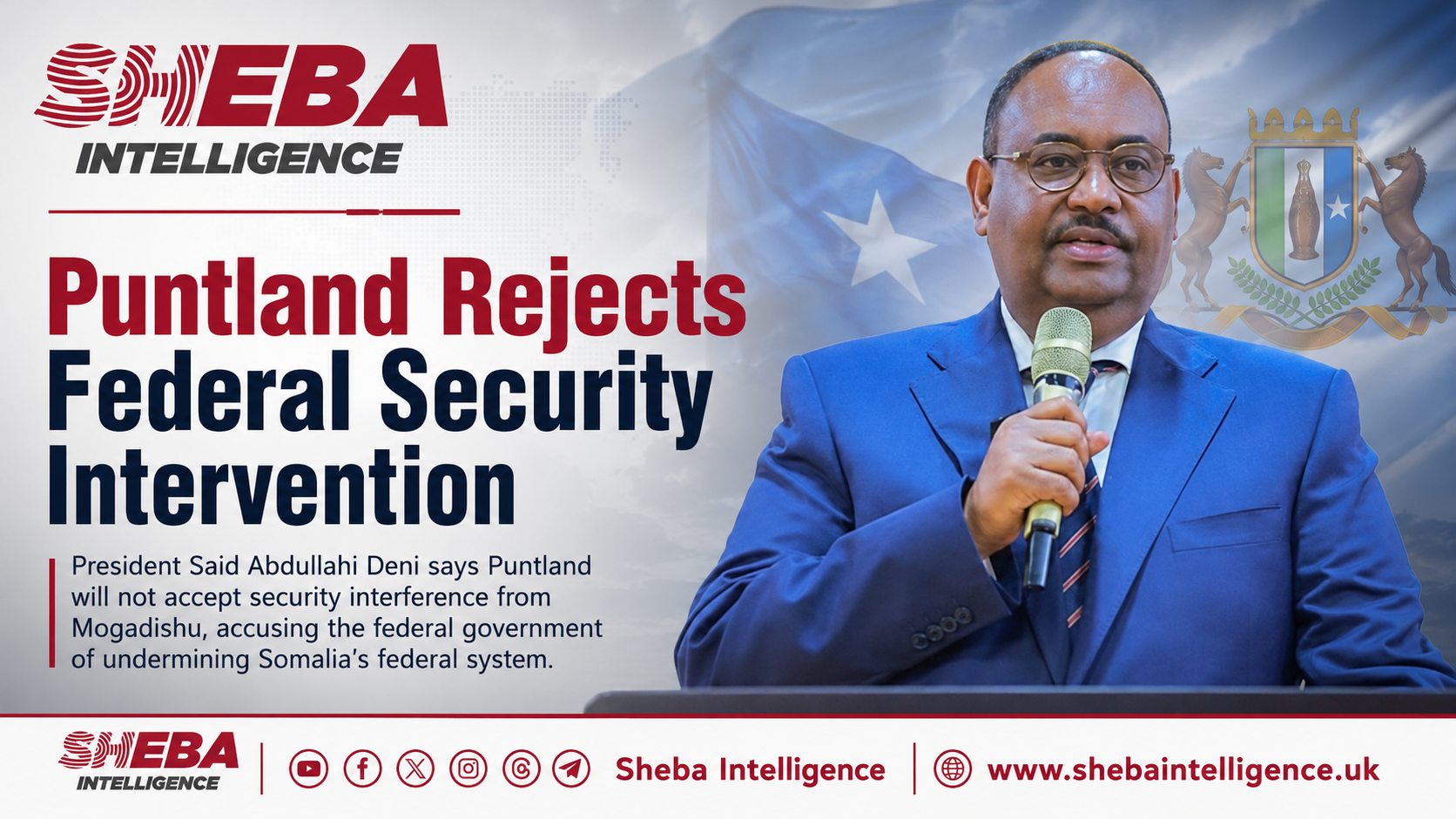
Puntland President Said Abdullahi Deni says his administration will not accept any federal security interference, accusing Mogadishu of undermining Somalia’s federal system and using national forces for political purposes.
Puntland President Said Abdullahi Deni has warned that his administration will not accept any security intervention by Somalia’s federal government inside Puntland, marking a new escalation in the long-running dispute between Garowe and Mogadishu.
Speaking during July 1 celebrations in Garowe, Deni accused the federal government of violating Somalia’s agreed constitutional framework, weakening the federal system, and undermining the independence of state institutions.
He said Somalia remains trapped in political challenges linked to the legacy of the collapse of the central state, adding that hopes for rebuilding a Somali state based on consensus and national partnership are now under threat.
Deni criticized what he described as the use of national forces for political objectives, referring to recent security incidents in Mogadishu that he said targeted politicians and traditional elders instead of focusing on armed groups and wider security threats.
The Puntland leader also rejected reports or discussions about recruiting or deploying federal forces inside Puntland. He said the security situation in the state is stable and does not require forces from outside, accusing the federal government of trying to disrupt the stability and progress Puntland has achieved in recent years.
Deni called on Puntland residents to preserve unity and confront what he described as propaganda and plots aimed at misleading the community. He said Puntland’s security forces remain fully prepared to defend the state’s people and territory.
The latest remarks come amid a deeper constitutional and political dispute between Puntland and the federal government. Puntland has repeatedly opposed recent constitutional changes led by Mogadishu, arguing that the process weakens the federal model and bypasses the consensus on which Somalia’s post-conflict state-building project was based.
The dispute does not currently point to an immediate declaration of separation by Puntland. Deni’s speech continued to frame Puntland as committed to Somali unity and the federal system. However, the message reflects a growing gap between formal national unity and the reality of competing security authorities on the ground.
For Somalia, the immediate risk is not full fragmentation, but a deeper institutional crisis: a federal government with international recognition, and powerful federal member states that control local security, territory, and political legitimacy. If the disagreement over the constitution, elections, and security command continues, Somalia could face greater political disorder and possible localized confrontations between federal-aligned forces and state authorities.
The crisis also comes at a sensitive time for Somalia’s security environment, as federal and regional forces remain under pressure from Al-Shabaab and ISIS-linked elements, while political disputes continue to slow efforts to build a unified national army.
For now, Somalia appears to be moving less toward formal breakup and more toward a state of political and security fragmentation, where the central question is no longer only who leads in Mogadishu, but who controls security decisions in the federal states.