
Al-Shabaab Threat Grows as International Support for Somalia Mission Faces Uncertainty
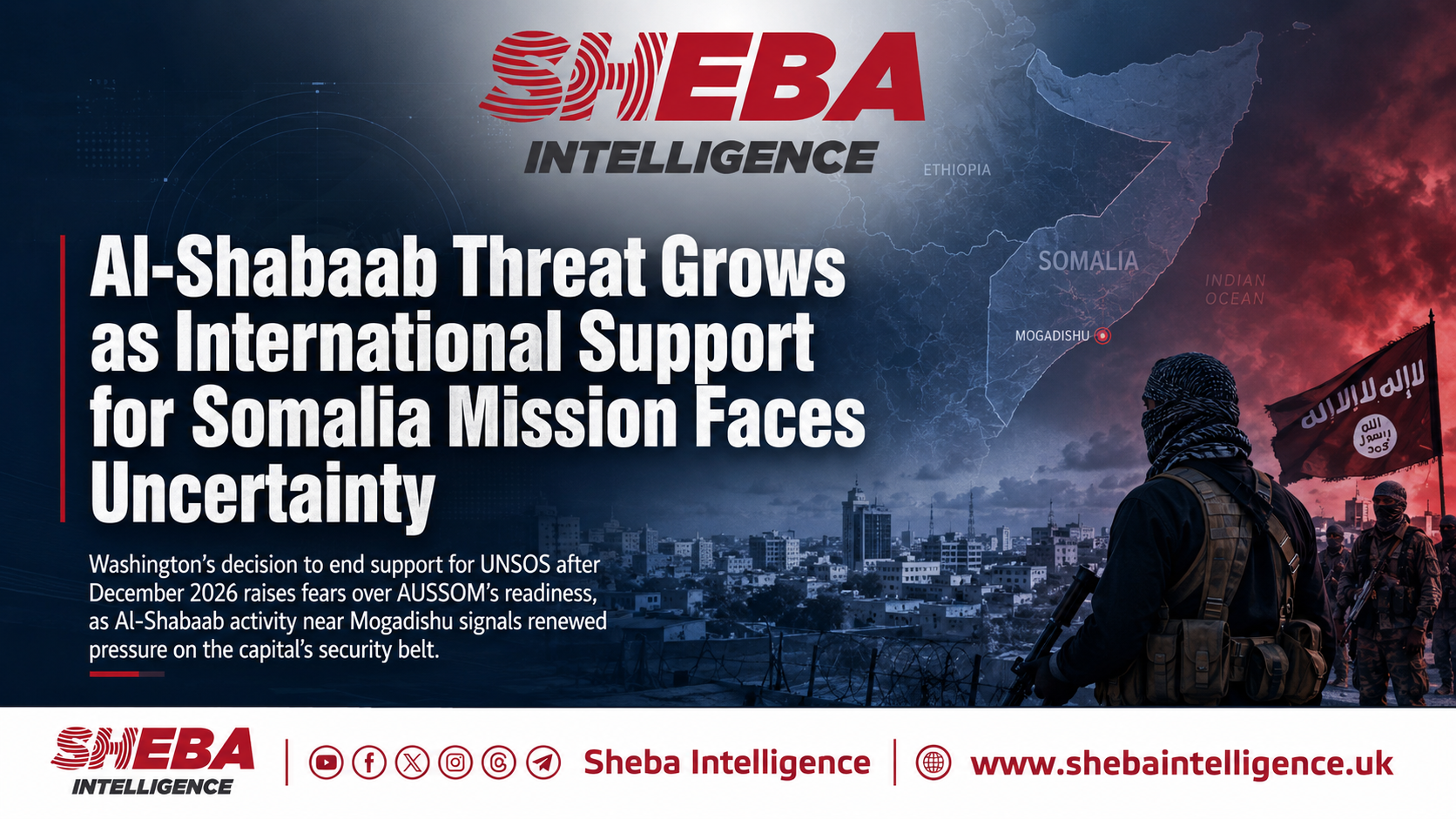
Washington’s decision to end support for UNSOS after December 2026 raises fears over AUSSOM’s readiness, as Al-Shabaab activity near Mogadishu signals renewed pressure on the capital’s security belt
The security threat posed by Al-Shabaab is growing in Somalia as international support for the African Union mission faces a major funding and logistics crisis, raising concerns that the militant group could exploit any gap in the country’s security architecture.
The African Union has held an emergency meeting to discuss the implications of a U.S. decision to stop funding the United Nations Support Office in Somalia (UNSOS) after the current mandate expires on December 31, 2026. UNSOS provides critical logistical support to the African Union Support and Stabilization Mission in Somalia (AUSSOM), including supplies, transport, fuel, medical evacuation and operational backing.
According to a diplomatic note sent by the U.S. mission to the African Union on July 1, Washington will not continue financing UNSOS beyond the end of the year. The decision is expected to have serious implications for AUSSOM’s operational readiness and future funding, at a time when Somali forces still depend on international support in the campaign against Al-Shabaab.
The move comes amid growing warnings that the war against Al-Shabaab has entered a new phase of stalemate. A recent assessment by the International Crisis Group said the group has regained much of the territory it lost during the 2022–2023 government offensive, while the Somali government continues to face challenges related to weak force training, political divisions and declining external support.
Recent reports of Al-Shabaab movements in areas near Mogadishu, including Elasha Biyaha and Maani, appear to reflect this wider security trend. The reported night-time activity near the capital’s outskirts is not only a local security incident, but an indicator that the group is testing weak points in Mogadishu’s outer security belt.
These areas are strategically sensitive because they connect the capital with parts of Middle Shabelle and Lower Shabelle, two regions that have long been central to Al-Shabaab’s mobility and attack networks. Any renewed militant activity there could increase pressure on government forces and expose the limits of security control outside fixed military positions.
The reported pattern is consistent with Al-Shabaab’s broader tactics: temporary night-time presence, intelligence gathering from residents, monitoring of suspected government collaborators, and the use of roadside bombs against security forces. Such operations do not necessarily aim at permanent control, but they are designed to undermine public confidence in the state and show that the group can still operate close to the capital.
The expected decline in international support could further complicate the situation. If AUSSOM loses key logistical backing, the mission may face difficulties sustaining operations, supporting Somali forces, and maintaining pressure on Al-Shabaab in rural and peri-urban areas. This could create additional space for the group to reorganize, expand taxation networks and intensify attacks.
The developments also reinforce concerns raised in previous Sheba Intelligence reports about Somalia’s growing importance in the wider Red Sea and Horn of Africa security environment. Al-Shabaab’s resilience, combined with political fragmentation and regional rivalries, could increase the risk of cross-border networks, smuggling routes and possible indirect links between armed groups operating across the Red Sea corridor.
For Somalia, the U.S. decision is therefore more than a funding issue. It is a test of the entire security transition model. Without a clear alternative mechanism to replace the expected logistical gap, the Somali government and its international partners may face a more dangerous environment in 2027, with Al-Shabaab seeking to regain initiative around Mogadishu and beyond.