
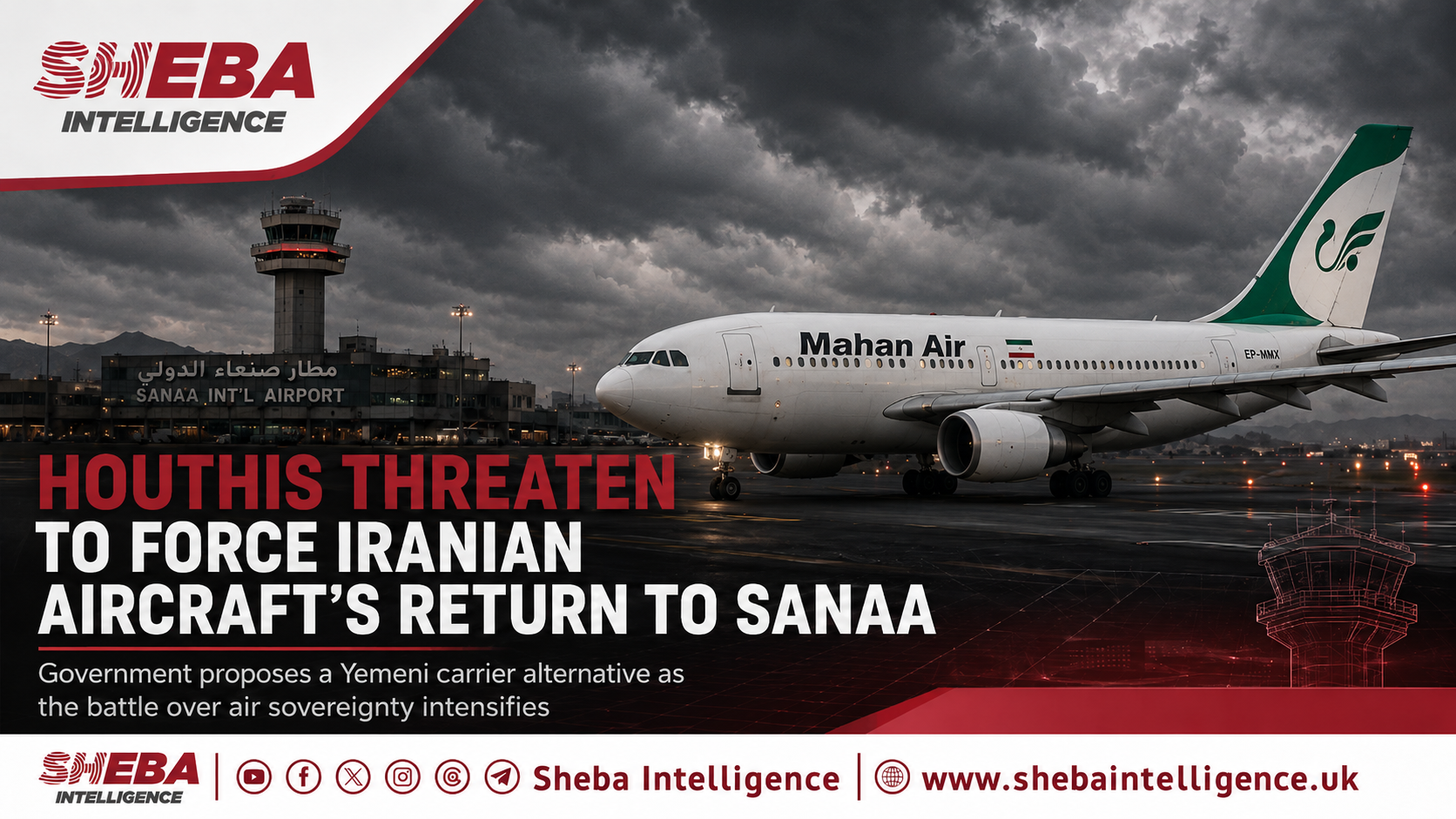
Yemeni government rejects a new Mahan Air flight and proposes returning the Houthi delegation aboard a Yemeni carrier as the battle over air sovereignty intensifies
The Houthis have escalated their position over the Iranian aircraft dispute, insisting that their delegation in Tehran will return to Sanaa aboard the same Iranian aircraft and threatening to use force if the flight is blocked or intercepted.
Senior Houthi official Mohammed al-Bukhaiti said the group remained committed to bringing the delegation back on the Iranian plane, warning against any attempt to obstruct the flight. The group has also repeated its earlier position that flights between Sanaa and Tehran would continue “regardless of the consequences,” signalling an effort to impose a direct air link by force rather than treat the mission as a one-off arrangement.
Following the first flight’s arrival on July 3, the Houthis threatened retaliation against any renewed attempt to prevent Iranian flights from reaching Sanaa and warned that airports and other vital interests could be targeted. The core of the current escalation, however, is the group’s attempt to force the return of a Mahan Air aircraft despite the Yemeni government’s rejection.
In response, Yemen’s Presidential Leadership Council rejected an Iranian request to operate a new Mahan Air flight from Tehran to Sanaa to return the Houthi delegation. The council said the earlier flight constituted a breach of Yemeni sovereignty and a challenge to international law and relevant UN Security Council resolutions.
During an extraordinary meeting on Friday, July 10, the council discussed returning the delegation aboard an aircraft chartered through Yemenia Airways, the country’s recognised national carrier, instead of allowing another direct Iranian flight.
Options under discussion reportedly include transferring the delegation through Oman or Jordan before flying them to Sanaa aboard a Yemeni aircraft.
The dispute has now developed into a broader battle over air sovereignty. The Houthis are seeking to establish Sanaa airport as an independently operated gateway capable of receiving Iranian flights without government approval. The internationally recognised government, meanwhile, is trying to preserve its legal authority over Yemen’s airspace and international aviation arrangements.
In a separate development, Yemeni researcher Dr Abdulqader al-Kharraz raised questions on Friday, July 10, about whether part of the Houthi delegation may already have reached Sanaa aboard a UN aircraft that landed at the airport.
There has been no independent confirmation or UN statement establishing that members of the delegation were on board, and the claim remains under verification.
If confirmed, the return of some delegates aboard a UN aircraft could indicate that an undeclared compromise is already being implemented, allowing the delegation to return gradually without authorising another Mahan Air flight.
The most likely scenario remains a negotiated solution involving a Yemeni or UN aircraft to avoid a direct aerial confrontation. However, the dispatch of an Iranian aircraft without government approval, combined with Houthi threats to enforce its arrival, could turn the dispute into a military confrontation and place the existing truce under renewed pressure.