
Yemen Declares Airspace Sovereignty Red Line, Bans Future Iranian Flights as UN Security Council Urges De-escalation
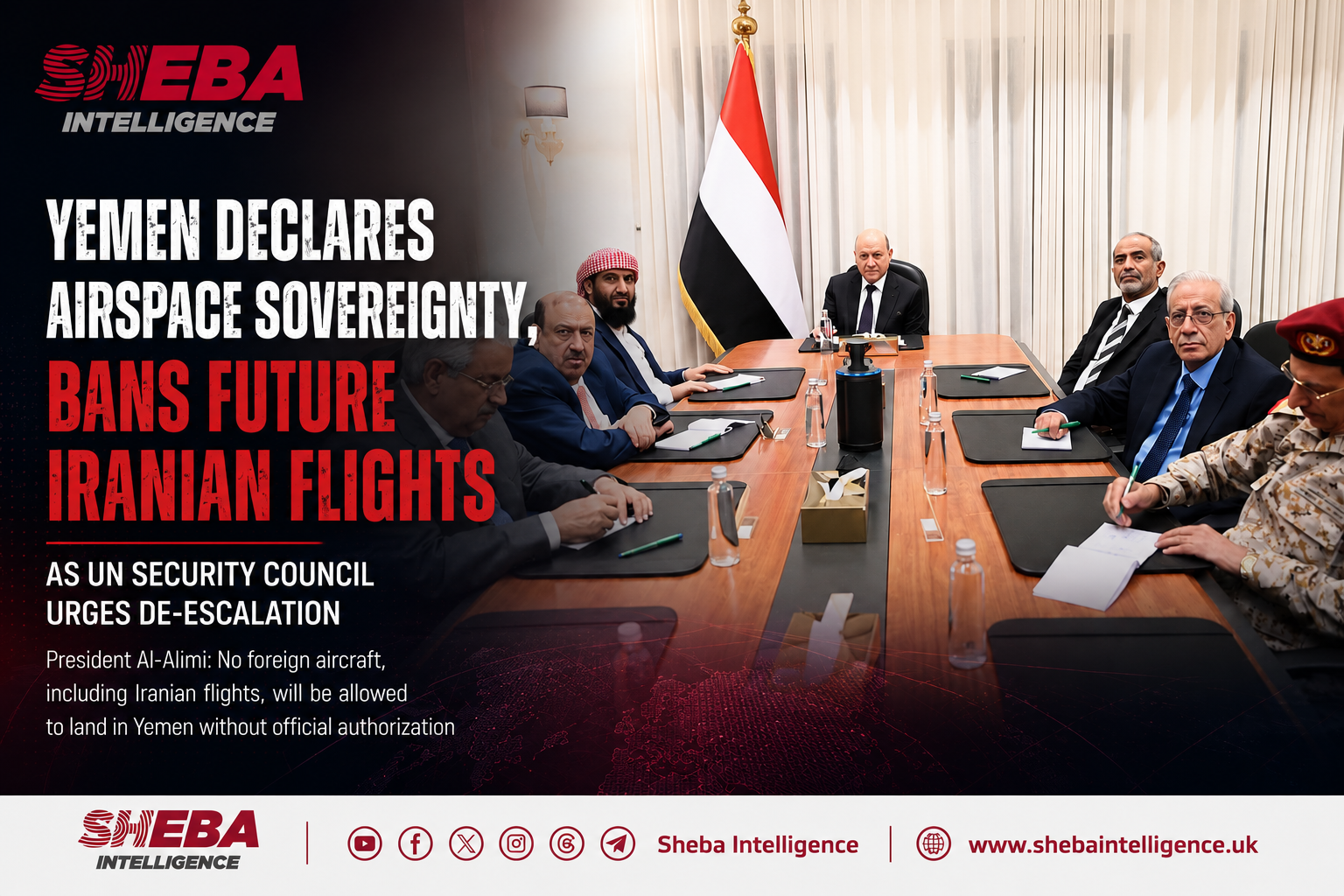
The Yemeni government has announced that no foreign aircraft, including Iranian flights, will be permitted to land in Yemen without official authorization, marking its strongest assertion yet of state sovereignty over the country’s airspace. The declaration followed a joint meeting of the Presidential Leadership Council and the National Defense Council, while the UN Security Council convened to discuss the escalating crisis and warned against a new cycle of conflict.
Chaired by President Rashad Al-Alimi, the National Defense Council concluded that recent Iranian flights to Houthi-controlled Sanaa Airport constituted a direct violation of Yemen’s sovereignty and international law. The Council declared that any future international flight operating outside government approval would not be allowed to enter Yemeni territory, stressing that control of airspace and airports remains the exclusive sovereign authority of the internationally recognized government.
The meeting approved a package of military, political, diplomatic, and legal measures aimed at preventing further violations, while placing full responsibility for the escalation on both the Houthi movement and Iran. It also praised the armed forces for what it described as a disciplined defensive response that prevented the imposition of a new reality by force without triggering a broader military confrontation.
The Council further endorsed the government’s decision to remain in permanent session through a dedicated crisis management team coordinating military, diplomatic, legal, and media responses. It called on the international community, particularly the UN Security Council, to move beyond statements of concern by enforcing existing sanctions, preventing the transfer of weapons and military experts to the Houthis, and upholding Yemen’s sovereignty under international law and relevant Security Council resolutions.
The government’s position comes amid mounting international concern over the growing risk of escalation. During the UN Security Council session, senior UN officials warned that Yemen cannot afford another round of violence and reiterated calls for restraint and a return to negotiations under UN auspices. The discussions reflected broad concern that continued military and political escalation could undermine the relative calm that has largely held since the 2022 truce, although no new Security Council measures were announced.
The crisis has intensified since an Iranian aircraft landed at Sanaa Airport despite repeated government warnings. Yemeni authorities argue that such flights violate the Chicago Convention on International Civil Aviation and UN Security Council Resolutions 2140 and 2216, which affirm the sovereignty of the Republic of Yemen and prohibit actions that strengthen Houthi control over sovereign state institutions. The latest decisions signal that the dispute has moved beyond diplomatic protests into an active effort by the Yemeni government to enforce its authority over the country’s airspace while seeking broader international backing.