
Yemen Moves Toward a New Confrontation as Iran Pushes for an Air Bridge and Regional Powers Prepare for Escalation
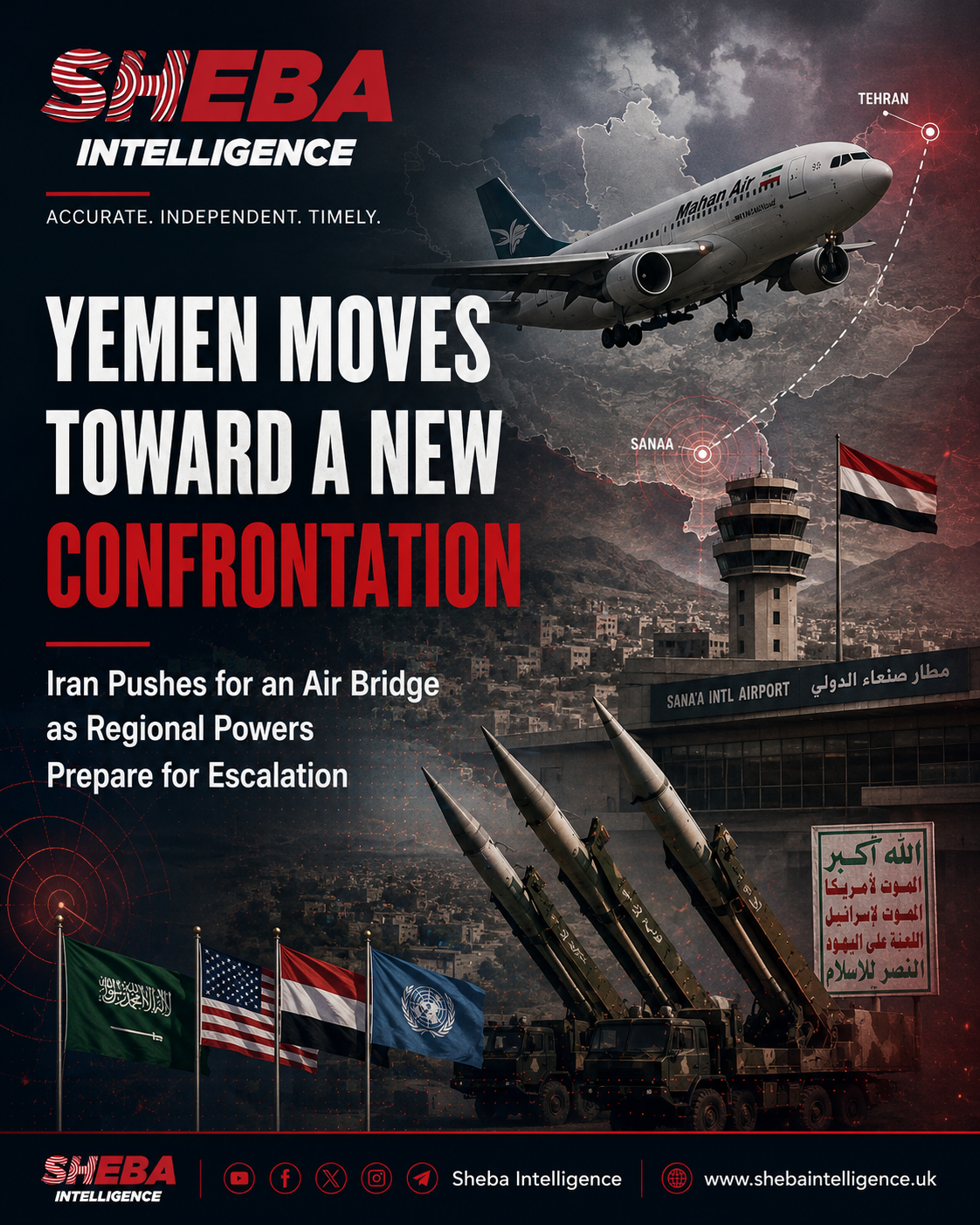
The latest speech by Houthi leader Abdul Malik al-Houthi reflects a broader regional confrontation rather than a purely Yemeni crisis. His threats against Saudi airports, ports, and oil facilities came as Yemen’s internationally recognized government, Saudi Arabia, the United States, and regional partners simultaneously increased military and political pressure on the movement.
At the center of the crisis is Iran’s apparent effort to establish a sustainable air corridor between Tehran and Sanaa following growing difficulties facing maritime smuggling routes into Houthi-controlled territory. The dispute over direct Iranian flights has therefore evolved into a strategic contest over sovereignty, logistics, and regional influence rather than civil aviation alone.
The Yemeni government has adopted its strongest position in years. Following the attempted Iranian flights, the Presidential Leadership Council and the National Defense Council declared full military readiness, reaffirmed that no foreign aircraft would be permitted to enter Yemeni airspace without government authorization, and coordinated political, military, and legal measures to prevent Iran from imposing a new reality through Sanaa Airport. The government’s willingness to use force against airport infrastructure represented a significant shift from previous restraint, signaling that future violations may trigger broader military responses rather than diplomatic protests alone.
Military activity has also intensified across several frontlines. Government forces have reinforced positions in Marib and Al-Jawf while maintaining pressure around areas viewed as strategically sensitive to Houthi military deployments. At the same time, tribal mobilization in Al-Rayyan district has emerged as an additional internal challenge for the movement, creating the possibility that external military pressure could eventually intersect with expanding domestic opposition.
Saudi Arabia appears to be preparing for a limited but decisive confrontation rather than another prolonged war. Riyadh’s priority remains preventing Iran from establishing unrestricted logistical access into northern Yemen while maintaining the capability to conduct rapid strikes against Houthi missile infrastructure should deterrence fail. The Kingdom has simultaneously strengthened its defensive posture and intensified military coordination with the internationally recognized government.
Washington’s calculations extend beyond Yemen itself. Current U.S. policy seeks to contain Iranian regional influence while preventing Tehran from using the Red Sea as an additional pressure front. Reports indicating that Iran has instructed the Houthis to prepare contingency plans for closing Bab al-Mandab if American strikes target Iranian energy infrastructure suggest that Yemen is becoming increasingly integrated into Tehran’s wider regional deterrence strategy.
Pakistan’s latest statements supporting Saudi Arabia’s security commitments further reinforce the emerging regional coalition aimed at deterring wider escalation. Together with continuing Omani mediation efforts, these diplomatic moves indicate that regional actors are simultaneously preparing for conflict while attempting to prevent it.
Despite increasingly aggressive rhetoric, the Houthis themselves may have limited incentives to initiate a comprehensive war at this stage. The movement faces mounting economic pressure, increasing governance burdens, and emerging internal security concerns, particularly in Al-Rayyan where anti-Houthi tribal mobilization has begun to challenge the movement’s authority. A simultaneous confrontation involving external air strikes, renewed government offensives, and expanding tribal unrest would present a far more complex challenge than previous rounds of conflict.
For this reason, current indicators suggest that the Houthis are seeking a symbolic political victory rather than an immediate military one. Preserving direct Iranian air access, easing restrictions around Sanaa Airport, or extracting political concessions would allow the movement to portray itself domestically as having successfully challenged both Riyadh and the internationally recognized government without entering a costly nationwide war.
The most significant escalation risk remains linked not to developments inside Yemen but to the broader U.S.-Iran confrontation. Should Washington target Iran’s critical energy infrastructure, Tehran is likely to activate its regional network of partners, with the Houthis expected to play a central role by threatening or disrupting maritime traffic through Bab al-Mandab.
Current developments therefore suggest that Yemen is entering a new strategic phase. Rather than preparing for an immediate nationwide military offensive, regional actors appear to be positioning themselves for a high-risk contest over strategic access, air sovereignty, and control of one of the world’s most important maritime corridors. Whether this confrontation develops into full-scale war will depend less on events inside Yemen than on the trajectory of the wider regional conflict between Iran and the United States.