
Saudi–U.S. Military Talks Highlight Growing Focus on Air Defense Coordination
Sheba Intelligence | Analysis
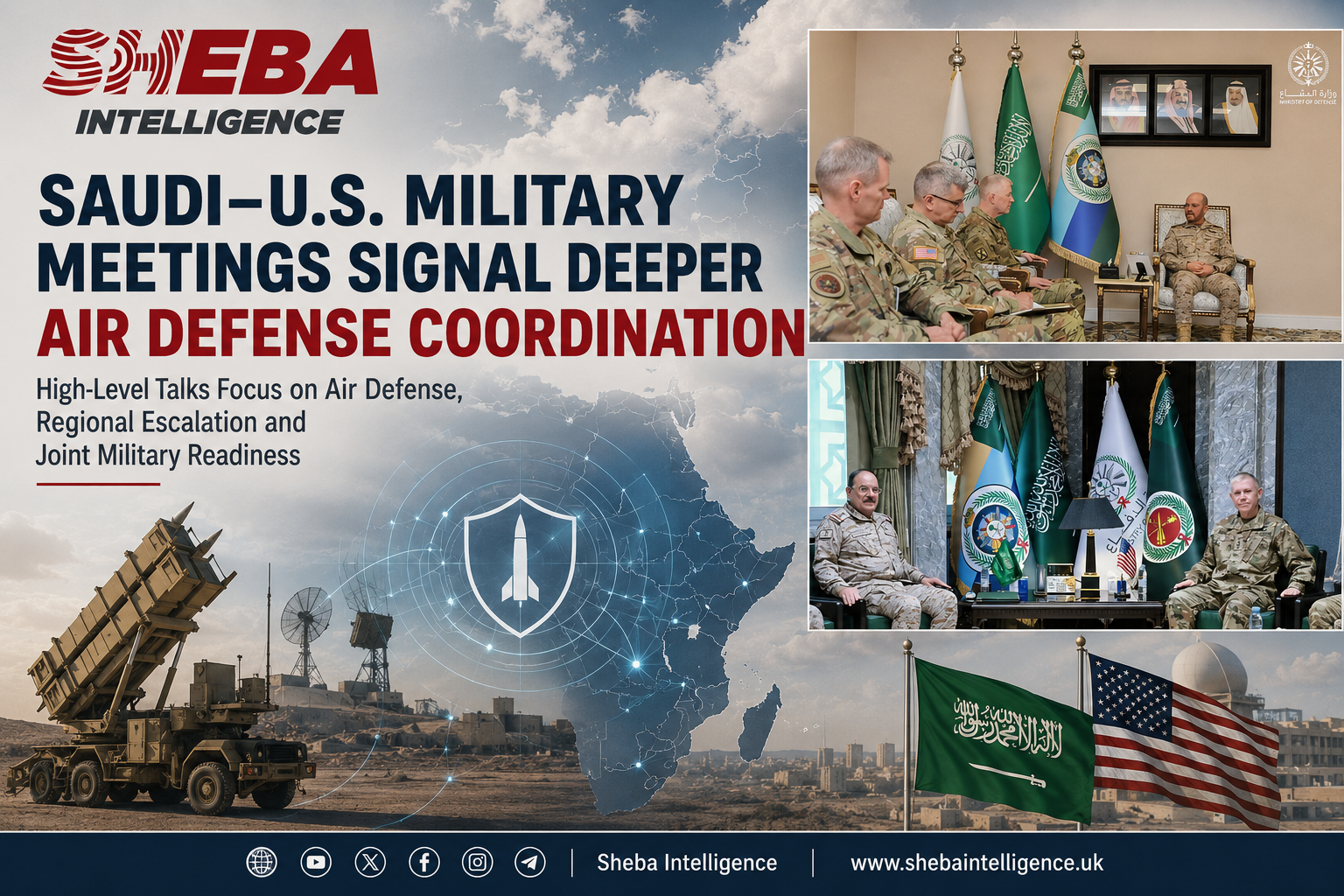
Recent meetings between senior Saudi military commanders and the Deputy Commander of the U.S. Central Command (CENTCOM) indicate an intensified phase of operational military coordination, with air and missile defense emerging as a central priority amid rising regional tensions.
On July 15, Chief of the General Staff Gen. Fayyad Al-Ruwaili met CENTCOM Deputy Commander Lt. Gen. Patrick Frank in Riyadh. According to the Saudi Ministry of Defense, the two sides reviewed military relations and discussed ways to strengthen defense cooperation and expand joint coordination.
The military dialogue continued on July 19, when Commander of the Royal Saudi Air Defense Forces Lt. Gen. Mazyad Al-Amro held separate talks with Lt. Gen. Patrick Frank. The Saudi Ministry of Defense said the meeting focused on enhancing cooperation and coordination between the two militaries.
The sequence of these meetings is notable. Rather than limiting discussions to senior military leadership, the U.S. delegation proceeded to engage directly with the commander responsible for Saudi Arabia's air defense network. This progression suggests that current bilateral coordination extends beyond strategic consultation to operational planning in one of the Kingdom's most critical defense sectors.
For Sheba Intelligence, the meeting with the Royal Saudi Air Defense Forces commander is particularly significant. It points to increased attention on integrated air and missile defense, including early-warning capabilities, command-and-control coordination, and preparedness against ballistic missiles, cruise missiles, and unmanned aerial systems.
The timing of the meetings coincides with heightened regional instability driven by continued Iranian military activity, persistent Houthi missile and drone capabilities in Yemen, and growing concerns over the security of Saudi territory, critical infrastructure, and strategic maritime routes in the Red Sea.
While neither Riyadh nor Washington announced new military deployments or operational decisions, the focus of the discussions suggests that both sides are strengthening defensive readiness rather than preparing for immediate offensive action. The emphasis appears to be on improving interoperability, accelerating information sharing, and ensuring rapid joint responses to evolving aerial threats.
The repeated engagement of CENTCOM's deputy commander with both the Saudi Chief of the General Staff and the Commander of the Royal Saudi Air Defense Forces reflects a structured approach to military coordination. The meetings addressed both the broader operational framework and the specialized requirements of protecting Saudi airspace.
Taken together, the discussions underscore a shared assessment that the regional threat environment is becoming more complex. For Sheba Intelligence, the direct engagement with Saudi air defense leadership signals that missile and drone threats have become one of the primary drivers of current Saudi–U.S. military cooperation.