
Airstrikes Hit Houthi Drone and Communications Facilities in Hodeidah and Kamaran
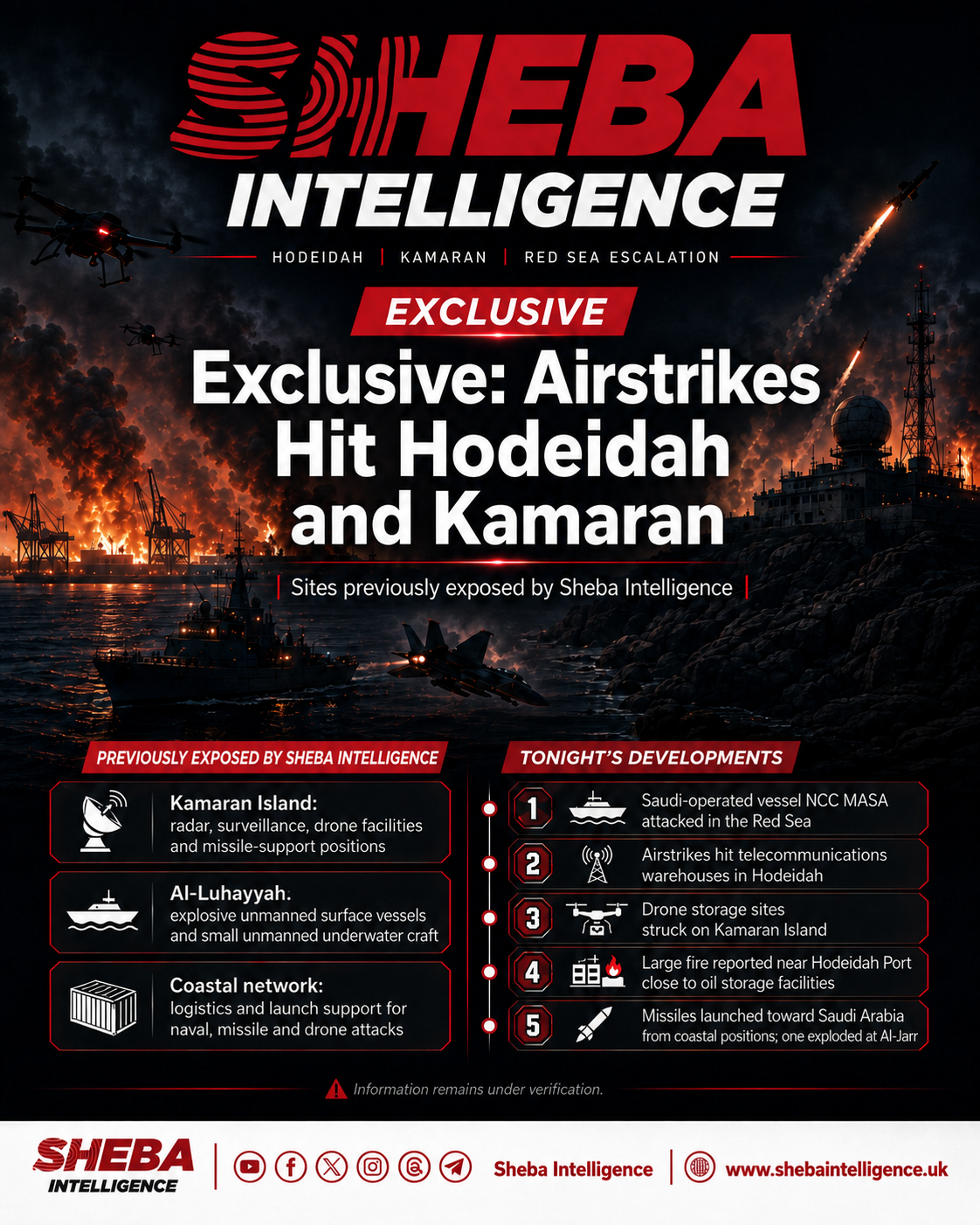
The strikes targeted sites linked to Houthi drone, missile and maritime operations within a coastal network previously exposed by Sheba Intelligence.
Sheba Intelligence | July 24, 2026
A wave of airstrikes targeted Houthi-controlled facilities in Hodeidah and on Kamaran Island on Friday night, hitting sites linked to communications, drone operations and maritime attacks.
According to information obtained by Sheba Intelligence, the strikes hit warehouses belonging to the Public Telecommunications Corporation in Hodeidah, as well as facilities used to store and prepare unmanned aerial vehicles.
Additional strikes targeted drone storage sites on Kamaran Island, which the Houthis have used to launch drones against vessels operating in the Red Sea.
A separate site near Hodeidah Port was also hit. A large fire was seen rising from an area close to oil storage facilities, although the precise nature of the target and the full extent of the damage remain unclear.
The strikes followed a Houthi missile attack toward Saudi Arabia from several coastal positions. Sheba Intelligence sources said at least three missiles were launched from the Al-Jarr coastal area, while one failed during launch and exploded at the site, exposing an active missile position.
Aircraft continued flying over Hodeidah after the strikes, indicating that the aerial operation remained active and that additional locations may have been under surveillance.
The latest developments closely match earlier exclusive reporting by Sheba Intelligence on Houthi preparations for coordinated naval, missile and drone operations along Yemen’s western coast.
Sheba Intelligence previously revealed that the group had transferred three explosive unmanned surface vessels and small unmanned underwater craft designed to operate as mobile naval mines to the Al-Luhayyah coastal reserve.
The report also disclosed that Houthi naval forces, the Fifth Military Region, the Coast Guard and military sectors in Hodeidah had been tasked with preparing launch sites, providing logistical support and coordinating attacks against commercial shipping.
It further documented parallel missile-force preparations, including the movement of launch platforms, missiles and operational teams to coastal and inland positions.
In a later exclusive report, Sheba Intelligence revealed that the Houthis had established a permanent military presence on Kamaran Island, deploying radar and surveillance systems, combat boats, explosive unmanned vessels and facilities supporting drone and missile operations.
The group also used mangrove-covered areas on the island’s eastern side to conceal boats, weapons and military equipment from aerial and satellite surveillance.
The reported strikes on Kamaran directly correspond with the infrastructure previously identified by Sheba Intelligence. The targeting of telecommunications warehouses and sites near Hodeidah Port also indicates that the operation extended beyond weapons storage to facilities supporting command, communications and maritime targeting.
The escalation came after the Saudi-operated vessel NCC MASA was attacked in the Red Sea. Saudi authorities said the vessel sustained minor hull damage, while its crew remained safe and the ship continued toward its destination.
The incident followed attacks against the Saudi-linked vessels ENCELIA and LAYLA, after the Houthis announced a maritime blockade targeting Saudi-linked shipping.
Information regarding casualties, the full extent of the damage and the party responsible for the strikes remains under verification.