Exclusive | Two Foreign Military Experts Die After Sanaa Drone Strikes, Three Others in Intensive Care
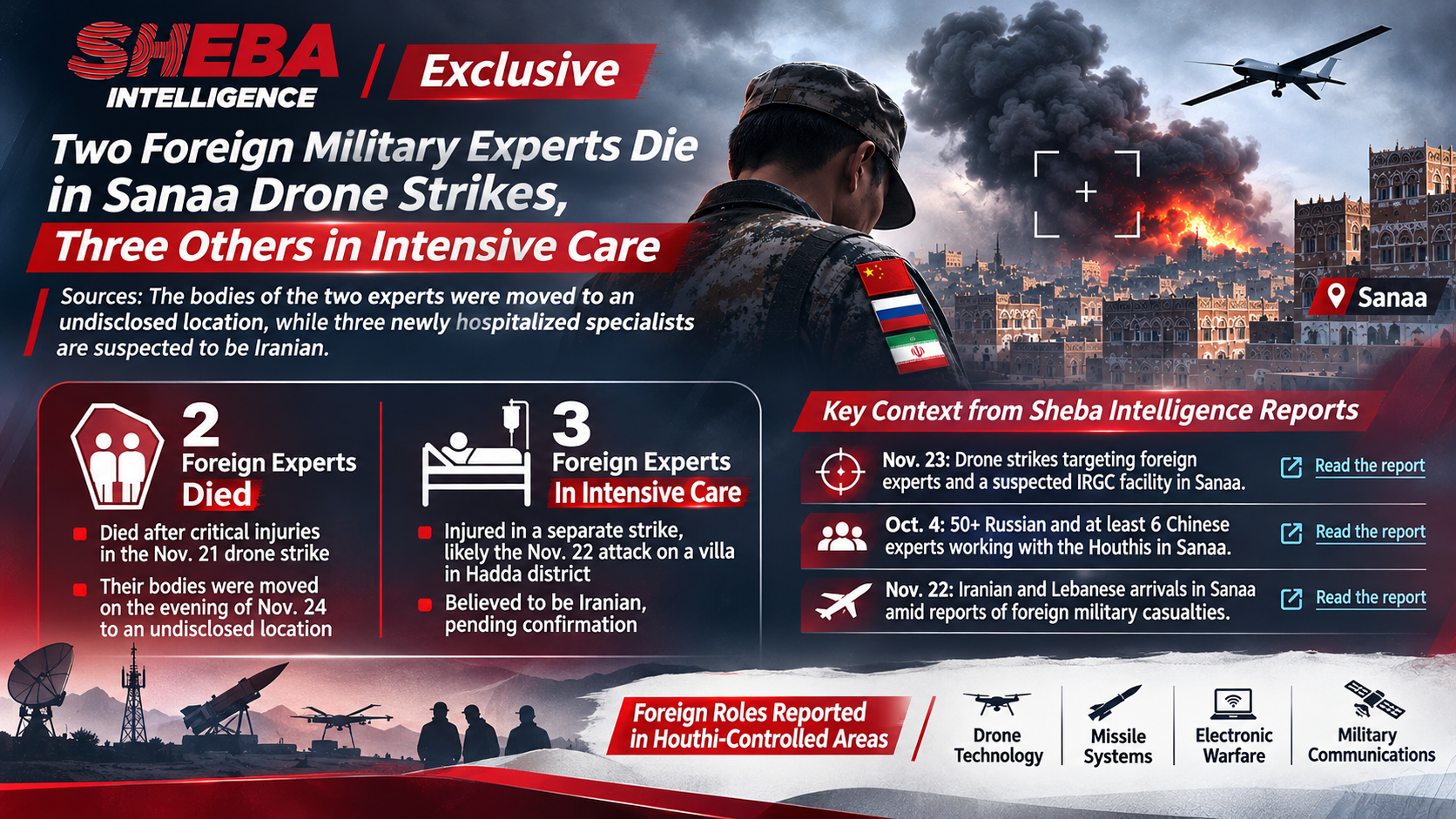
Sheba Intelligence sources say the bodies of two foreign specialists were moved to an undisclosed location, while three newly hospitalized experts are suspected to be Iranian.
Two foreign military experts working with the Houthis have died from injuries sustained in a drone strike in Yemen's capital, Sanaa, while three other foreign specialists have been admitted to intensive care following a separate suspected attack, intelligence sources told Sheba Intelligence.
According to the sources, the two experts died after receiving treatment in the intensive care unit of a hospital in Sanaa. Their bodies were reportedly transferred on the evening of November 24 to an undisclosed location, with no information available about who arranged the transfer or their final destination.
One of the deceased experts was believed to be Chinese and had suffered a life-threatening head injury after being struck by shrapnel during a November 21 drone strike targeting a facility housing foreign military specialists working with the Houthis.
The second expert sustained severe facial injuries that initially prevented identification. Sources had suggested he might be Russian or Iranian, although his nationality remains unconfirmed.
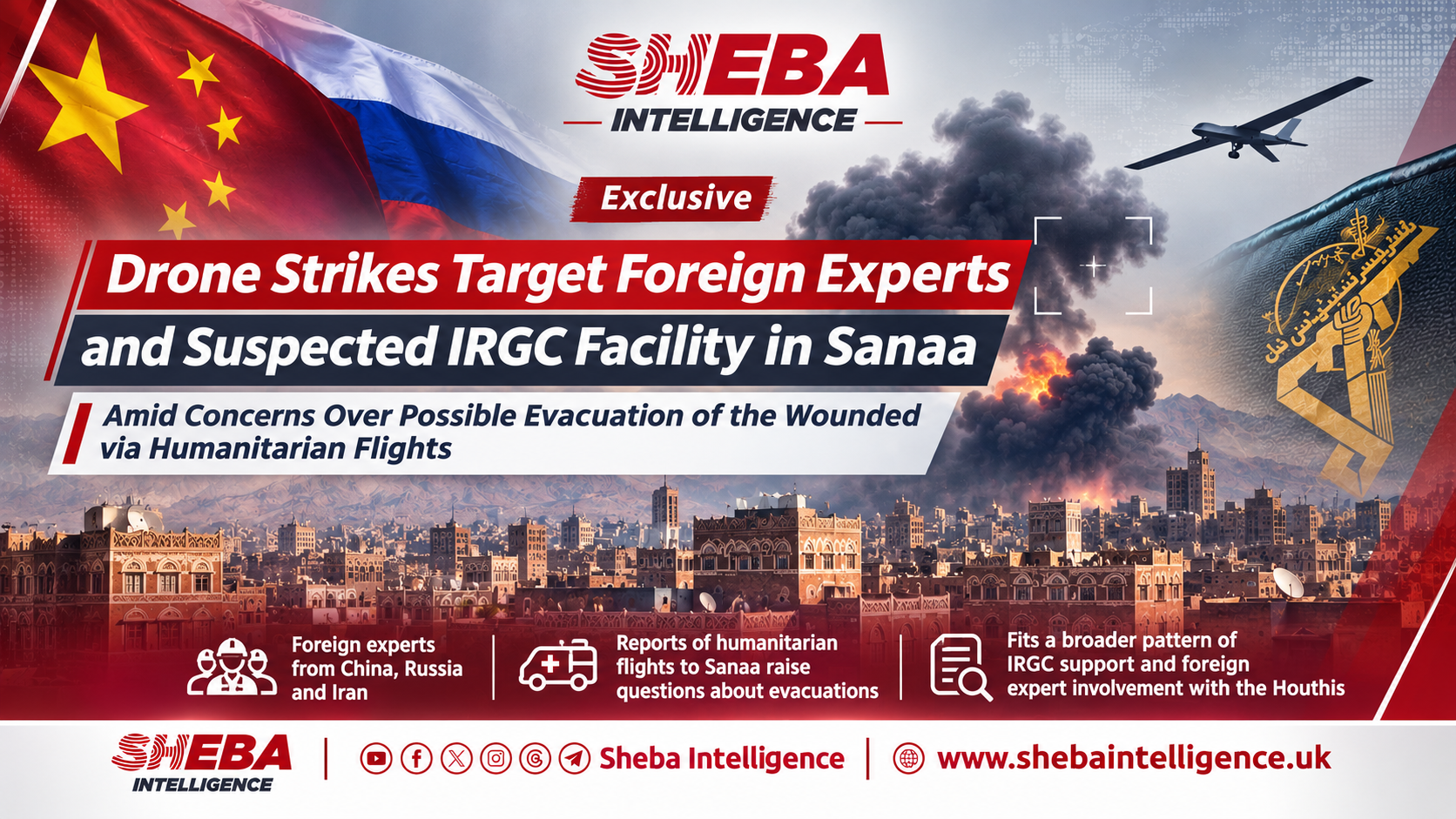
The deaths follow a November 23 investigation by Sheba Intelligence, which first revealed the targeting of foreign military experts in Sanaa and raised questions about possible medical evacuations.
Three More Foreign Experts in Intensive Care
In a separate development, sources reported that three additional foreign military experts had been admitted to intensive care at a hospital in Sanaa.
Preliminary information suggests their injuries may be linked to the November 22 drone strike on a villa in the Hadda district of southern Sanaa, suspected of being used by personnel associated with Iran's Islamic Revolutionary Guard Corps (IRGC).
The sources said the three wounded individuals are believed to be foreign nationals, possibly Iranian, but their identities and nationalities have not yet been established. The extent of their injuries and their current medical conditions remain unclear.
As previously reported in Sheba Intelligence's investigation into the two drone strikes, the Iranian ambassador may have been expected at the Hadda villa, although subsequent information indicated he might not have arrived before the attack.
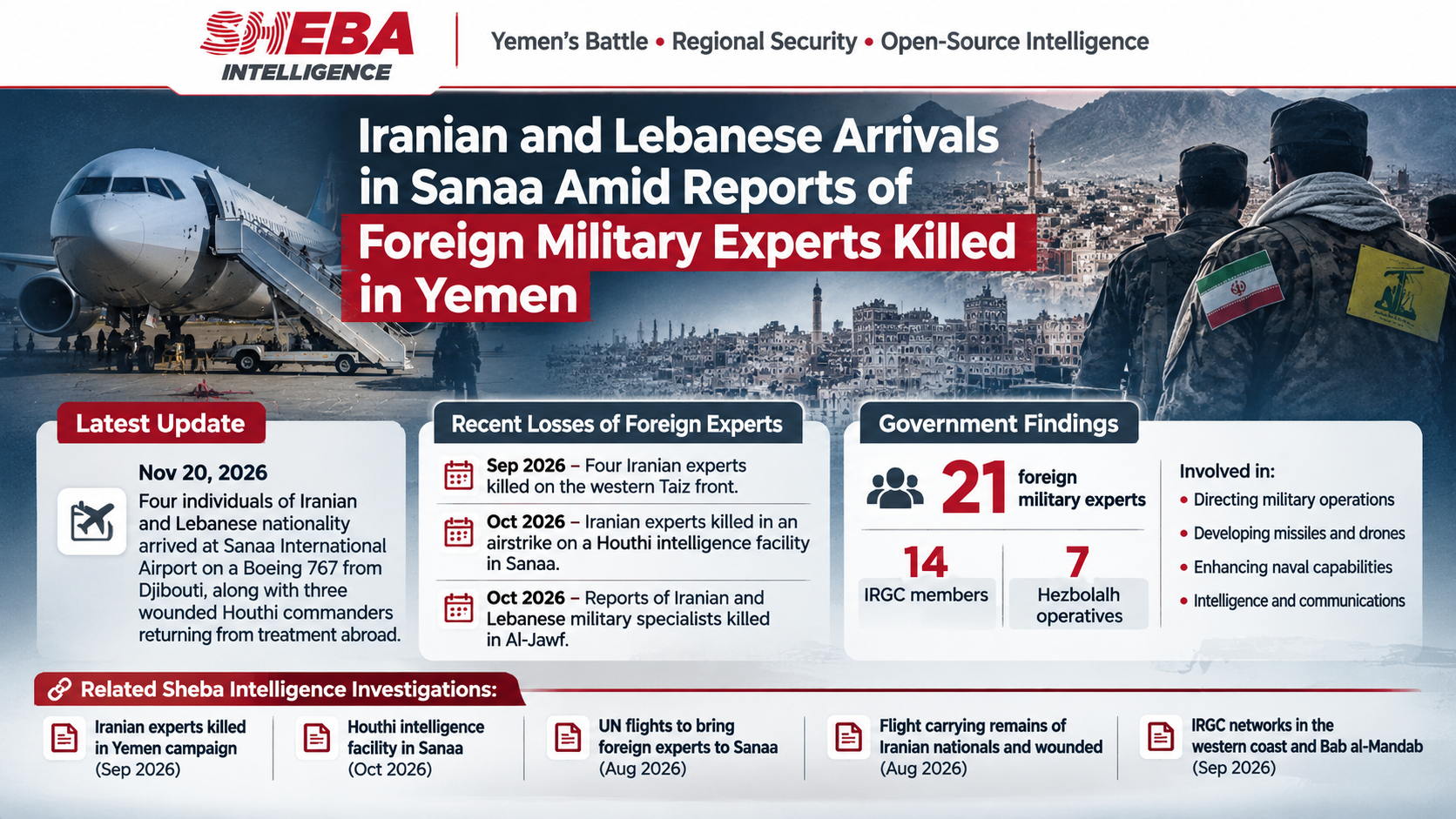
The suspected Iranian connection comes amid earlier findings about foreign military involvement in Houthi operations. In November, Yemen's Ministry of Interior said it had identified 21 foreign military specialists, including 14 members of the IRGC and seven Hezbollah operatives. These findings were also covered in a Sheba Intelligence report on Iranian and Lebanese arrivals in Sanaa.
Russian and Chinese Military Specialists
The reported death of an expert believed to be Chinese is consistent with previous intelligence accounts of foreign specialists operating alongside the Houthis, although it does not establish his nationality.
An October 4 Sheba Intelligence investigation reported estimates indicating that more than 50 Russian specialists and at least six Chinese experts were working with the Houthis in Sanaa.
According to that investigation, Russian specialists were reportedly involved in electronic warfare, counter-drone technologies and military communications, while Chinese experts were linked to drone systems, missile technologies, warhead development and satellite-related capabilities.
The investigation also described facilities allegedly used by foreign experts for residential and operational purposes, suggesting that some personnel may have been operating under academic or technical cover.
Meanwhile, a November 22 Sheba Intelligence report revealed that four Iranian and Lebanese nationals had reportedly arrived in Sanaa aboard a Boeing 767 aircraft from Djibouti on November 20, amid reports of foreign military specialists being killed or wounded.
The same report cited information that three wounded Houthi commanders had returned to Yemen aboard the aircraft after receiving treatment abroad.
Concerns Over Possible Evacuations
The latest deaths and injuries have renewed questions about the movement of foreign military personnel and the possible evacuation of wounded specialists from Houthi-controlled territory.
An earlier Sheba Intelligence investigation citing Yemeni researcher Dr. Abdulqader Al-Kharraz detailed allegations that the Houthis had used UN-operated flights to transport foreign specialists, sensitive equipment and wounded personnel.
The investigation also cited claims that an aircraft had previously departed Sanaa carrying the remains of Iranian nationals and wounded Iranian and Houthi personnel. Those allegations were not independently verified.
While the medical evacuation of wounded military personnel is not inherently unlawful under international humanitarian law, questions remain about whether humanitarian aviation arrangements could be used for purposes outside their authorized medical missions.
There is currently no verified evidence linking the five casualties reported in the latest strikes to any specific humanitarian flight or establishing misconduct by humanitarian organizations.
The identities and nationalities of the two deceased experts and three newly hospitalized specialists have not been independently verified. The connection between the three injured experts and the November 22 strike also remains preliminary, while responsibility for the attacks has not been independently established.