Somali President’s Remarks Against UAE Spark Political Dispute, Raising Concerns Over Red Sea and Horn of Africa Security
Criticism from former intelligence chiefs and Somali officials exposes domestic divisions over Mogadishu’s handling of tensions with Abu Dhabi, amid growing regional competition for ports and military influence in the Gulf of Aden.
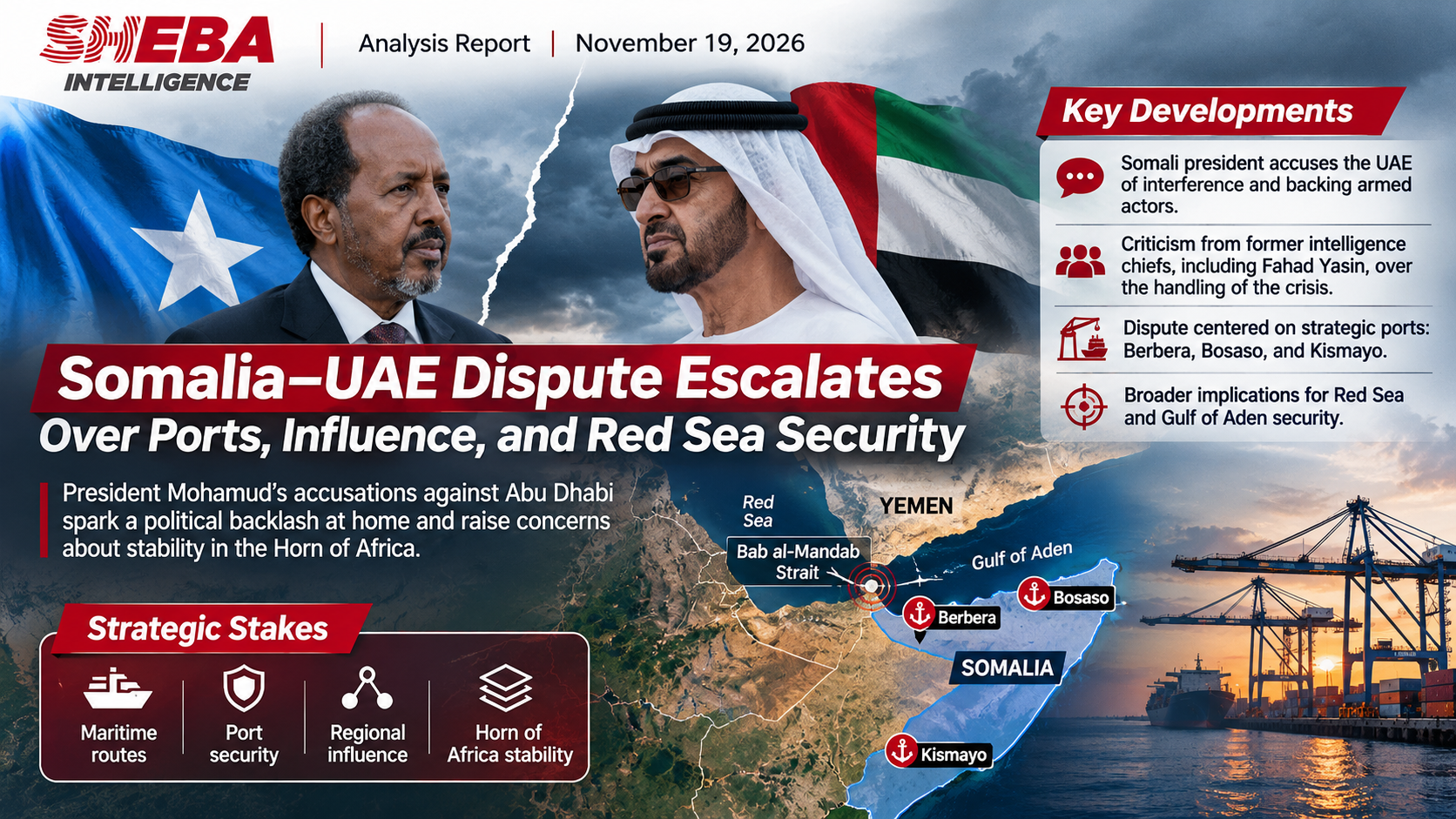
Political and media tensions between Somalia and the United Arab Emirates have escalated following a televised address by Somali President Hassan Sheikh Mohamud on Tuesday, November 17, in which he accused Abu Dhabi of interfering in Somalia’s internal affairs and supporting political and military actors operating outside the authority of the federal government.
The speech also drew criticism from prominent Somali figures, including former intelligence chiefs, exposing domestic divisions over the president’s approach to relations with the UAE.
The escalation comes amid longstanding disputes over port management, foreign military presence, and relations between Somalia’s federal government and regional administrations.
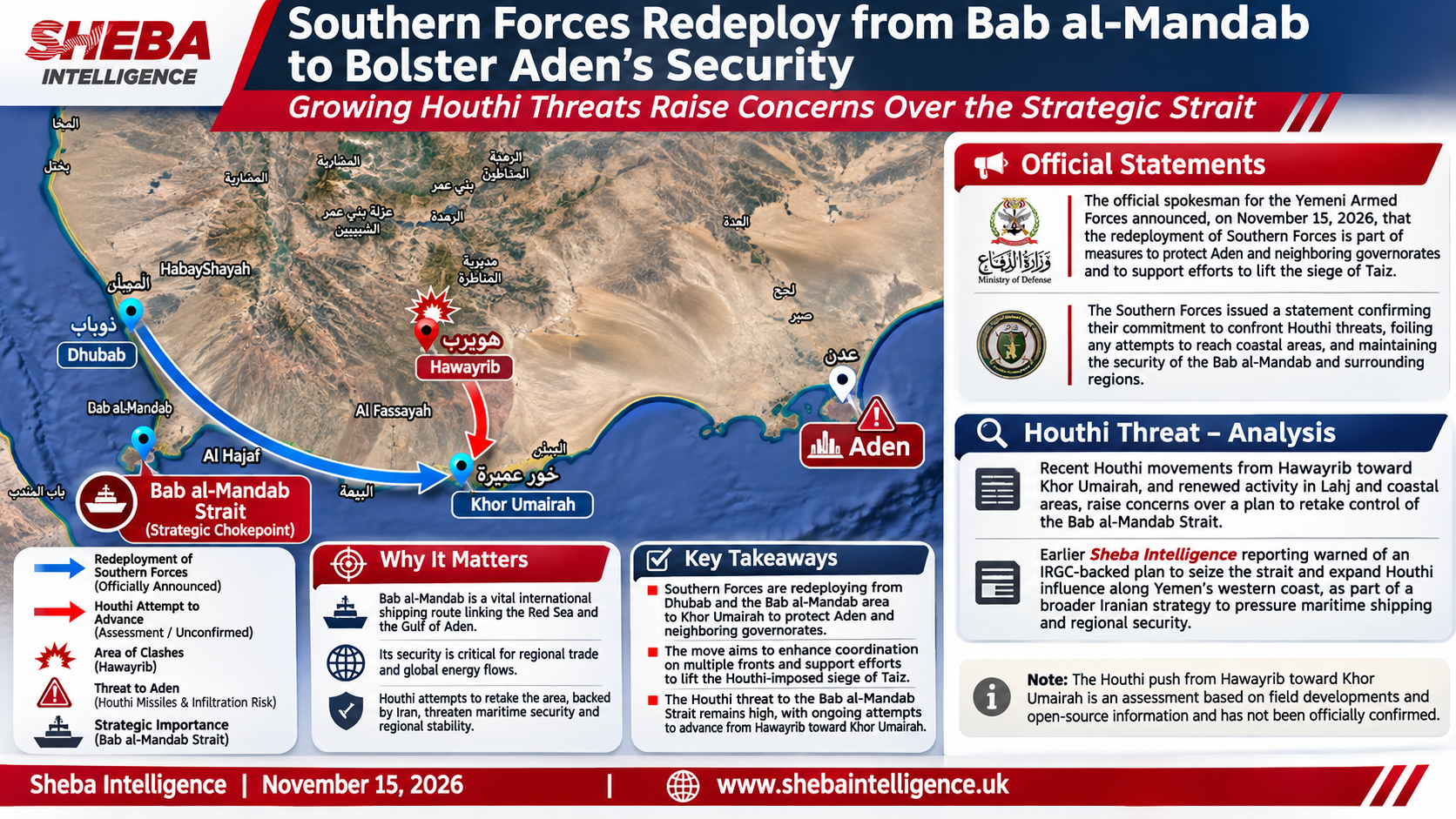
These disagreements carry security implications beyond bilateral relations, given Somalia’s strategic position along the Gulf of Aden, close to the Bab al-Mandab Strait and the Red Sea.
Allegations of Interference and Control Over Strategic Ports
President Mohamud accused the UAE of establishing military bases, supporting armed formations outside Somalia’s national security institutions, and concluding agreements with regional administrations concerning the ports of Berbera, Bosaso, and Kismayo without federal government approval.
He also accused Abu Dhabi of fueling political divisions and criticized its position regarding Israel’s recognition of Somaliland.
The Somali president further alleged that the port of Berbera had been used in January 2026 to transport a Yemeni separatist leader without Mogadishu’s authorization.
Despite the accusations, Mohamud expressed his government's willingness to restore relations with the UAE on the basis of mutual respect, sovereignty, and equality.
His remarks followed an earlier decision by Somalia to cancel bilateral agreements covering security, defense cooperation, and port operations.
The UAE has previously denied allegations of interference in Somalia’s internal affairs.
Domestic Opposition and Criticism from Former Intelligence Chiefs
The controversy has extended beyond the diplomatic confrontation with Abu Dhabi.
Fahad Yasin, former director of Somalia’s National Intelligence and Security Agency (NISA), criticized President Mohamud’s address, arguing that it lacked practical measures to address the country's political crisis.
Yasin accused the president of using national sovereignty concerns to divert attention from constitutional and electoral disputes.
He also questioned what he described as a contradiction between the president’s sharp accusations against the UAE and his stated willingness to engage in dialogue with Abu Dhabi.
According to Yasin, reaching domestic political agreements should take priority over escalating external disputes.
The criticism follows earlier statements by Abdullahi Mohamed Ali Sanbalolshe, another former intelligence chief, who said he had held meetings in the UAE with leaders from Puntland, Jubaland, and Somaliland to discuss forming a political alliance opposed to President Mohamud.
There has been no independent confirmation that the meetings resulted in a formal political agreement.
Nevertheless, the statements highlight the broader divisions between Somalia’s presidency, opposition figures, and regional administrations.
Red Sea Security at the Center of the Dispute
The confrontation carries significant regional implications because Somalia’s ports form part of a strategic maritime network connecting the Indian Ocean and Gulf of Aden to the Bab al-Mandab Strait and the Red Sea.
Berbera, located on the southern coast of the Gulf of Aden, occupies a strategically important position near shipping routes leading toward Bab al-Mandab.
Bosaso, meanwhile, provides another important maritime location along the Somali coast facing Yemen.
Commercial and security influence over these ports can affect regional transportation networks, maritime logistics, and supply routes, particularly amid continuing security threats linked to the conflict in Yemen and wider regional tensions.
A March 2026 analysis by the French Institute for Middle East Studies (FMES) identified competition over Somaliland as part of a broader struggle over Red Sea security arrangements, involving overlapping interests among the UAE, Israel, Ethiopia, Türkiye, Egypt, and other regional actors.
Yemen and Bab al-Mandab in the Background
The Yemeni dimension emerged directly in President Mohamud’s address when he accused the UAE of using Berbera to transport a Yemeni separatist leader in January 2026.
The inclusion of this allegation highlights the political and security connections between developments in Yemen and Somalia.
The Yemeni and Somali coastlines face each other across the Gulf of Aden, forming interconnected maritime environments where military and security developments on either side can affect regional shipping routes.
A prolonged dispute over the use of ports, airports, and military facilities could complicate regional coordination on maritime surveillance, anti-smuggling operations, and counter-piracy efforts.
Such risks could become more significant if tensions affect existing security cooperation between Somalia’s federal government and regional administrations.
However, these remain potential consequences rather than evidence that the current diplomatic dispute has already disrupted international shipping.
Regional Rivalries and Political Divisions
The escalation comes amid growing involvement by regional powers in the Horn of Africa, particularly Türkiye, Egypt, the UAE, and Ethiopia.
Their interests intersect over maritime access, port security, Somalia’s territorial integrity, and broader Red Sea security arrangements.
Somalia’s federal government now faces two interconnected challenges: managing its dispute with Abu Dhabi over sovereignty and security agreements, while addressing domestic divisions concerning constitutional arrangements, elections, and the distribution of authority between federal and regional institutions.
Meanwhile, criticism from Somali opposition figures demonstrates that disagreements over the UAE’s regional policies do not necessarily translate into support for the president’s handling of the confrontation.
This distinction helps explain why the dispute has expanded from foreign relations into domestic debates over government legitimacy, constitutional authority, and political consensus.
The developments suggest that the Somalia–UAE confrontation has become part of a wider political and security landscape in the Horn of Africa, where competition for strategic ports and military influence intersects with domestic conflicts and shifting regional power dynamics.
The trajectory of the crisis will depend on whether Mogadishu and Abu Dhabi can contain their differences and whether the confrontation begins to affect existing security arrangements at Somali ports.
Any such developments would carry implications for maritime security in the Gulf of Aden and Red Sea, particularly as military tensions continue along Yemen’s opposite coastline.