Exclusive | Houthis Seized Advanced Maritime Surveillance Systems During Their Offensive on Mocha
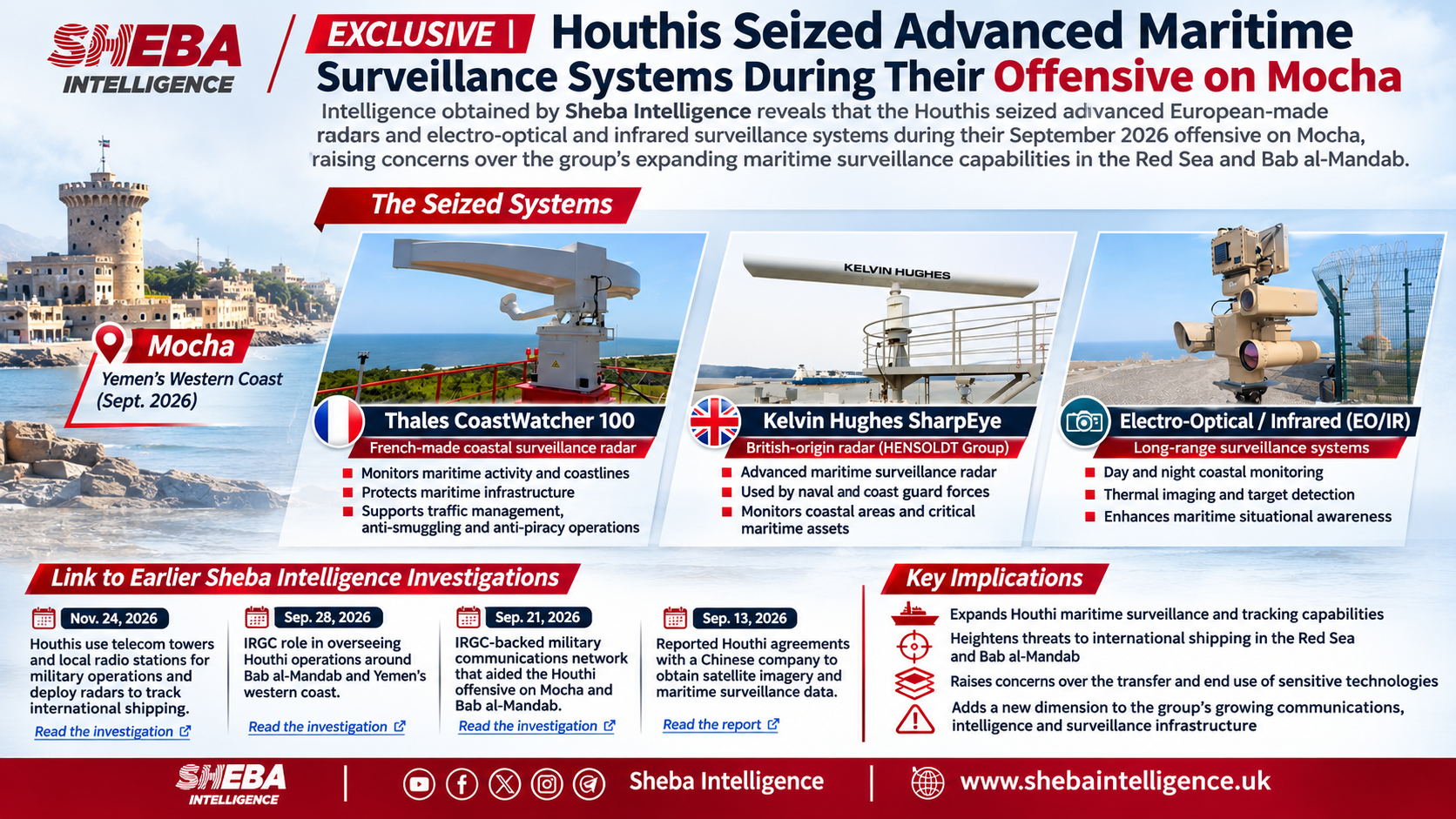
Intelligence obtained by Sheba Intelligence reveals that the Houthis seized advanced European-made radars and electro-optical and infrared surveillance systems during their September 2026 offensive on Mocha, raising concerns over the group’s expanding maritime surveillance capabilities in the Red Sea and Bab al-Mandab Strait.
Intelligence obtained by Sheba Intelligence reveals that the Houthis seized several advanced radar and maritime surveillance systems during their offensive on the western Yemeni coastal city of Mocha in September 2026.
The seized equipment included radar systems of French and British origin, alongside electro-optical and infrared surveillance systems designed for coastal monitoring and the protection of maritime infrastructure.
The findings are particularly significant in light of previous investigations by Sheba Intelligence into the Houthis’ exploitation of telecommunications towers and local radio stations for military purposes, the deployment of maritime radars and the development of communications infrastructure with Iranian support.
Advanced Maritime Surveillance Systems
According to the intelligence obtained by Sheba Intelligence, the equipment seized by the Houthis in Mocha included the following systems:
Thales CoastWatcher 100
Developed by the French defense and technology company Thales, the CoastWatcher 100 is an advanced coastal surveillance radar designed to monitor maritime activity, protect coastal infrastructure and support maritime traffic management.
Its original applications include combating piracy, smuggling and illegal fishing, monitoring suspicious maritime activities, and supporting search-and-rescue operations.
Kelvin Hughes SharpEye
Originally developed in Britain, the Kelvin Hughes SharpEye radar belongs to a product family associated with Germany’s HENSOLDT group, which specializes in defense electronics and sensor technologies.
These radar systems are used by naval forces, coast guards, border security agencies and authorities responsible for maritime surveillance and the protection of critical infrastructure.
Electro-Optical and Infrared Surveillance Systems (EO/IR)
The seized equipment also included advanced electro-optical and infrared surveillance systems designed to monitor coastal areas and critical infrastructure under varying lighting conditions.
Such systems combine visible-light and thermal imaging technologies to enhance maritime surveillance and situational awareness.
The intelligence obtained by Sheba Intelligence did not identify the manufacturer or specific model of these systems.
Maritime Radars, Telecommunications and Local Radio Stations
The latest findings come a day after Sheba Intelligence published an exclusive investigation into the Houthis’ use of telecommunications towers and local radio stations for military operations and their deployment of radars to track international shipping.
The investigation, published on November 24, 2026, revealed the reported exploitation of civilian telecommunications and broadcasting infrastructure for military purposes, alongside the expansion of the group’s maritime surveillance capabilities along Yemen’s western coast.
On September 21, 2026, Sheba Intelligence published another investigation into a military communications network developed with support from Iran’s Islamic Revolutionary Guard Corps (IRGC).
Intelligence obtained at the time indicated that the network had entered operational service during the Houthi offensive on Mocha and Bab al-Mandab.
Earlier, on September 13, Sheba Intelligence revealed reported Houthi agreements with a Chinese company to obtain satellite imagery and maritime surveillance data through Iranian mediation.
The platform could not independently establish whether the reported satellite services had become operational.
On September 28, Sheba Intelligence published a further exclusive investigation into the IRGC’s role in overseeing Houthi operations around Bab al-Mandab and Yemen’s western coast, revealing additional information about Iranian involvement in the group’s military and intelligence activities.
The latest intelligence concerning the seizure of advanced maritime surveillance equipment in Mocha adds a new dimension to these earlier investigations.
However, it remains unclear whether the equipment seized in Mocha includes the same radar systems identified in the November 24 investigation.
Growing Threats to Red Sea Security
The reported seizure of advanced maritime surveillance equipment by the Houthis raises concerns over the group’s expanding technological and intelligence capabilities, particularly given its history of attacks against commercial vessels in the Red Sea and Gulf of Aden.
The findings also raise questions about the fate of defense and security equipment supplied to Yemen during the conflict, the effectiveness of end-use monitoring mechanisms and the risks of sensitive technologies falling into the hands of non-state armed groups.
The current technical condition of the equipment seized in Mocha and whether it has entered operational service remain unclear.
Taken together, the intelligence obtained by Sheba Intelligence suggests that the threats facing the Red Sea and Bab al-Mandab Strait extend beyond missiles, drones and explosive-laden boats to encompass the Houthis’ expanding capabilities in telecommunications, intelligence gathering and maritime surveillance.