Exclusive: After Bab al-Mandab, Iran’s IRGC Approves Shifting the War Toward Yemen’s Oil and Gas Regions
Intelligence sources reveal Iranian-Houthi understandings on advancing the group's economic agenda amid military escalation in oil and gas exploration areas between Marib and Al-Jawf.
Intelligence sources told Sheba Intelligence that Iran’s Islamic Revolutionary Guard Corps (IRGC) has approved the implementation of the second phase of the Houthis’ military plan, which focuses on Yemen’s oil and gas resources in Marib and Shabwa governorates—a top priority for the group.
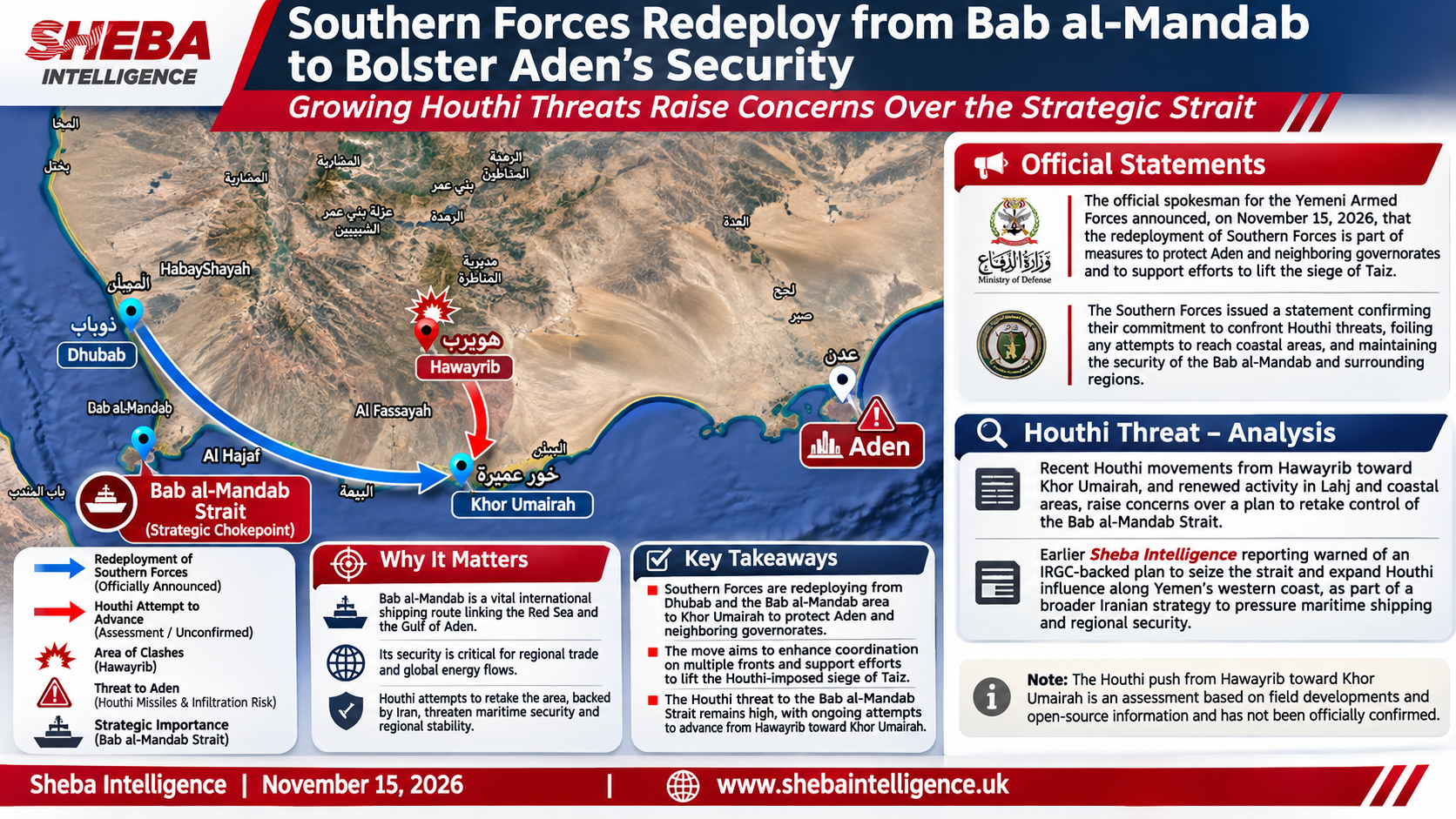
The sources explained that the IRGC had previously prioritized the first phase, aimed at securing control of Bab al-Mandab, viewing the international maritime chokepoint as a strategic bargaining chip in Tehran’s confrontation with the United States.
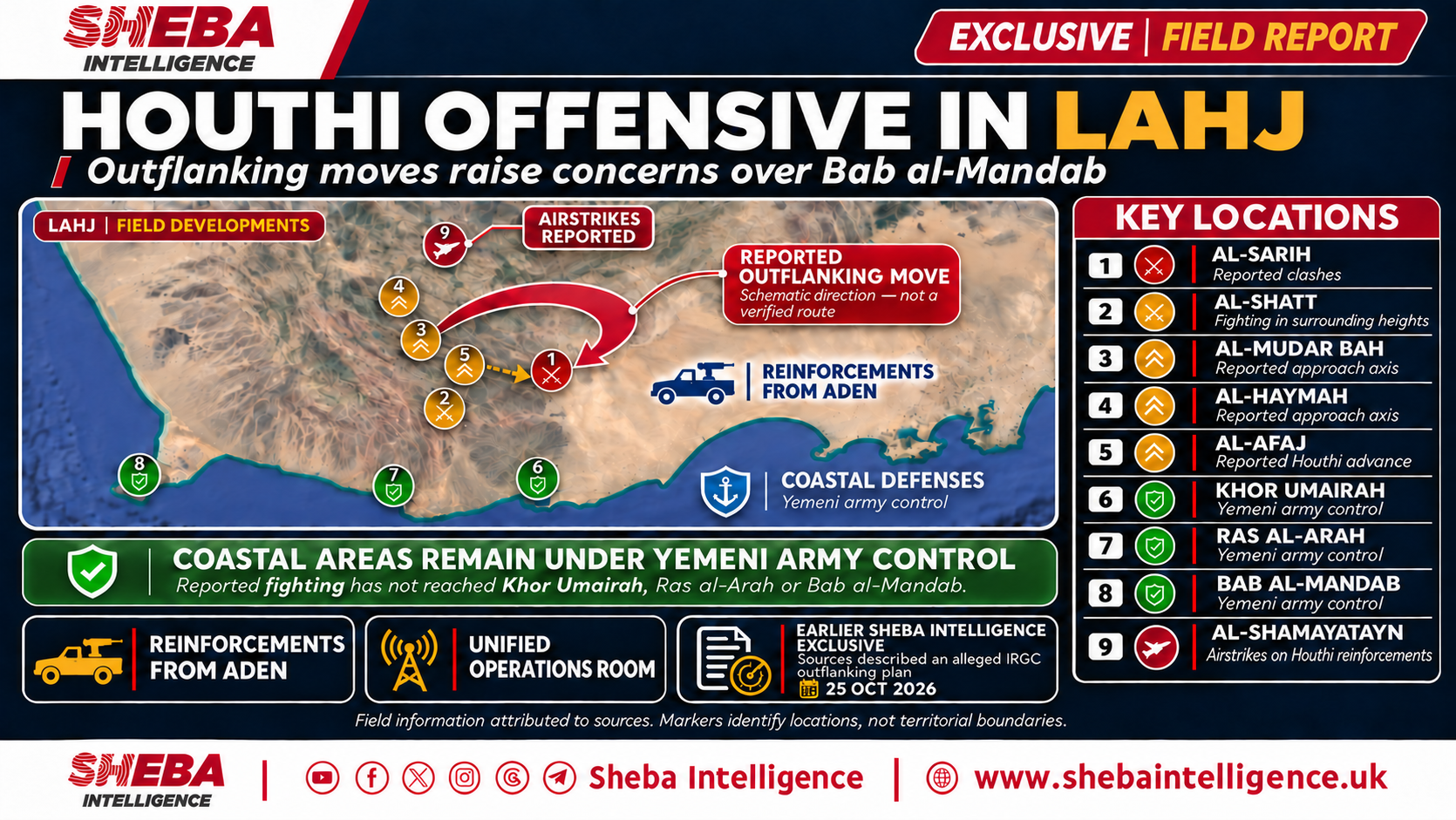
According to the sources, Iranian approval for the second phase followed Houthi battlefield advances, backed by the IRGC, in rural Taiz and parts of Lahj governorate as part of an Iranian plan to seize control of Bab al-Mandab and consolidate influence over its surrounding areas.
While the IRGC has prioritized geopolitical objectives, the Houthis seek to advance their economic agenda by securing direct revenues from oil and gas production and overcoming what the group describes as an “economic blockade.”
Military Escalation in Oil and Gas Exploration Areas
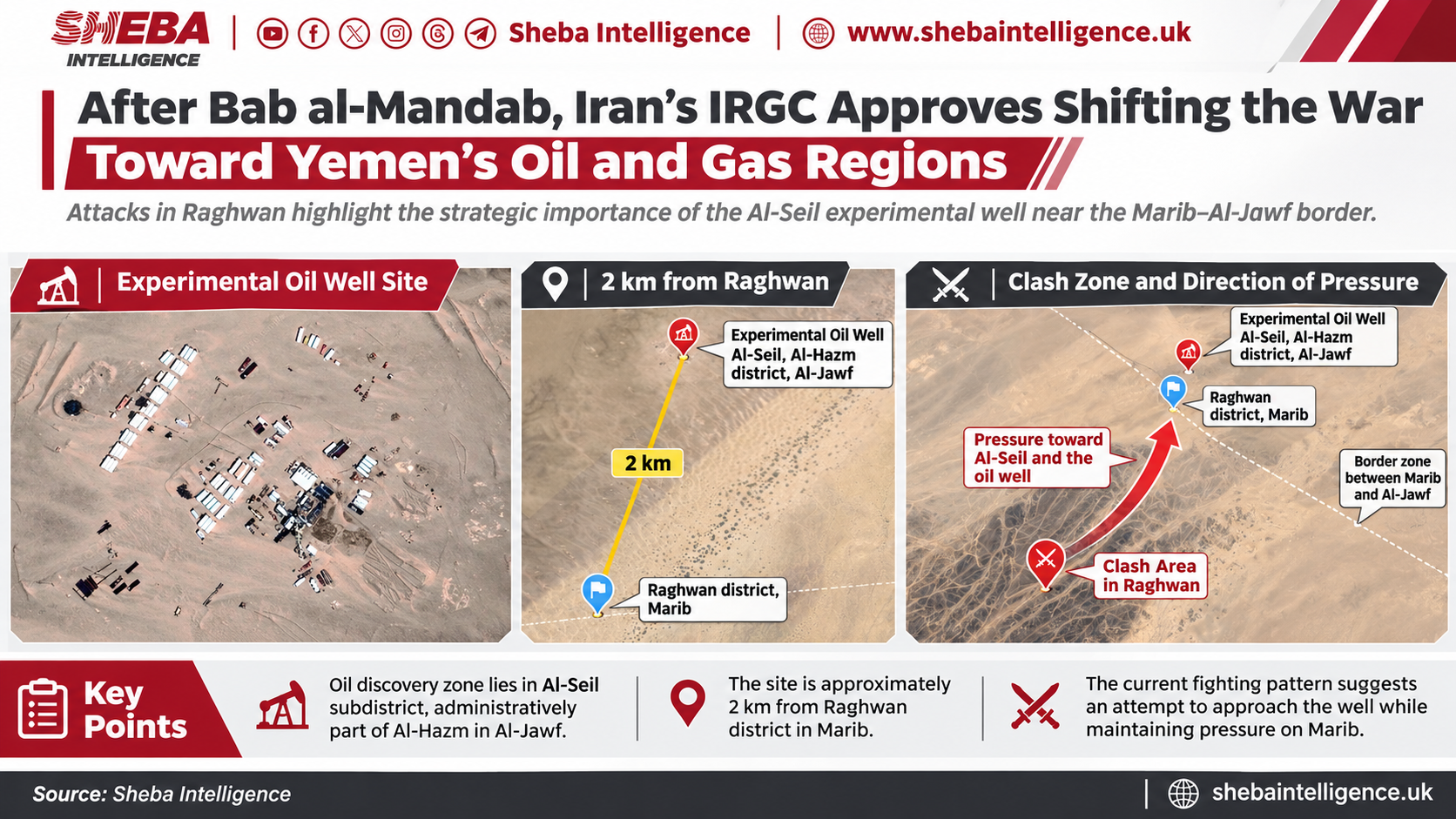
Coinciding with intelligence reports of Iranian approval, field sources told Sheba Intelligence that the Houthis have been carrying out sustained attacks on Raghwan district in Marib governorate since the morning of Monday, November 16, facing resistance from government forces and local tribes.
The Houthis are seeking to advance toward the border area between Marib and Al-Jawf governorates, which holds particular economic significance due to oil and gas exploration activities conducted there before the outbreak of the war.
The sources said government forces and local tribes have successfully defended the area since 2020, despite battlefield setbacks in other areas north and south of Raghwan and repeated Houthi attempts to advance.
According to the sources, the latest military escalation is consistent with intelligence indicating that the Houthis are seeking control over energy resources to secure financial revenues that could support their ambitions to extend control across Yemen and compel recognition of their de facto authority.
The sources warned that the fighting could expand and threaten vital oil and gas infrastructure in Marib, including the Safer facilities, which could face attempts at seizure or missile attacks in the context of the conflict over oil resources.
Pre-War Oil and Gas Exploration
Yemeni media archives show that oil and gas exploration activities were conducted in the area between Marib and Al-Jawf governorates during the tenure of former Prime Minister Mohammed Salem Basindawa.
On March 3, 2014, the Safer Exploration and Production Operations Company disclosed preliminary exploration resultsin Al-Jawf governorate, including the ignition of a gas flare and production tests yielding approximately six million cubic feet of natural gas per day. The commercial viability of the discoveries had yet to be established at the time.
On March 13 of the same year, Deputy Minister of Oil and Minerals Shawqi Al-Mikhlafi confirmed that exploratory drilling was continuing in Al-Jawf governorate following successful initial tests at one of the wells.
In September 2013, local authorities in Al-Jawf had announced oil exploration activities and arrangements to bring in additional exploration companies, in coordination with local tribes.
Local sources told Sheba Intelligence that a Russian company had participated in exploration activities at the time and that Yemen’s state television had broadcast footage of one of the production tests.
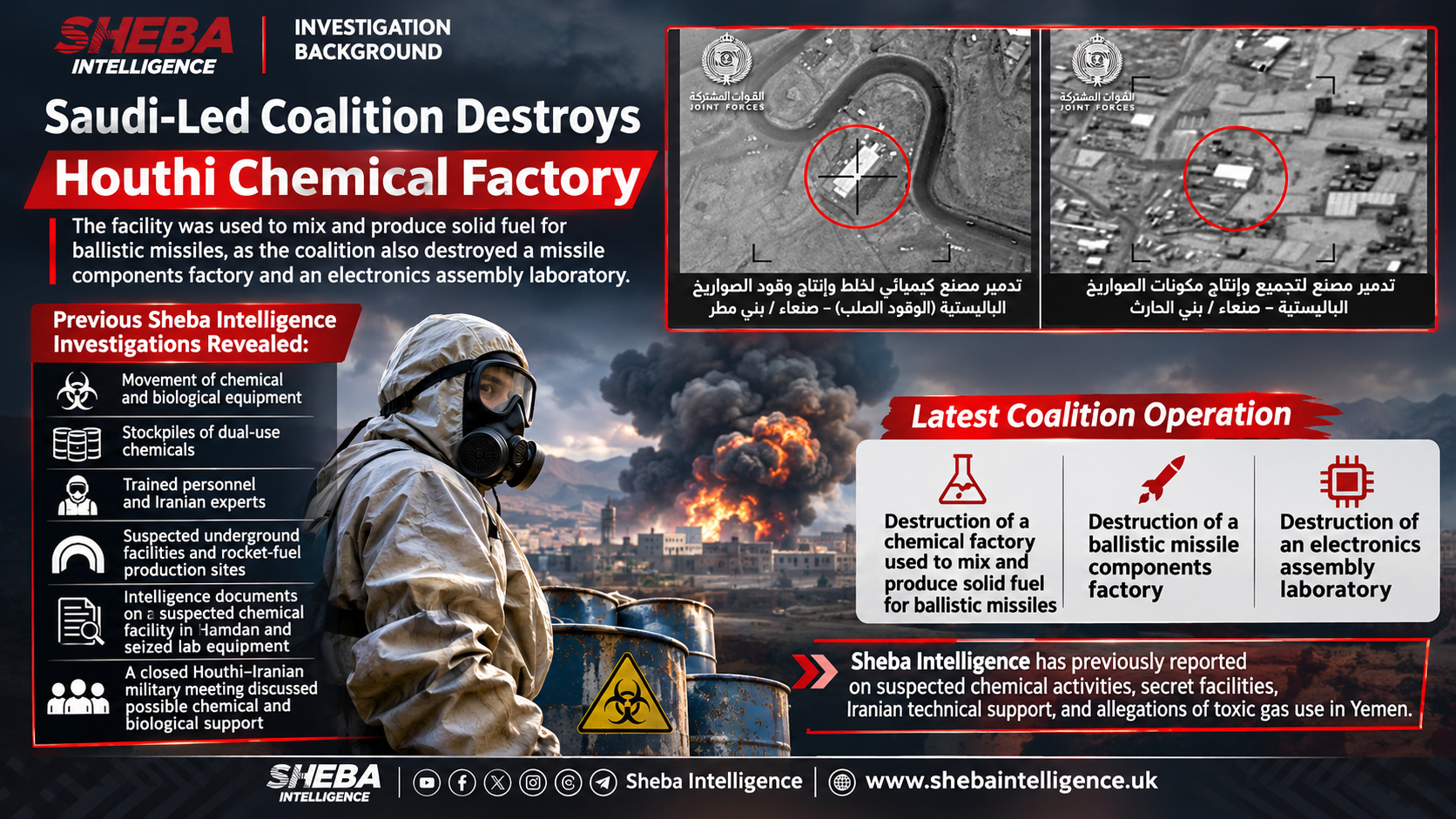
The sources assess that the Houthis may seek foreign expertise in the oil sector. Sheba Intelligence previously reported on the presence of Russian and Chinese experts in Houthi-controlled areas, working in technical and military fields. However, there is no confirmed information regarding their involvement in the oil sector.
Tribes Between Marib and Al-Jawf
Raghwan district in Marib governorate borders Al-Hazm district in Al-Jawf governorate. The area maintains close social and tribal ties with the Dahm tribes and is home to several tribal communities, including Bani Marwan and Bani Shaddad.
According to local sources, the area of oil discoveries lies in Al-Sayl subdistrict, which is administratively part of Al-Hazm district, just two kilometers from Raghwan district, within the border area between Marib and Al-Jawf governorates. The Houthis have repeatedly attempted to seize control of the area, but their efforts have been thwarted by tribal resistance.
At the outset of the war, members of these tribes signed a tribal pact affirming their commitment to remaining on their land and defending their territories. The pact included strict tribal provisions prohibiting those who abandoned their land from returning.
Tribal fighters have continued to fight alongside government forces despite years of missile attacks and Katyusha rocket bombardment targeting their areas.
Shabwa in the Houthis’ Economic Plan
According to intelligence sources, the Houthis’ economic objectives are not limited to Marib but also extend to Shabwa governorate, which holds strategic significance as both an oil-producing region and an energy export hub.
Shabwa is one of Yemen’s principal oil-producing governorates, with four major oil-producing blocks: Jannah, Al-Uqlah, Damis and West Ayad, in addition to untapped natural gas reserves.
The governorate also hosts the Balhaf liquefied natural gas (LNG) facility, designed to process and export natural gas from Marib, and the Al-Nushaymah oil export terminal in the Bir Ali area, which has been used to export crude oil produced in Shabwa, Marib and parts of Hadramawt.
These assets make Shabwa one of the main pillars of Yemen’s petroleum economy.
The Houthis view Marib and Shabwa as the heart of Yemen’s oil and gas wealth and regard control over these resources as a means of strengthening their financial capacity, consolidating their authority and gaining additional leverage in future political negotiations.
From Maritime Influence to Economic Resources
In an exclusive report published on July 19, 2026, Sheba Intelligence revealed three priority fronts in the Iranian-backed Houthi escalation plan: Taiz and Bab al-Mandab, Marib and Al-Jawf, and the border with Saudi Arabia.
On August 20, 2026, Sheba Intelligence revealed that senior IRGC commander Abdul Reza Shahlai had met with Houthi military leaders to discuss Tehran’s plan to seize Marib’s oil resources and control Bab al-Mandab.
Following Houthi advances in areas surrounding Bab al-Mandab and the subsequent announcement by southern forces of their redeployment from coastal areas, the group appears to be moving toward implementing the second phase of the plan, focused on oil and gas resources.
The new intelligence reveals two complementary tracks in the relationship between the IRGC and the Houthis: a geopolitical track serving Iranian interests in international maritime corridors, and an economic track aimed at securing the group’s access to Yemen’s natural resources.
While Tehran seeks to leverage Yemen’s strategic location in its international confrontation, the Houthis seek to exploit the country’s oil and gas wealth to consolidate their political and economic power.