Why the Houthis Are Concentrating Their Attacks on Mocha?
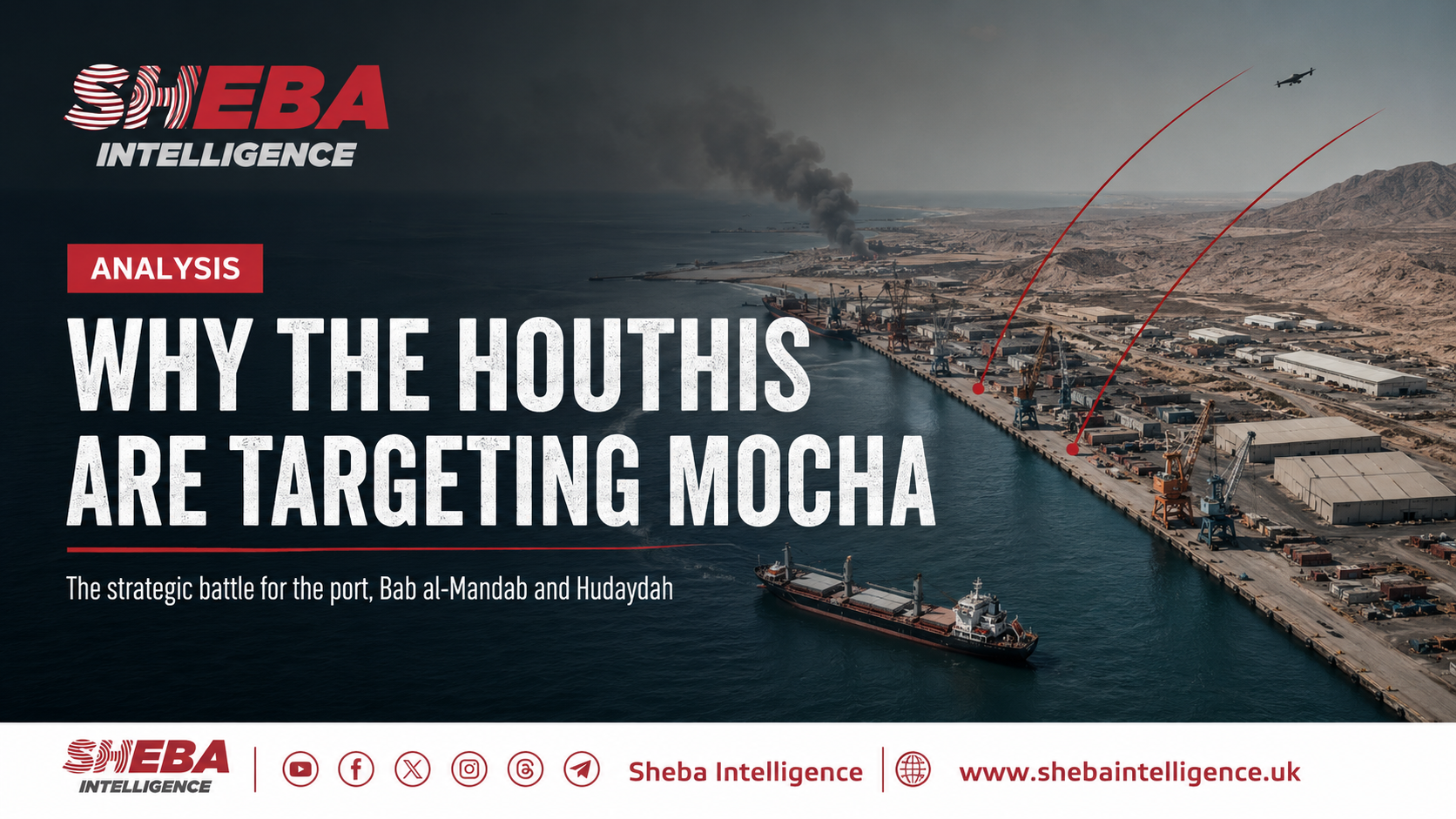
The Houthis have targeted Mocha and its port for a fourth consecutive day, most recently firing two ballistic missiles at the port’s marine berth.
The campaign began on August 9 with a large-scale missile and drone assault on military positions, civilian areas and infrastructure. Seven people were killed and 30 wounded, while air defences intercepted 11 drones. Further strikes followed before the escalation extended into Bab al-Mandab, where the commercial vessel Tihamah was attacked, killing four crew members and two Yemeni rescuers.
The sequence shows a coordinated campaign covering Mocha, its port and the surrounding maritime corridor.
A gateway to Bab al-Mandab
Mocha is the closest government-controlled military centre and major port to Bab al-Mandab. Its location allows the Houthis to connect attacks on government forces with their maritime operations in the southern Red Sea.
Targeting both the port and nearby vessels expands the perceived danger zone around the strait. This increases insurance and shipping costs, complicates commercial navigation and discourages vessels from using the route. Daily traffic through Bab al-Mandab has already fallen from approximately 50 vessels to 32 amid the escalating threat.
Disrupting military supplies
Mocha port could serve as a key entry point for weapons, equipment and ammunition in the event of a government offensive. Repeated strikes on its berths and infrastructure are designed to weaken that logistical role before any operation begins.
The attacks also warn regional actors against supplying government forces by sea. Any vessel carrying military equipment to Mocha could be placed within the Houthis’ declared targeting scope.
At the same time, repeated missile and drone waves force government forces to devote air defences, reserves and engineering resources to protecting and repairing the port instead of preparing for offensive operations.
A defensive operation for Hudaydah
Pressure on Mocha is closely connected to the defence of Hudaydah. The city provides a natural rear base for any northward operation by West Coast forces, including advances from Hays, At Tuhayta and other southern Hudaydah fronts.
By attacking Mocha, the Houthis are targeting the potential launch and supply base of such an offensive. The campaign is intended to disrupt preparations, restrict maritime resupply and keep West Coast forces focused on defending their own headquarters and infrastructure.
Hudaydah is both one of the Houthis’ most important assets and one of their most exposed positions. It provides a strategic Red Sea outlet, economic resources and infrastructure supporting missile, drone and maritime operations.
Unlike the mountainous strongholds of Saada and Sanaa, Hudaydah lies across open coastal terrain and faces active government positions to the south. Losing it would deprive the Houthis of a vital maritime gateway, restrict their access to supplies and weaken their ability to threaten international shipping.
Testing government cohesion
Concentrating fire on Mocha also places sustained pressure on one component of the government’s military structure. It consumes defensive resources and tests whether other formations will reinforce the West Coast or remain focused on their own fronts.
Simultaneous pressure around Marib, Al-Dhalea and Shabwa further limits the government’s ability to shift forces and air-defence systems. The pattern combines concentrated attacks on Mocha with continuing threats elsewhere, complicating any attempt to organise a unified offensive.