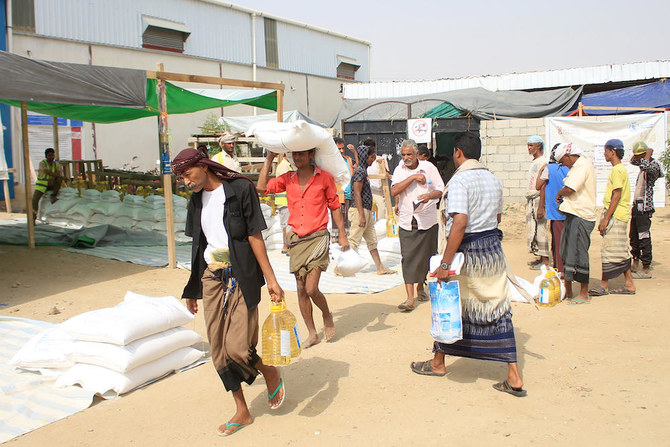
One hundred eighty-eight humanitarian organizations, including several UN agencies, issued a joint statement today, warning that 18.2 million people require help after nine years of war Yemen has been seeing.
The appeal came one day ahead of a meeting of high-ranking EU officials in Brussels to discuss the aid program for Yemen, which is considered one of the worst humanitarian crises in the world.
"Economic decline, deteriorating public services and infrastructure, and displacement induced by conflict and climate-related disasters continue to drive the humanitarian crisis," the statement said.
It added, "Rising food insecurity, the risk of increasing malnutrition rates - particularly among pregnant and lactating women, older people and children - and the spread of cholera during the current rainy season pose threats to communities across the country."
Yemen's civil began in 2015 between the Houthi group and the Yemeni government, and it became more violent after the Saudi-led Arab coalition led a military intervention in support of the Yemeni government against the Iran-backed Houthis who took over power by force of weapons.
Hundreds of thousands have died in the fighting or from indirect causes such as a lack of food, and over 4 million people have been displaced.
Though the country has been witnessing little improvements in humanitarian conditions following the UN-brokered truce, significant humanitarian needs cannot be addressed without adequate funding.
According to the joint statement of the local and international humanitarian organizations operating in Yemen, only $435 million of the $2.7 billion called for in Yemen's 2024 Humanitarian Response Plan requirement has been raised.
The organizations appealed to donors to urgently address existing funding gaps and provide sustainable support to enhance resilience and reduce aid dependency.
The joint statement warned that inaction would have catastrophic consequences for the lives of Yemeni women, children and men, and the halt of lifesaving programs will directly affect the lives of millions who depend on humanitarian assistance and protection services for survival.