Yemen Rejects Iranian Mediation Between Saudi Arabia and Houthis: Tehran Is a Party to the War, Not a Mediator
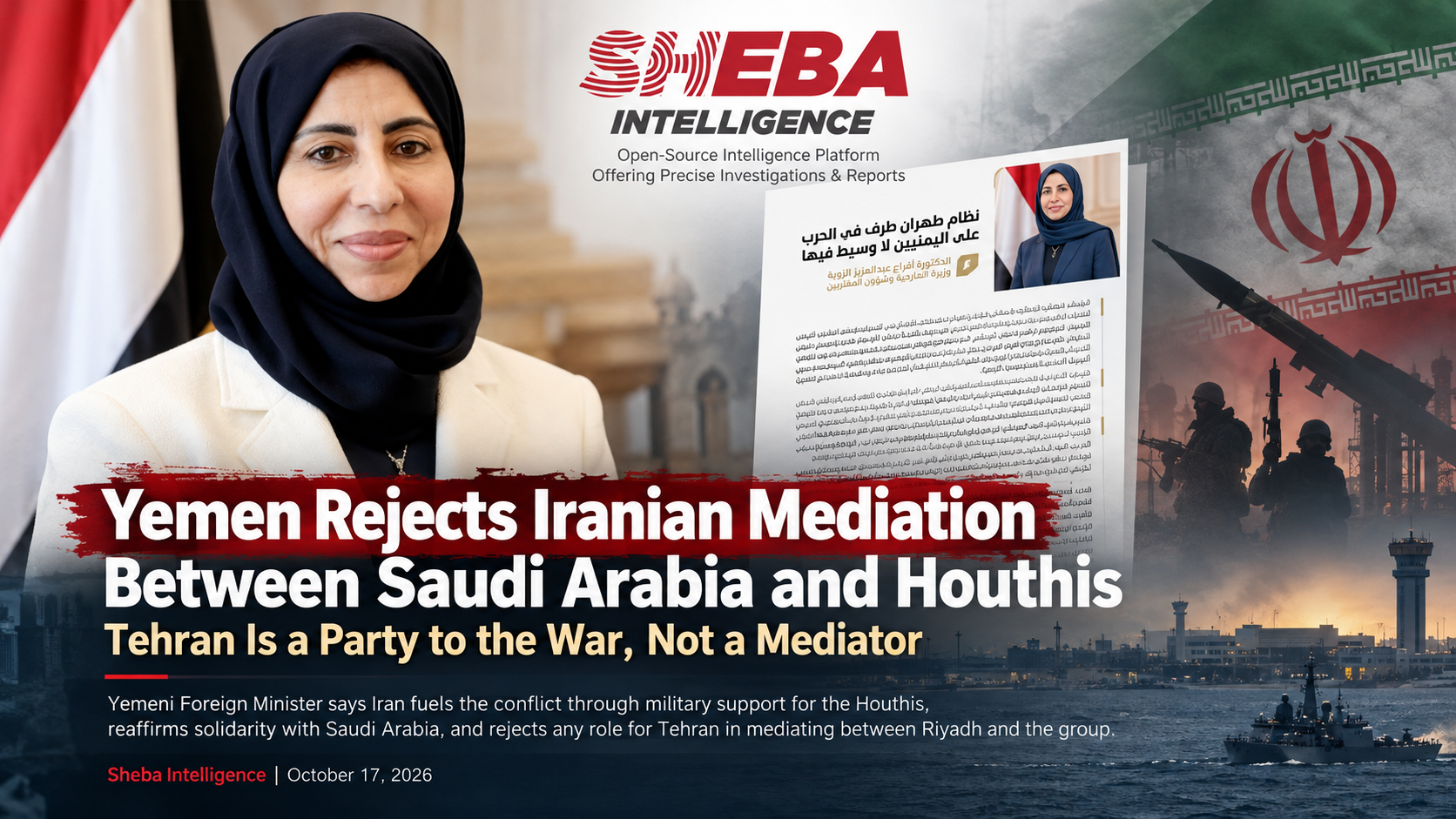
Yemen’s Foreign Ministry rejects Iran’s offer to mediate between Riyadh and the Houthis, accusing Tehran of fueling the conflict through military support for the group amid the ongoing Dawn of Yemen offensive and escalating attacks on Saudi facilities.
The internationally recognized Yemeni government has rejected Iran’s attempt to position itself as a mediator between Saudi Arabia and the Houthi group, arguing that Tehran is directly involved in Yemen’s war and cannot serve as a neutral intermediary in a conflict it is accused of prolonging through military assistance, training, and operational support to the Houthis.
The position was outlined in a statement by Yemen’s Minister of Foreign Affairs and Expatriates, Dr. Afrah Abdulaziz Al-Zouba, in response to Iranian diplomatic overtures offering to facilitate talks between Riyadh and the Houthis.
The exchange comes amid continued Houthi attacks on Saudi airports and civilian infrastructure and the ongoing Yemeni government military offensive, Operation Dawn of Yemen.
Iran Offers Mediation Following Attacks on Saudi Arabia
On October 11, Iranian Foreign Minister Abbas Araghchi held a telephone conversation with his Saudi counterpart, Prince Faisal bin Farhan, during which he expressed Tehran’s willingness to help initiate talks between Riyadh and the Houthis.
Araghchi warned that continued military operations without a political process could further complicate the crisis.
While the Saudi Foreign Ministry stated that the conversation addressed regional escalation and efforts to contain it, the Iranian account specifically highlighted Tehran’s offer to facilitate political dialogue.
On October 16, Iranian Foreign Ministry spokesperson Esmaeil Baghaei reiterated his country’s readiness to help end the confrontation if requested by the parties involved. He also rejected Saudi accusations that Tehran was encouraging Houthi attacks against the Kingdom.
Saudi Deputy Foreign Minister for Public Diplomacy Raed Krimly, meanwhile, accused Iran of encouraging the Houthis to escalate attacks on Saudi Arabia, stressing that Riyadh had not requested Iranian mediation.
Yemen: Iran Is a Party to the Conflict
In her statement, Al-Zouba argued that Iran cannot present itself as a neutral mediator while continuing, according to the Yemeni government, to supply the Houthis with weapons, military expertise, training, and intelligence.
She said such assistance had contributed to prolonging the war and undermining security in Yemen and the wider region.
The minister accused Tehran of using the Houthis as an instrument of regional pressure, including through attacks targeting Saudi Arabia and international maritime navigation.
She emphasized that any political process must respect Yemen’s sovereignty and state institutions rather than establish arrangements that bypass the internationally recognized government or grant an armed group legitimacy at the expense of the state.
Al-Zouba also reaffirmed Yemen’s solidarity with Saudi Arabia, stressing the interconnected security interests of both countries and condemning attacks against civilians and vital infrastructure.
Her statement reflects the Yemeni government’s rejection of the proposed Iranian mediation framework rather than opposition to a political settlement itself. The minister linked any sustainable solution to ending foreign interference, restoring state institutions, and addressing the military threats posed by armed groups.
Dispute Over Who Represents Yemen in Negotiations
Beyond rejecting Iran’s proposed mediation role, the Yemeni statement raises a broader political question concerning the representation of Yemen in any future negotiations.
Al-Zouba objected to Tehran’s use of the term “Yemeni Armed Forces” when referring to the Houthis, arguing that such language effectively presents the group as the legitimate representative of the Yemeni state while disregarding the internationally recognized government.
The minister cited several Iranian actions that she described as violations of Yemeni sovereignty.
These included handing over Yemen’s diplomatic premises in Tehran to a Houthi representative in 2019, appointing an Islamic Revolutionary Guard Corps officer as ambassador to the Houthi authorities in Sana’a in 2020, and operating flights to Sana’a International Airport in July 2026 without the Yemeni government’s authorization.
She also called on the international community to enforce the arms embargo applicable to the Houthis under UN Security Council Resolutions 2216 and 2624, disrupt the group’s financing networks, and hold its supporters accountable.
Political Implications of Iran’s Initiative
The diplomatic dispute comes as Yemeni government forces continue Operation Dawn of Yemen, launched in early October, while Houthi attacks have increasingly targeted Saudi civilian infrastructure.
The timing of Iran’s mediation proposal raises three interconnected political considerations.
First, Tehran’s initiative could provide a diplomatic channel for reducing military escalation with Riyadh at a time when attacks against Saudi territory have intensified.
Second, a negotiation framework centered on Saudi Arabia and the Houthis could preserve the group’s position as a principal negotiating party in future political arrangements, regardless of developments on the battlefield.
Third, the initiative highlights a fundamental disagreement over the nature of the conflict: whether it should be addressed primarily as a Saudi-Houthi confrontation or as a Yemeni war requiring the participation of the country’s internationally recognized state institutions.
Iran presents its proposal as a diplomatic effort to end hostilities and denies responsibility for Houthi attacks. The Yemeni government, however, maintains that Tehran’s alleged continued military support for the group is incompatible with its claim to neutrality.
The Yemeni response therefore carries significance beyond the immediate rejection of Iranian mediation. It challenges the framing of the war as a bilateral confrontation between Riyadh and the Houthis and reasserts that any settlement determining Yemen’s political future must involve the internationally recognized government and respect the country’s sovereignty.
As of October 17, there has been no publicly confirmed Saudi acceptance of Iranian mediation or announcement of a new negotiating process facilitated by Tehran.
Whether the current diplomatic contacts lead to de-escalation will depend on subsequent official positions and developments on the ground.