Exclusive | Houthis Order New Storage Plan for Materials Linked to Chemical and Nerve Agent Research, Source Says
Military procurement, armament and research departments reportedly assigned to develop new storage arrangements using civilian and commercial warehouses, as Yemen warns the UN of chemical weapons proliferation risks.
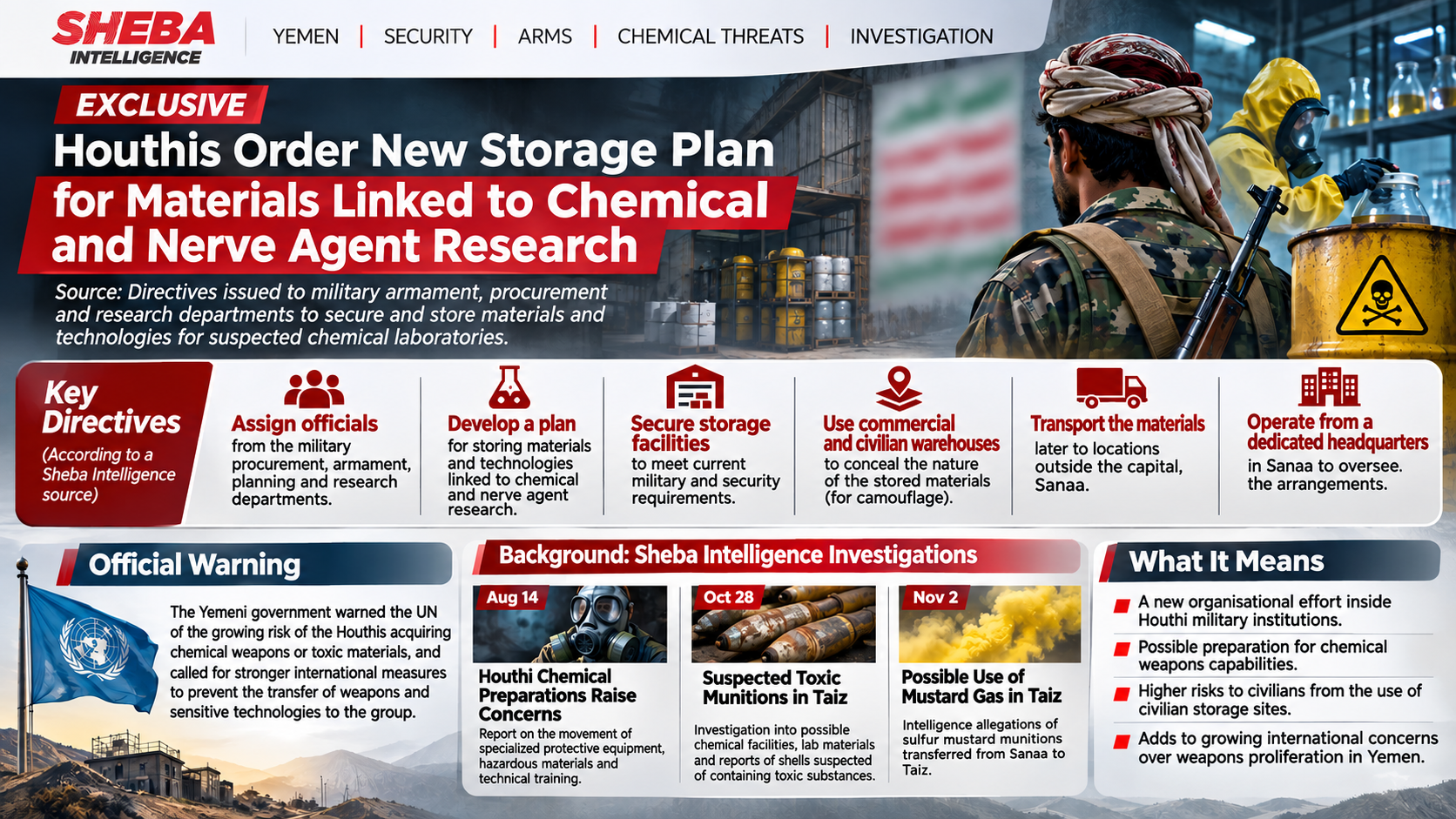
A special source has told Sheba Intelligence that the Houthi movement has issued new directives to officials in its military armament, procurement, planning and research departments to develop a plan for securing and storing materials and technologies allegedly intended for laboratories conducting chemical and nerve agent research.
According to the source, the directives require the designated military officials to develop arrangements compatible with the current military and security situation, including the identification and preparation of storage facilities for materials and equipment associated with the suspected research activities.
The source said specialised officers from the military procurement, armament, planning and research departments had been assigned responsibilities under the new plan.
The information suggests an effort to reorganise the handling and storage of sensitive materials amid the ongoing military escalation in Yemen.
Sheba Intelligence has not independently verified the directives or established whether the reported materials have already been acquired or whether the proposed laboratories are operational.
Civilian and Commercial Warehouses Reportedly Used for Concealment
The source disclosed that the officials involved operate from a dedicated headquarters in Sanaa, while several commercial and civilian warehouses are reportedly being used to conceal the nature of the stored materials.
According to the account, the arrangements include subsequently transferring the materials and technologies to locations outside the Yemeni capital.
The source did not provide independently verifiable evidence establishing the quantities, chemical composition or precise intended use of the materials.
The reported use of civilian and commercial storage facilities raises questions about the possible presence of hazardous military-related materials in civilian environments and the risks such arrangements could pose to nearby populations.
The information represents a new allegation concerning the organisational and logistical arrangements behind suspected Houthi chemical research activities, rather than confirmation that chemical weapons or nerve agents have been produced.
Yemeni Government Warns UN of Chemical Weapons Proliferation
The new intelligence comes as Yemen's internationally recognised government warned the United Nations about the growing danger of advanced weapons and potentially prohibited chemical materials reaching non-state armed groups.
In a statement delivered at the seventh session of the Conference on the Establishment of a Middle East Zone Free of Nuclear Weapons and Other Weapons of Mass Destruction in New York, Yemen's Deputy Permanent Representative to the United Nations, Ambassador Ahmed Al-Sharabi, identified the Houthis as a major example of the threat posed by increasingly sophisticated armed groups.
The government said Iranian military, technical and financial support had enabled the Houthis to acquire and develop ballistic missiles, cruise missiles and attack drones used against civilian targets and infrastructure in Yemen and Saudi Arabia, as well as to threaten international shipping in the Red Sea and Bab al-Mandab Strait.
It expressed particular concern about the possibility of the Houthis obtaining chemical weapons, toxic substances or the technical capabilities necessary to use them.
Yemen called for stronger international cooperation to prevent the transfer of weapons, sensitive technologies and prohibited materials to armed groups, alongside enhanced monitoring, verification and accountability mechanisms.
Previous Sheba Intelligence Investigations
The latest source information follows several investigations published by Sheba Intelligence examining suspected Houthi chemical and biological weapons-related activities.
On August 14, the platform published Houthi Chemical Preparedness Raises Concerns, reporting intelligence allegations concerning the movement of specialised protective, detection, decontamination and containment equipment intended for chemical and biological hazards.
The investigation also described the reported accumulation of dual-use chemicals, the training of technical personnel and an explosion at a warehouse believed to contain some of the materials and equipment.
On October 28, Sheba Intelligence published an exclusive investigation into suspected toxic munitions in Taiz, examining intelligence documents concerning suspected chemical facilities, laboratory materials allegedly seized from Taiz University, historical military stockpiles and foreign technical expertise.
The investigation followed official complaints from Taiz authorities concerning shells suspected of containing toxic substances, with reported incidents of breathing difficulties and loss of consciousness among civilians and fighters.
On November 2, Sheba Intelligence published Intelligence Source: Preliminary Inquiries Point to Houthi Use of Mustard Gas in Taiz.
An intelligence source alleged that suspected sulfur mustard munitions had been transferred from Sanaa to Taiz under the supervision of the Houthi-controlled Security and Intelligence Service.
The same source suggested that the suspected munitions could have originated from older Iraqi military stockpiles allegedly transferred to Yemen before unification in 1990.
The historical transfer allegations and the identity of the suspected substances remain unverified. No publicly available laboratory findings have conclusively confirmed the use of sulfur mustard in the reported Taiz incidents.
The latest source account differs from the earlier reports by describing alleged new administrative assignments and storage arrangements for materials linked to chemical and nerve agent research.
Growing Concerns Over Unconventional Weapons Capabilities
The new allegations emerge amid increasing international attention to the proliferation of advanced military technologies and the possibility of armed groups obtaining materials associated with chemical weapons.
The Yemeni government's warning at the United Nations underscores concerns about the transfer of sensitive materials and military expertise to the Houthis, while Sheba Intelligence's latest source information raises additional questions about the group's reported internal preparations.
If independently substantiated, the alleged use of civilian storage facilities for hazardous military-related materials would warrant particular scrutiny because of the potential risks to surrounding communities.
Establishing the nature and purpose of the reported materials, the status of the suspected research facilities and any connection to prohibited weapons activities would require further documentary and technical verification.