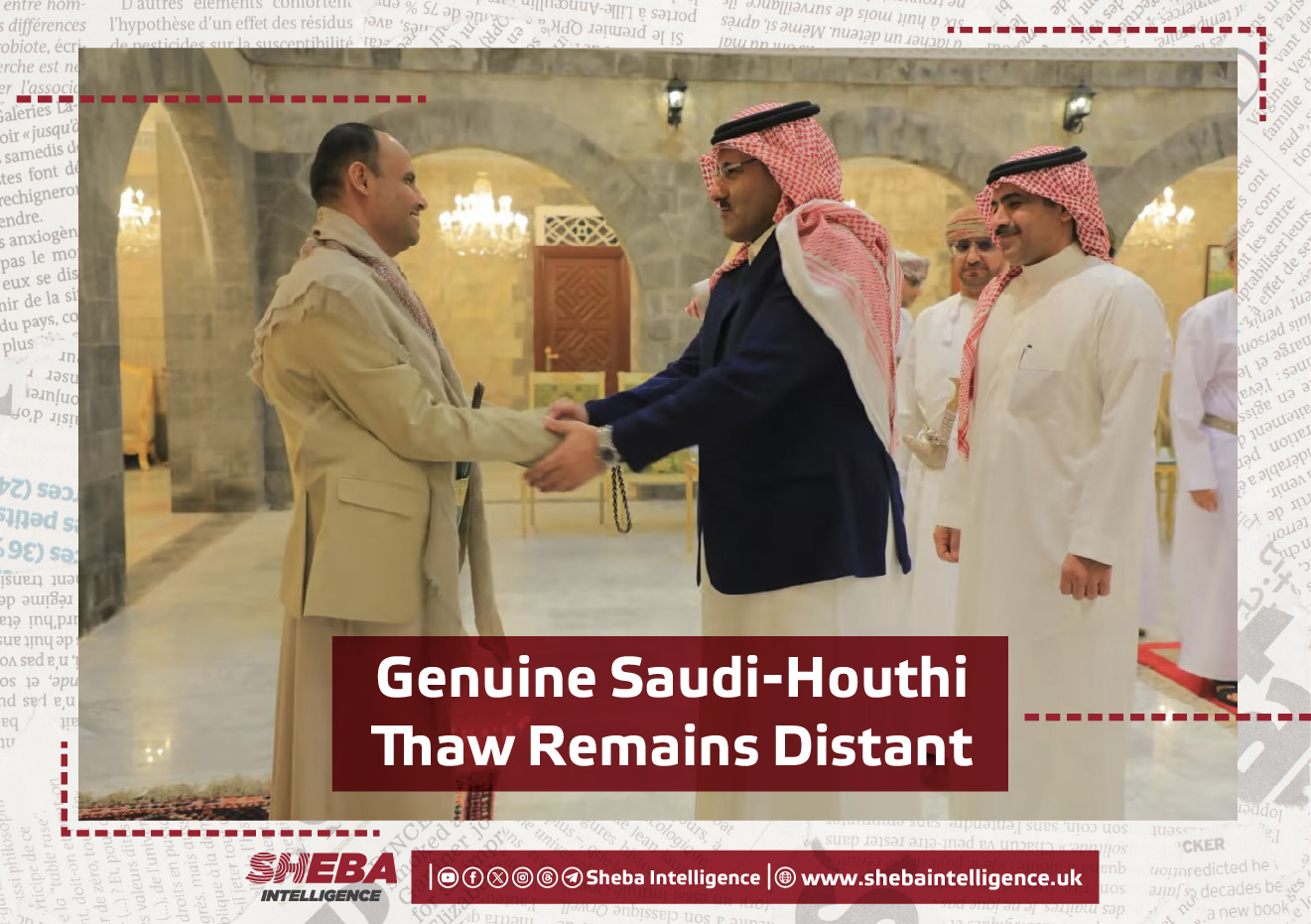
Genuine Saudi-Houthi Thaw Remains Distant
Sheba Intelligence
Yemen’s warring sides, the Ansar Allah (Houthi) group and the Saudi-backed Yemeni government, have shown flexibility since last year, and the momentum of the civil war has slowed amidst continued international and regional efforts to end the conflict in Yemen.
The military calm, the prisoner swap, and offloading of the decaying FSO Safer oil ship off Yemen’s Hodeida coast have been encouraging signs that Yemen is heading toward peace.
However, what has been achieved at the humanitarian level does not indicate that the scale of antagonism between the parties to the conflict has shrunk. Instead, their mistrust is still deep, and the two sides’ visions for peace are utterly conflicting.
On Saturday, August 12, Ansar Allah (Houthi) group chief Abdulmalek Al-Houthi slammedSaudi Arabia, saying that the Saudi policy on Yemen will not end the war or bring peace and that the Saudi pursuit of the American agendas is “a big trouble”.
The tone of Al-Houthi’s language was sharp, and he did not hint at any rapprochement between his group and Saudi Arabia. A Saudi delegation arrived in Sanaa in April this year, holding days-long talks with the Houthi officials. Still, a genuine thaw between the group’s leadership and the kingdom has not materialized.
Al-Houthi said, “We cannot remain silent about what is happening for a long time. We have given way to mediation sufficiently. If positive developments do not take place …, our position will be firm and stern.”
His view of the solution to the war is based on three steps: ending the blockade, withdrawing foreign forces from Yemen, and rebuilding what the Saudi-led coalition has destroyed since 2015.
The three conditions are difficult to meet, and no mediation can convince Saudi Arabia and Yemen’s UN-recognized government to fulfill these requirements. The Oman-led mediation or the UN peace efforts seem capable of pushing the warring sides in Yemen to offer humanitarian concessions. Leading them to agree on ending the war, the future governance system and united leadership is a remote possibility.