Iran-Israel Escalation Raises Risks for Yemen, the Red Sea and the Horn of Africa
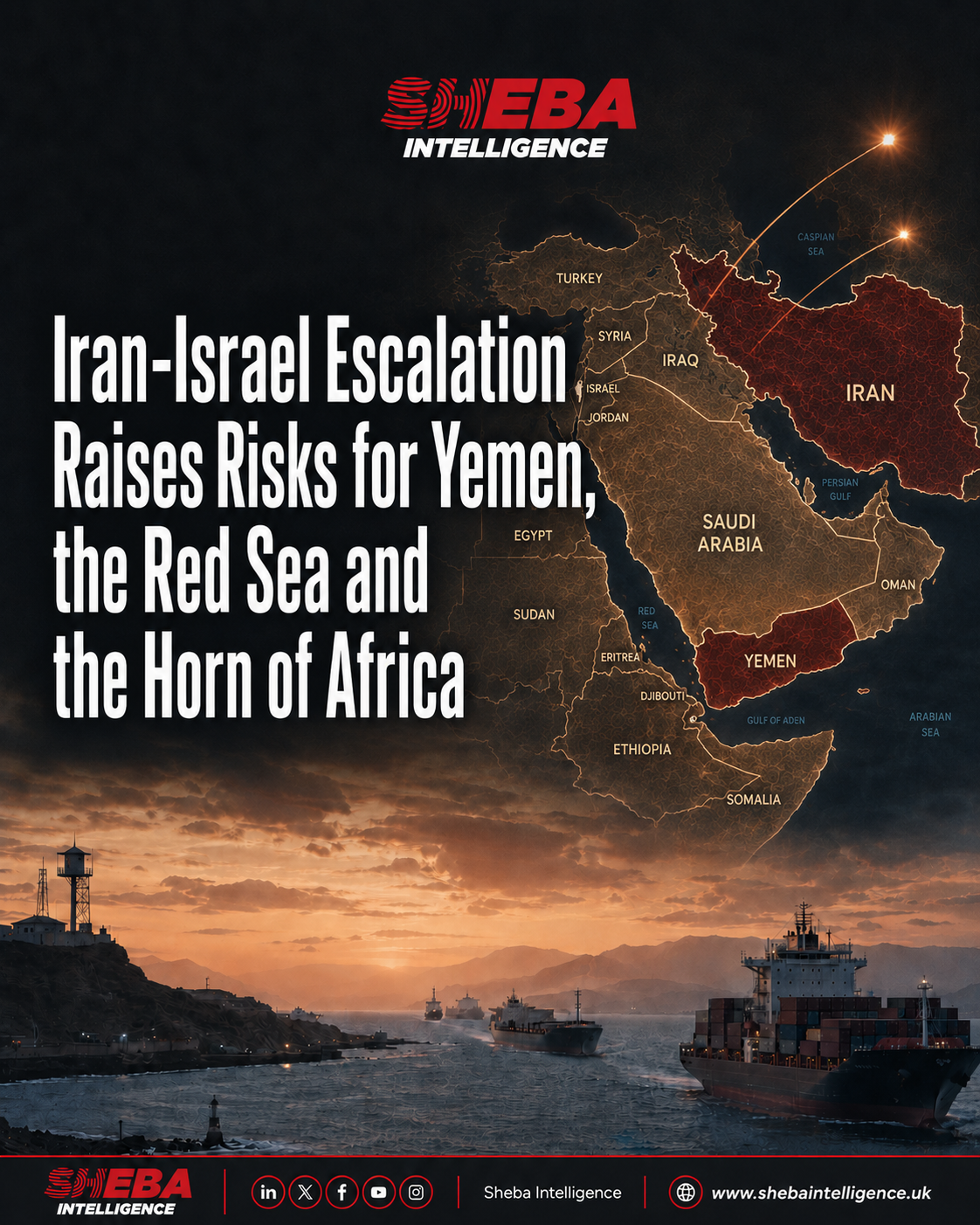
The current Iran-Israel escalation has pushed the region into a more dangerous phase. On Monday, June 8, 2026, Israel said it had struck military targets in western and central Iran after Tehran launched missiles toward Israel in response to an earlier Israeli strike on Beirut’s southern suburbs. The exchange marks one of the most serious direct confrontations since the fragile ceasefire reached in April.
Although both sides may still seek to avoid a full-scale regional war, the confrontation is unlikely to remain confined to Iran and Israel. Its impact could quickly extend to Iran-aligned fronts, especially Yemen, the Red Sea and parts of the Horn of Africa.
For Yemen, the escalation gives the Houthis a new opportunity to reframe themselves as part of a regional confrontation rather than a purely Yemeni actor. The group could use the crisis to intensify domestic mobilization, justify further militarization, and potentially resume or expand missile, drone or maritime operations linked to Israel and Western interests. In March, Reuters reported that Houthi officials had signaled readiness to join the war if required, raising concerns over renewed shipping risks.
The Red Sea and Bab al-Mandab remain the most exposed arenas. Any wider Iran-Israel confrontation could trigger renewed attacks on commercial shipping, especially vessels linked to Israel, the United States or its allies. Even limited operations could raise insurance costs, disrupt shipping routes and push more vessels toward the Cape of Good Hope, increasing pressure on global trade.
The Horn of Africa would not be insulated from the fallout. Djibouti, Eritrea, Somalia and Sudan sit along the wider Red Sea security corridor. A broader conflict could increase foreign military activity around ports and bases, expand intelligence operations, and create more space for smuggling networks or armed groups operating across the Gulf of Aden and the Red Sea.
Three scenarios are now possible. The first is a limited and controlled exchange, with international pressure preventing further escalation. The second is an indirect war through regional fronts, including Yemen, Lebanon, Iraq and the Red Sea. The third, and most dangerous, is a wider regional confrontation that links the security of Bab al-Mandab, the Strait of Hormuz and the Eastern Mediterranean.
For Yemen, the main risk is that regional escalation could derail peace efforts and strengthen the Houthis’ regional military role. For the Red Sea and the Horn of Africa, the danger is that vital maritime corridors could once again turn into active arenas of confrontation between Iran, Israel and their allies.