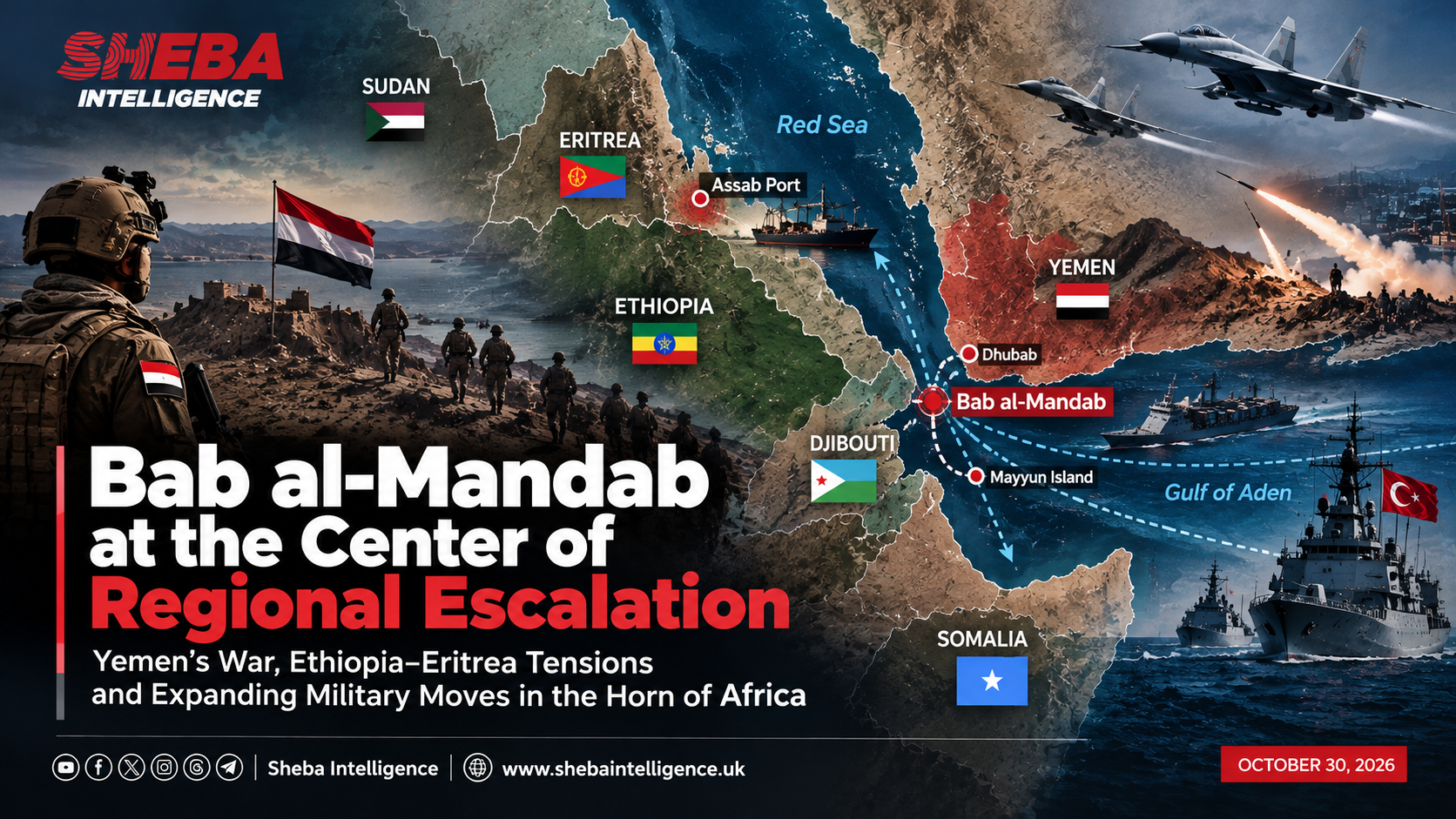
Iranian Ambassador's Reappearance in Houthi-Held Sana'a Raises Questions Over Possible Bab al-Mandab Escalation
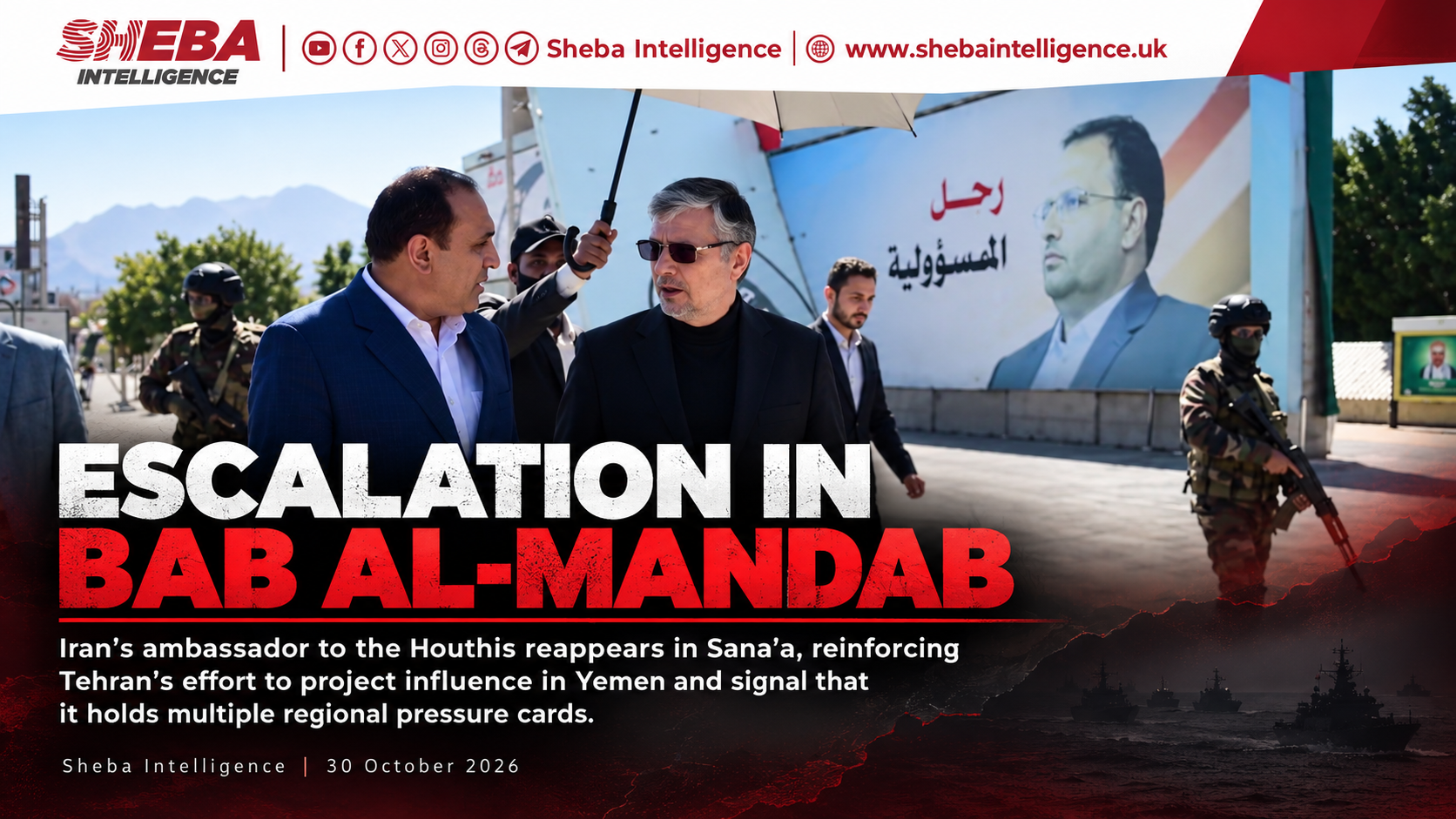
The appearance follows security talks in Tehran on Yemen's battlefronts, as Iran appears increasingly keen to demonstrate its influence over the Yemeni conflict and its ability to leverage multiple regional pressure points.
The latest public appearance of Iran's ambassador to the Houthis in Sana'a, Ali Mohammad Rezaei, has raised questions about a possible new military escalation around the strategic Bab al-Mandab Strait, amid continuing government offensives and heightened Iranian diplomatic and security activity.
The timing also suggests that Tehran is seeking to project its influence over Yemen and demonstrate that it retains multiple cards of regional leverage, with the Houthis remaining a significant component of its broader regional position.
The appearance came just three days after a senior Iranian security official met the Houthis' representative in Tehran to discuss developments on Yemen's battlefronts. It also follows earlier intelligence reports by Sheba Intelligence linking the Iranian ambassador to Houthi military preparations that identified Bab al-Mandab among the principal fronts for potential escalation.
Iran's Tasnim News Agency published photographs on Friday, October 30, showing Rezaei visiting the graves of several deceased Houthi leaders at Al-Sabeen Square in Sana'a, accompanied by Abdullah Sabri, a deputy foreign minister in the unrecognised Houthi administration.
The graves visited included those of Saleh al-Sammad, former head of the Houthis' Supreme Political Council; Ahmed al-Rahawi, former prime minister of the Houthi administration; and Mohammed al-Ghamari, former chief of staff of the Houthi forces.
During the visit, Rezaei praised the deceased Houthi leaders, claiming that their sacrifices would eventually lead to the withdrawal of foreign forces from Yemen and the failure of what he described as the American-Israeli project in the region.
Tehran Talks and Iran's Yemen Leverage
Rezaei's appearance followed a four-party meeting hosted by Tehran on October 26, involving Iran, Saudi Arabia, Turkey and Pakistan, to discuss regional security arrangements and de-escalation.
The following day, senior Iranian security official Mohsen Rezaei met Ibrahim al-Dailami, the Houthis' representative in Tehran, to discuss developments in Yemen, including ongoing military operations.
The Iranian official linked the discussions to broader regional security arrangements and efforts to reduce foreign military involvement.
The sequence of diplomatic and security contacts suggests that Tehran is deliberately seeking to reinforce its image as an influential actor in Yemen, capable of affecting developments beyond its borders at a time of heightened regional negotiations.
By maintaining visible engagement with the Houthis while participating in wider regional discussions, Iran appears intent on demonstrating that it possesses multiple instruments of influence, with Yemen and the Bab al-Mandab Strait among the strategically significant issues.
Such signalling could strengthen Tehran's perceived bargaining position in regional negotiations, particularly given Bab al-Mandab's importance to international shipping and Red Sea security.
However, no new agreement concerning Yemen has been publicly announced, and there is no independently verified evidence directly linking the Tehran meetings to the ambassador's latest appearance in Sana'a.
Previous Iranian Involvement and Bab al-Mandab Plans
The latest development follows earlier Iranian diplomatic activity that coincided with reported Houthi military preparations.
In an exclusive intelligence report published on July 19, Sheba Intelligence revealed, citing intelligence sources, that a high-level Houthi military meeting in Sana'a had been overseen by Ambassador Ali Mohammad Rezaei.
According to the report, the meeting approved full combat readiness and identified three principal fronts for potential attacks: Marib and Al-Jawf, Taiz and Bab al-Mandab, and the Yemen-Saudi border.
Earlier that month, Rezaei had appeared publicly in meetings with Houthi officials amid controversy surrounding Iranian flights to Houthi-controlled areas of Yemen.
More recently, an exclusive Sheba Intelligence investigation published on October 26 revealed, citing intelligence sources, an alleged military plan developed by Iran's Islamic Revolutionary Guard Corps (IRGC) to retake control of Bab al-Mandab and potentially close the strait to international shipping.
The reported plan involved three coordinated operations: a nighttime amphibious landing along the Ras al-Arah coast in Lahj province, intensive missile and artillery bombardment, and a ground offensive targeting government positions around Al-Mudaraba, Kahboub, Dhubab and the surrounding coastal areas.
The reported preparations have not been independently verified, and neither the operational readiness nor the intended timing of the alleged offensive has been established.
Questions Over a Possible Escalation
The Iranian ambassador's renewed public appearance comes as Yemeni government forces continue Operation Dawn of Yemen, with fighting concentrated in Taiz and areas connected to Bab al-Mandab.
The developments raise questions about whether Tehran's renewed diplomatic visibility is primarily intended to strengthen its regional negotiating position, signal continued political backing for the Houthis, or accompany preparations for further military escalation.
For Iran, publicly demonstrating continued access to and influence over the Houthi leadership could also serve a broader political purpose: reminding regional and international actors that Tehran retains leverage across multiple strategic arenas, including Yemen and the Red Sea.
This interpretation is particularly relevant given previous intelligence reporting on Iranian-linked military preparations and the recent security discussions in Tehran.
Nevertheless, the ambassador's latest appearance took place during a publicly announced commemorative visit, and no independent evidence establishes that it was connected to a specific military decision or an imminent operation.
The combination of Iranian diplomatic signalling, continued engagement with Houthi representatives and reported military preparations around Bab al-Mandab remains a significant development to monitor as fighting continues in Yemen.