
Houthis Launch Major Attack in Maqbanah After Weeks of Mobilisation Near Bab al-Mandab
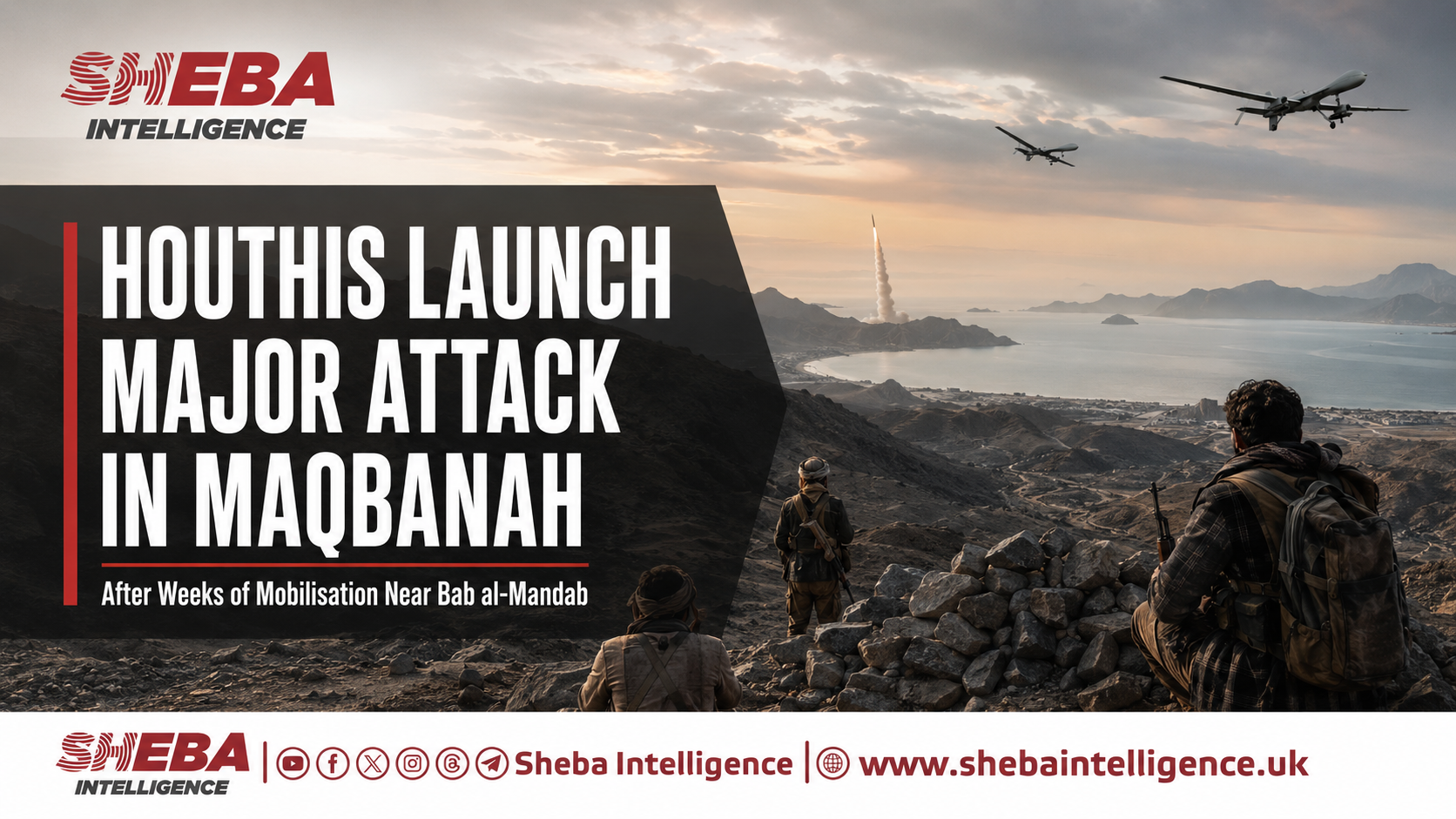
The Houthis launched a major ground assault on government positions in Maqbanah, western Taiz, on Thursday after weeks of military mobilisation and preparations across several fronts linked to Yemen’s western coast.
Field sources said the group fired nine ballistic missiles in the hours preceding the attack, launching them from positions in Mawiyah, areas north of Taiz city and other locations. Drones and heavy weapons were also used to support the ground operation.
The attack reportedly produced limited changes along the front line, with fighting continuing as government forces sought to contain the offensive. The number of casualties and the extent of any territorial gains remain unclear.
The operation followed several weeks of Houthi preparations that included moving fighters, ballistic missiles, drones and other heavy weapons into Mawiyah, Al-Siteen and the western Taiz front. The group also carried out repeated attacks against Maqbanah, Al-Kadhah, Mokha and Al-Khawkhah during the build-up.
Military activity on eastern fronts around Taiz continued in parallel, apparently aimed at dispersing government forces and limiting their ability to reinforce the western front.
Part of a Broader Bab al-Mandab Strategy
The escalation is consistent with a broader Houthi plan recently reported by Sheba Intelligence to intensify pressure around Bab al-Mandab by strengthening offensive capabilities on the Yemeni side of the strait while expanding operational coordination with al-Shabaab on the African side.
According to the report, the plan seeks to improve the ability to monitor and threaten maritime traffic from both sides of the waterway, with Saudi-linked vessels among the potential priority targets.
The fighting in Maqbanah does not indicate that the Houthis are close to reaching Bab al-Mandab. The district remains separated from the strait by government-held territory and several defensive lines. Its strategic importance lies instead in its position as part of the inland defensive depth protecting Mokha and the southern Red Sea coast.
Sustained pressure on Maqbanah could force government forces to divide their capabilities between defending western Taiz and protecting Mokha and nearby coastal areas. Even limited battlefield gains could also be used by the Houthis as a political and propaganda victory.
Search for a Battlefield Gain
The scale of the preparatory missile fire, drone activity and ground mobilisation indicates that the Houthis regard the western Taiz front as more than a secondary battlefield.
The group has been seeking a military gain for several months as the growing use of tactical drones by government forces has increased the cost of fighting for Houthi units and commanders on and behind the front lines.
Continued escalation in western Taiz could therefore serve several objectives: exhausting government forces, creating pressure on the coastal defensive belt and securing a symbolic gain that can be linked to the wider confrontation over Bab al-Mandab.
Such pressure would also serve Iran’s interest in keeping the Red Sea and one of the world’s most important maritime chokepoints exposed to persistent security threats at a time when Tehran is facing mounting regional and international pressure.