
Yemenis Display Conflicting Reactions to the Newly Issued Metal Coin in Sanaa
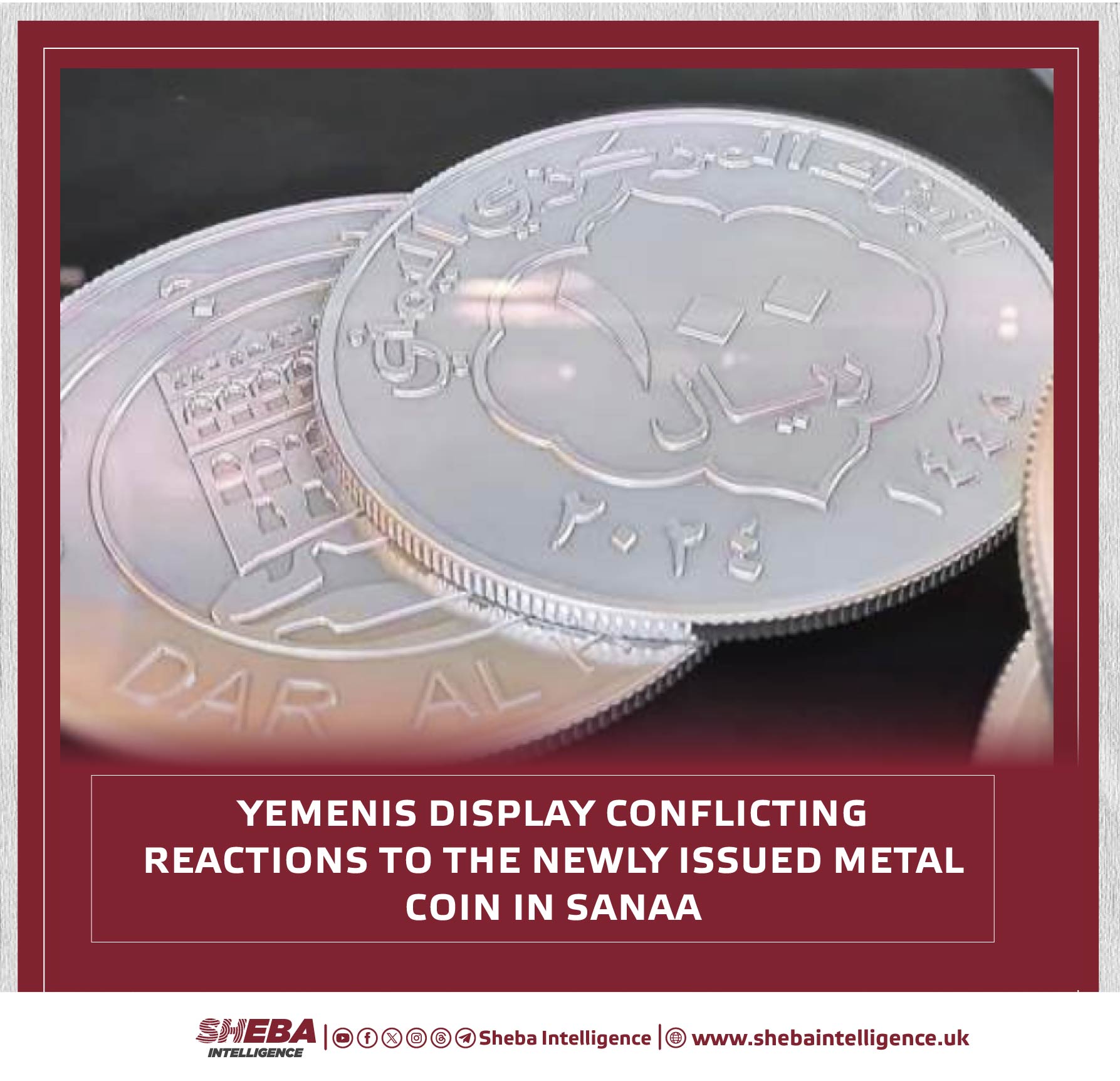
The announcement of the new 100 riyal coin by the Houthi-controlled Central Bank of Yemen in Sanaa has sparked a fresh controversy in Yemen and unleashed conflicting reactions nationwide.
While pro-Houthi voices commend the move as the ideal solution to address the issue of the damaged currency, anti-Houthi voices say the circulation of this coin is a new blow to Yemen's economy and another reason for the currency's further devaluation.
Today, civilians in Sanaa began replacing their damaged 100 riyal banknotes with the new coins with mixed feelings. They feel this solution will spare the citizens from daily disputes over the damaged banknotes. However, they fear such a move will cause the Yemeni riyal to lose its value over time.
Saleh Abdullah, 50, an owner of a supermarket in Sanaa, told Sheba Intelligence, "Even if this new coin has no value and even it is not recognized by the Central Bank in Aden, the Houthis will force merchants and banks in areas under their control to accept it. They will punish anyone who rejects to deal with their new coin."
Abdullah told the employees in his supermarket to accept the new coins but with limits. He explained to Sheba Intelligence, "If a customer buys commodities from me for 10000 Yemeni riyals and gives me the money as coins, I cannot accept it. But if it is 1000 riyal or less, it is fine."
Ali Mohammed, a schoolteacher at a public school in Sanaa, said that the Houthis wanted to replace the damaged banknotes with pieces of metal that had no real monetary value outside the Houthi-run areas. "This is not a solution. Otherwise, anyone who has cash can buy machines and begin printing money. But this is illegal and the money has no value."
This schoolteacher has not received his salary since 2016, as Houthis insist that it is the responsibility of the Yemeni government in Aden to pay public employees' wages.
Mohammed said to Sheba Intelligence, "The Houthi government issued the coin, feeling proud about this move. It acts as if it is the legitimate authority in Yemen. But when the Houthi government is asked to pay us our salaries, it says it is not their responsibility. This is illogical."
However, Houthi supporters in Sanaa commend the issuance of the new coin, saying this will end the daily disputes among citizens over damaged banknotes.
Eyad Nasser, 20, a bus driver in Sanaa, said the damaged banknotes have caused been causing daily feuds in Houthi-controlled areas, particularly in Sanaa.
"Every day, I argue with passengers when I refuse to take the badly damaged banknotes. Sometimes, I discover a few hundreds that no one can accept to take from me. This is a loss for me as a bus driver. This new coin will help end my disputes with passengers."
Late yesterday, the Aden-based Central Bank of Yemen released a statement describing the Houthi group's attempt to issue a new coin as a "dangerous and illegal escalation". The statement warned against accepting it, considering it "counterfeit".
Houthi spokesperson Mohammad Abdulsalam considered the new coin a positive step and a substitute for the damaged 100 riyal banknotes, a step toward comprehensive economic remedies.