
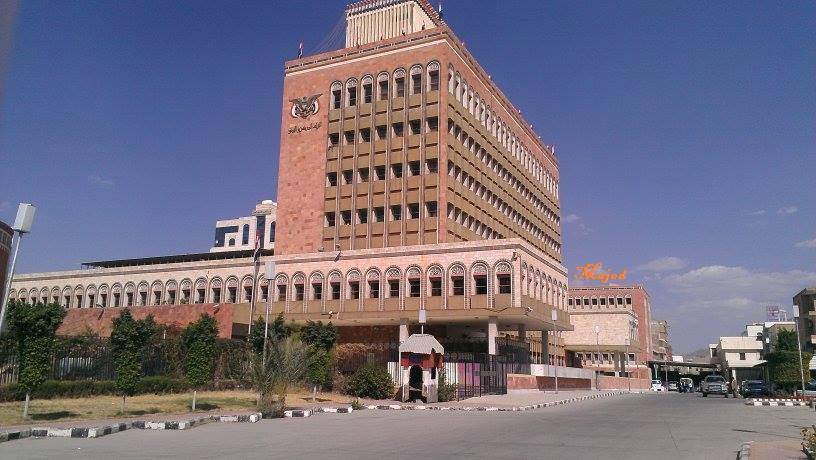
The Central Bank of Yemen directed all banks and exchange companies to stop dealing with five of the largest Yemeni banks in provinces under the control of the UN-recognized government.
According to the circular of the Aden-based Central Bank of Yemen, the banks with which dealings were stopped are Al-Tadhmon Bank, the Bank of Yemen and Kuwait, the Al-Amal Microfinance Bank, the Shamil Bank of Yemen and Bahrain, and the Al-Kuraimi Islamic Microfinance Bank.
The bank pledged to adopt punitive measures against the exchange companies and banks that flout the issued directions.
Last month, the Central Bank in Aden decided to establish a new united money transfer network. Forty-eight companies joined the network. However, the Houthi-controlled Central Bank in Sanaa ordered the banks not to join the new network. The five aforementioned banks obeyed the Houthi orders and did not join the network.
The Governor of the Central Bank in Aden said it is illogical that the Central Bank in Sana’a is the beneficiary of the transfers and, at the same time, tries to impose its procedures.
Yemenis on social media platforms have expressed conflicting opinions about the impact of the decision taken by the Central Bank in Aden. Some said this decision will stop the Houthi manipulation of the banking sector and mitigate money laundering. However, others said this decision will add to the suffering of civilians and will make money transactions complicated.
In 2016, the UN-recognized government decided to relocate the Central Bank from Sanaa to Aden to weaken the Houthi control of the banking operations in the country. However, that resolution did not yield a positive outcome for the government.
The economic war between the Houthi group and the Yemeni government continued over the past years, contributing to currency depreciation and creating conflicting monetary policies and divergent exchange rates.