Riyadh Airport Attack Kills 12; Yemeni President Condemns Houthis
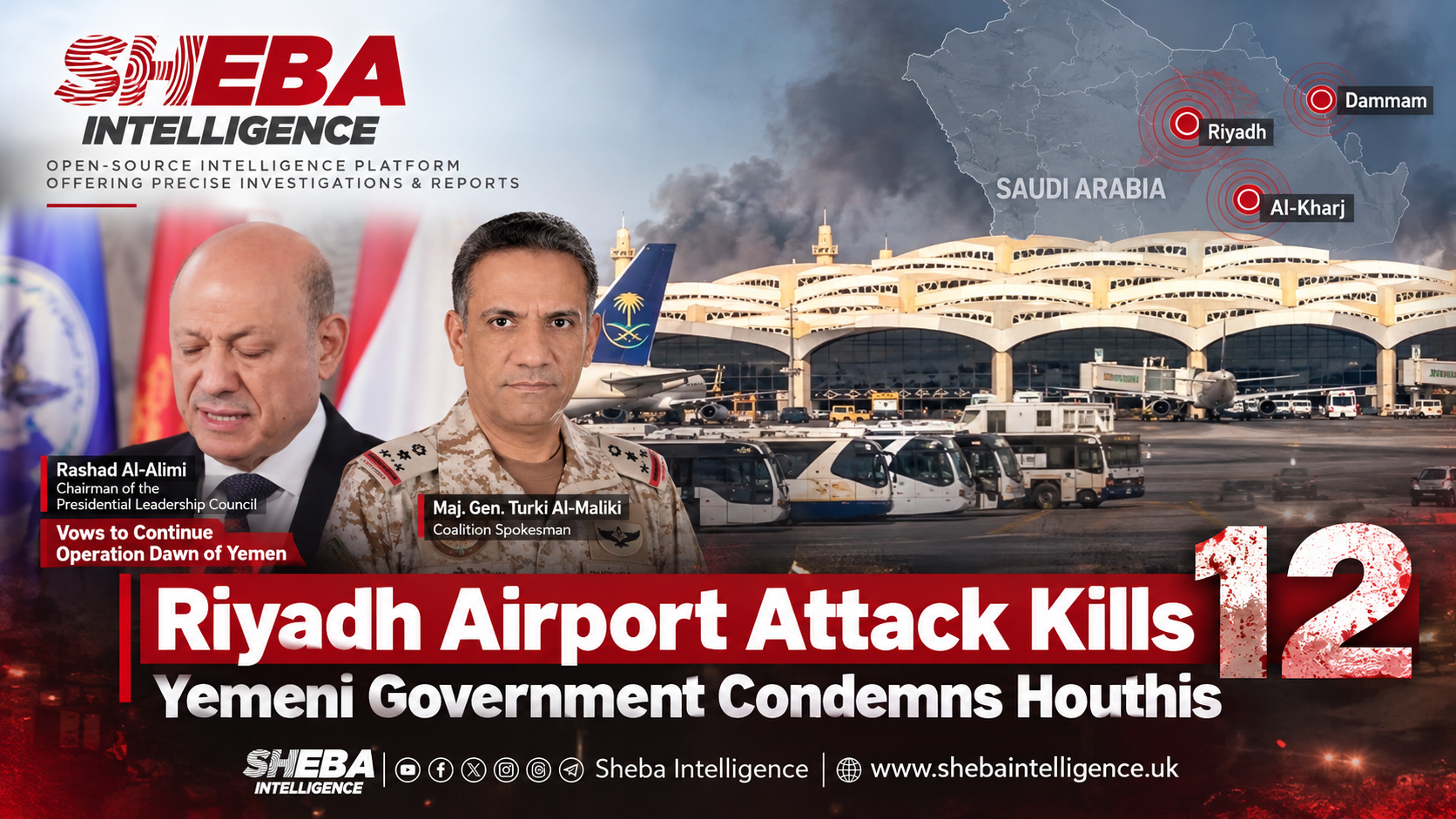
Saudi Arabia has reported 12 deaths following a Houthi attack on King Khalid International Airport in Riyadh, as the Saudi-led coalition announced the interception of a ballistic missile over Al-Kharj and reported a projectile landing near King Fahd International Airport in Dammam.
The Saudi General Authority of Civil Aviation said the attack on King Khalid International Airport on Saturday afternoon, October 10, killed 12 people, including four Saudi citizens and eight foreign residents.
The foreign victims included two Bangladeshi nationals and one citizen each from the United States, Egypt, Jordan, Syria, Palestine and Sudan.
The latest developments mark a further escalation in Houthi missile attacks against Saudi Arabia, with airports and civilian aviation infrastructure increasingly exposed to threats amid ongoing military operations in Yemen.
Coalition Vows Decisive Response to Riyadh Airport Attack
The Saudi-led coalition vowed a decisive response to the Houthi attack on King Khalid International Airport in Riyadh, describing the October 10 strike as a war crime under customary international humanitarian law.
In an official statement issued on October 11, coalition spokesman Major General Turki Al-Maliki said the attack on a passenger terminal, which killed and injured civilian passengers and airport staff, constituted a grave violation of international humanitarian law.
Al-Maliki stressed that the Joint Forces Command would respond decisively to the attack in accordance with customary international humanitarian law, signaling a potential escalation in coalition military operations against the Houthis.
Al-Alimi Vows to Continue Dawn of Yemen Operation Following Riyadh Attack
Yemen's Presidential Leadership Council Chairman Rashad Al-Alimi condemned the Houthi attack on King Khalid International Airport, expressing condolences and solidarity with Saudi Arabia on behalf of Yemen's leadership, government and people.
Al-Alimi stressed that Saudi Arabia's security is inseparable from Yemen's, describing any attack against the Kingdom as a threat to Yemen's security and national interests. He reaffirmed the two countries' determination to continue Operation "Dawn of Yemen" to end the Houthi threat and restore state institutions, regardless of the sacrifices required.
He also highlighted Saudi Arabia's continued economic support for Yemen, including budgetary assistance and recent measures benefiting Yemeni residents in the Kingdom.
Yemeni Government Condemns Attack, Declares Full Solidarity with Saudi Arabia
The internationally recognized Yemeni government strongly condemned the Houthi attack on King Khalid International Airport, describing it as a serious escalation that threatens Saudi Arabia's security and endangers civilian lives.
In a statement issued in Aden, the Yemeni Cabinet reaffirmed its full solidarity with Saudi Arabia, its leadership, government and people, stressing that attacks against civilian airports and infrastructure constitute violations of international law.
The government accused the Houthis of deliberately expanding their attacks beyond Yemen's borders in pursuit of Iran's regional agenda.
It emphasized that Saudi Arabia's security is inseparable from that of Yemen and the wider region, warning that attacks on civilian aviation facilities threaten regional stability, freedom of movement and air navigation safety.
The Cabinet also reaffirmed Yemen's support for all measures taken by Saudi Arabia to protect its territory, sovereignty and civilian infrastructure.
It described the cross-border attacks as an extension of the Houthis' actions inside Yemen, including attacks on residential areas, landmine deployment, arbitrary detention, child recruitment and the diversion of humanitarian assistance.
The government argued that the Houthis remain a key instrument of Iran's regional strategy and warned that any political settlement overlooking this relationship would fail to establish lasting stability.
It also expressed appreciation for Saudi Arabia's continued support for Yemen's internationally recognized government under King Salman bin Abdulaziz and Crown Prince Mohammed bin Salman.
The Cabinet called for a stronger international response extending beyond statements of condemnation to practical measures aimed at protecting civilians and preserving regional security.
Coalition Intercepts Ballistic Missile as Projectile Lands Near Dammam Airport
The Saudi-led coalition announced that its air defense systems intercepted and destroyed a ballistic missile launched by the Iran-backed Houthi group over Al-Kharj Governorate, southeast of Riyadh.
In a separate statement, the coalition reported that a projectile had landed in the vicinity of King Fahd International Airport in Dammam, in Saudi Arabia's Eastern Province.
The coalition did not immediately provide details about casualties or damage resulting from the Dammam incident.
The incidents followed a series of missile attacks targeting Saudi territory, including previous strikes against aviation facilities in Riyadh and Abha.
Escalation Coincides with Operation Dawn of Yemen
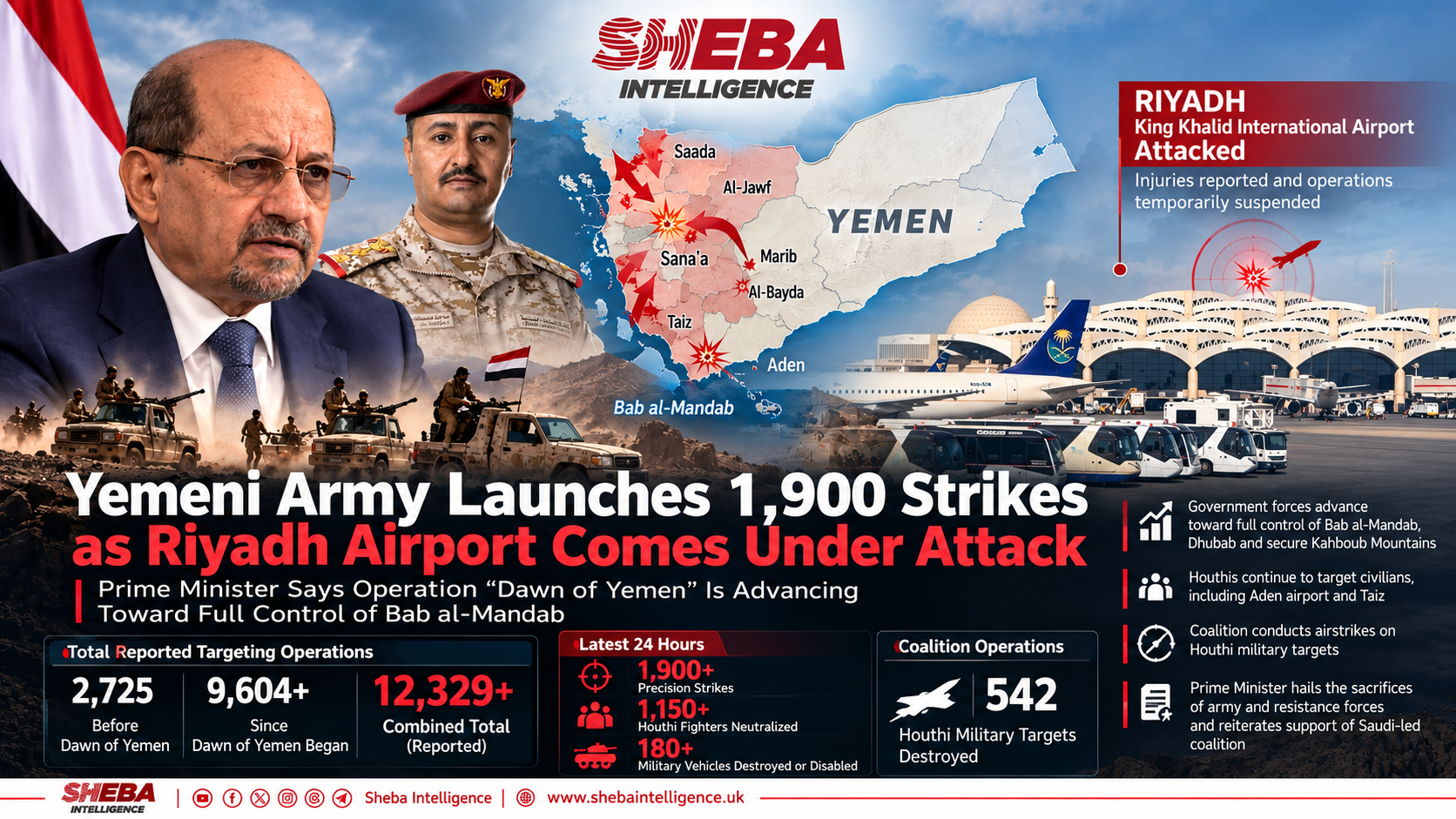
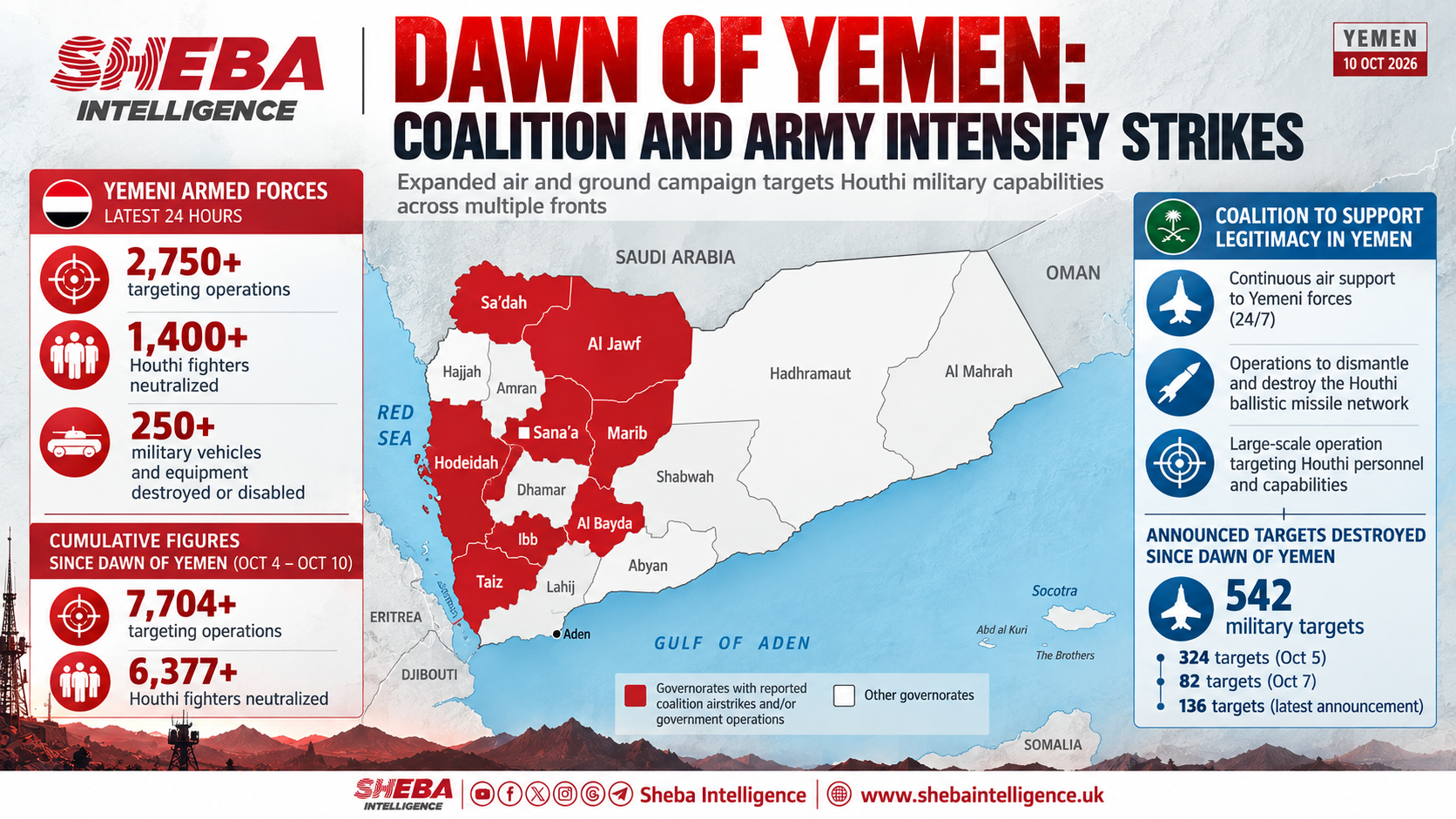
The latest attacks come as Yemeni government forces continue Operation "Dawn of Yemen," a large-scale military campaign launched in early October to restore state authority and regain territories controlled by the Houthis.
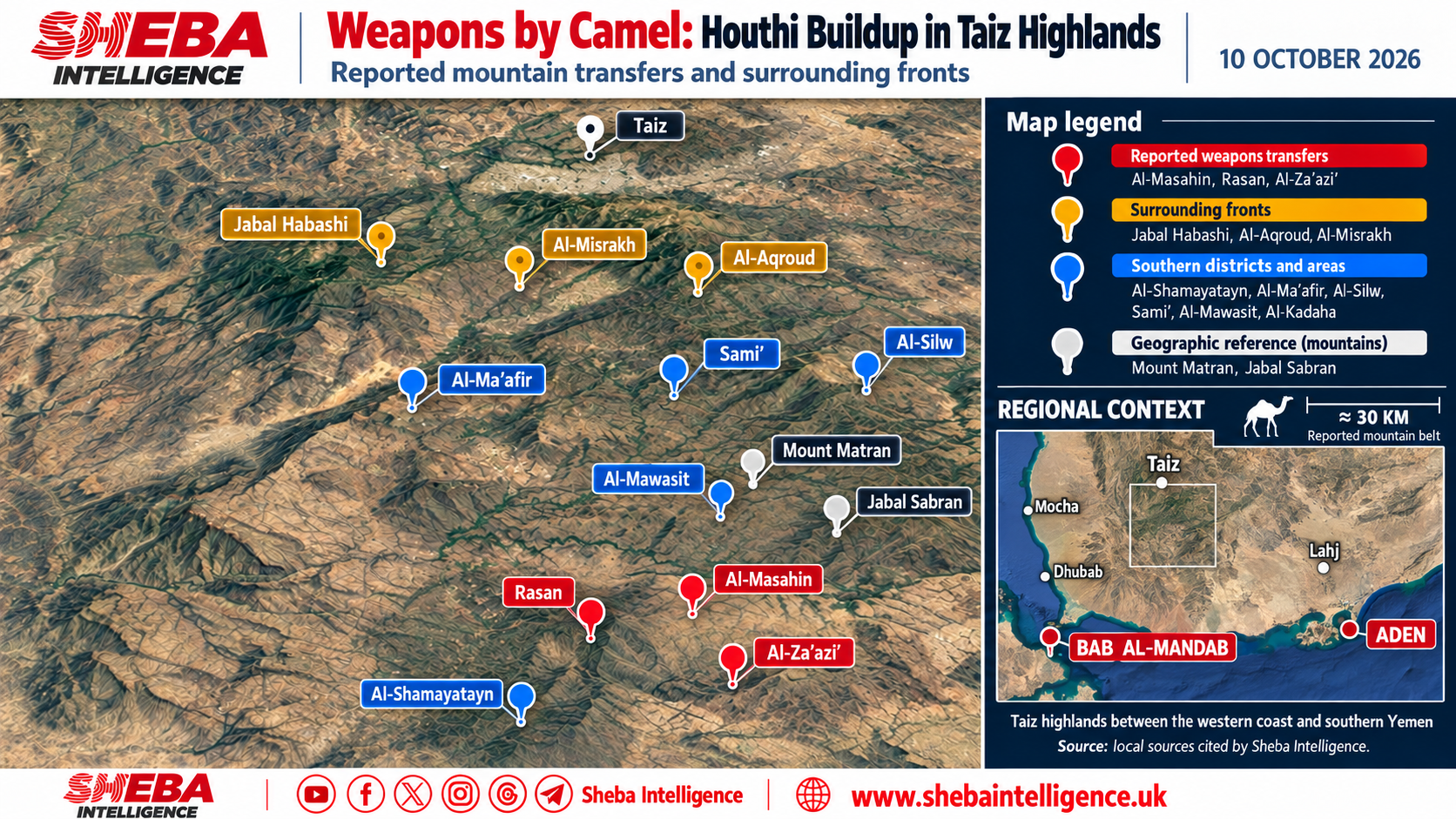
The campaign, backed by the Saudi-led coalition, has involved extensive air operations and ground offensives across several fronts, including Marib, Al-Jawf, Taiz and the strategic Bab al-Mandab area.
Coalition forces have also announced operations targeting Houthi ballistic missile launchers, weapons storage facilities and military infrastructure, including sites in Sana'a and Saada.
Previous coalition statements reported the destruction of a ballistic missile launcher in Sana'a that was allegedly being prepared for an imminent attack against Saudi Arabia, as well as a mountain-based storage facility in Saada containing 20 ballistic missiles.
The continuing missile attacks against Riyadh and other Saudi locations highlight the regional dimension of the conflict, as the Houthis seek to maintain their long-range strike capabilities despite intensified coalition operations.
The expansion of attacks toward civilian aviation facilities in Riyadh, Dammam and Abha raises concerns over the security of Saudi air transport infrastructure and the potential consequences for regional aviation.
For the Yemeni government, the attacks reinforce its position that confronting the Houthi threat is essential not only to restoring state institutions in Yemen but also to protecting Saudi Arabia and wider regional security.