Stadium Floodlights Turn Houthi Night Assault into Deadly Ambush in Yemen’s Taiz Mountains
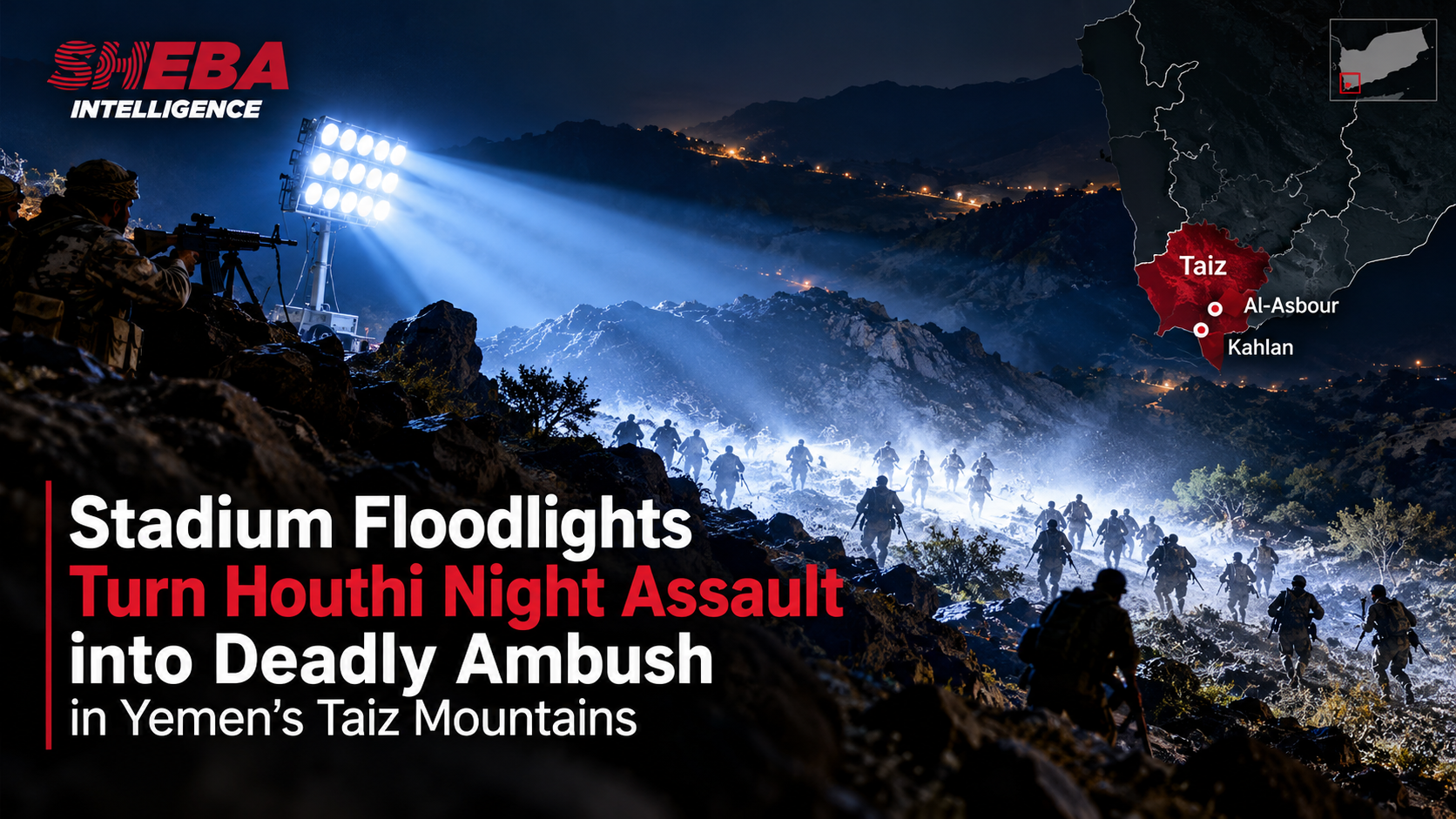
Yemeni government forces and local resistance fighters reportedly thwarted a nighttime Houthi assault on the Kahlan front in the Al-Asbour area of southern Taiz province, using an unconventional battlefield tactic involving powerful floodlights of the kind commonly used to illuminate stadiums and large public events.
According to field accounts, Houthi fighters attempted to infiltrate mountainous terrain and outflank defensive positions while launching simultaneous attacks on other fronts. The broader operation reportedly involved approximately 800 fighters.
However, local defenders, who had received advance intelligence about the planned assault, allowed the infiltrating group to advance deeper into the mountains under cover of darkness before suddenly switching on powerful floodlights collected from local residents, exposing the attackers to defensive fire.
Field sources said the sudden illumination disoriented the attackers, leaving dozens killed or wounded. Others reportedly fell from steep mountain slopes while attempting to escape. The casualty figures have not been independently verified.
The incident highlights the unconventional use of civilian equipment in a complex military confrontation. By combining advance intelligence, familiarity with the mountainous terrain, and the element of surprise, local fighters reportedly turned the Houthi flanking attempt into a deadly ambush, preventing the attackers from overrunning the area.
The tactic bears some resemblance to historical military uses of powerful searchlights to disrupt enemy visibility, including experiments during World War II. However, the reported use of locally sourced civilian floodlights in Taiz’s rugged mountains gives this engagement a distinctive character.
The deadly floodlight ambush in Kahlan is just one example of the innovative tactics employed by local fighters and communities across Taiz, where resistance to the Houthis continues on both military and civilian fronts. Despite limited resources, residents have repeatedly demonstrated their ability to adapt, drawing on local knowledge, community cooperation, and unconventional methods to confront Houthi offensives. The incident highlights how grassroots resistance has become an enduring feature of the conflict, with local communities playing a central role in defending their areas against repeated attempts to overrun them.