Yemen Seeks Naval Support as Saudi-Led Coalition Prepares for Operational Deployment
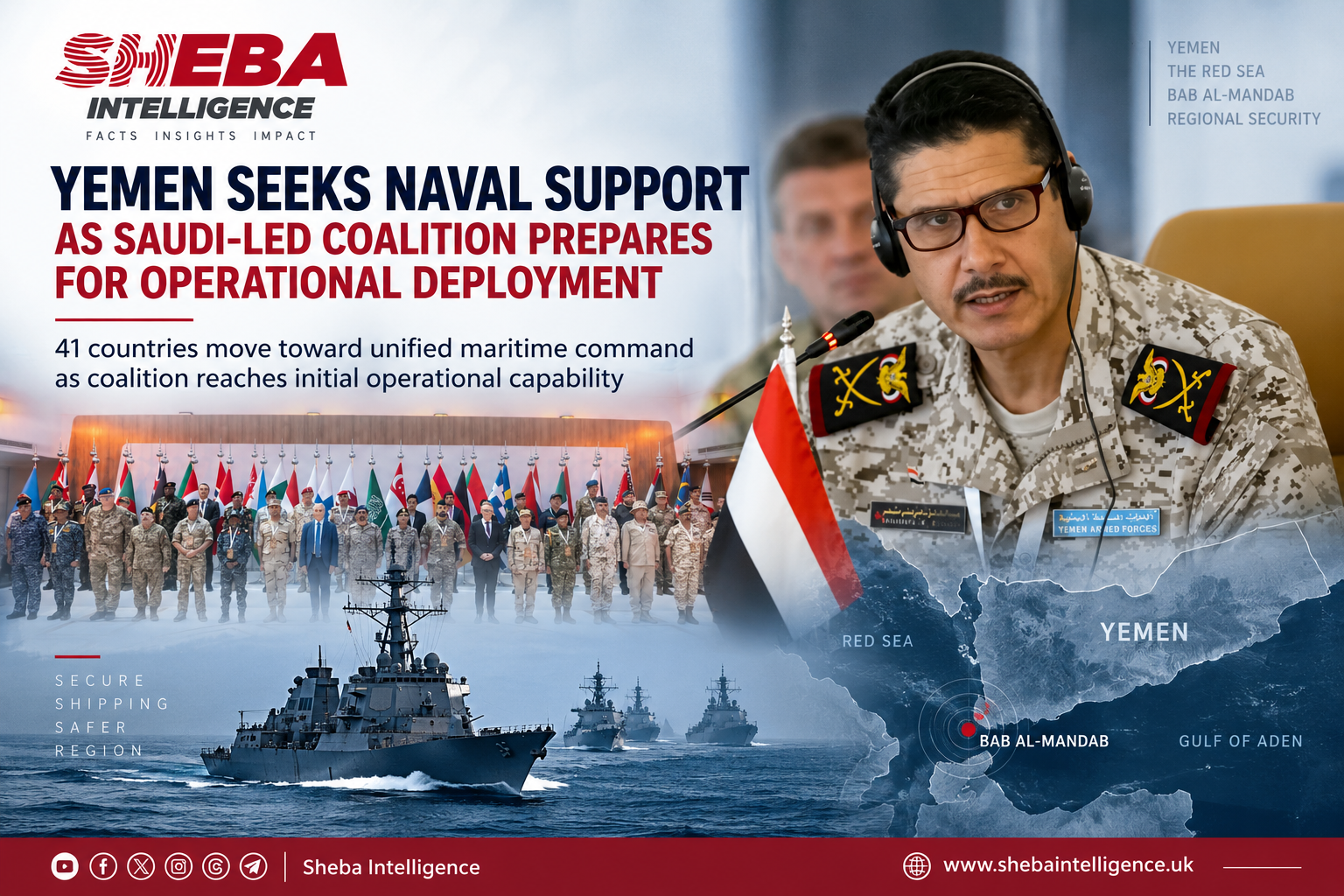
Yemen has called for operational and technical support to restore the readiness of its naval forces, as the Saudi-led Multinational Maritime Defensive Coalition (MMDC) announced that it had reached “Initial Operational Capability” and was preparing to move toward operational deployment and an active presence at sea.
Rear Admiral Abdulkhaliq Mansour, head of the Yemeni delegation participating in the MMDC’s fourth planning meeting in Jeddah, said rebuilding Yemen’s naval capabilities had become essential to enable the country’s forces to protect its territorial waters and contribute to securing international shipping lanes across the Red Sea, Bab al-Mandab Strait and Gulf of Aden.
Speaking during the meeting, hosted by Saudi Arabia’s Western Fleet Command, Mansour called for operational and technical assistance to restore the readiness of the Yemeni Navy and provide it with the capabilities needed to carry out its maritime security responsibilities.
The Yemeni commander accused the Iran-backed Houthis of posing continuing threats to navigation in the Red Sea, Bab al-Mandab and Gulf of Aden, saying the attacks had directly affected international maritime security, global trade and supply chains.
The Yemeni delegation also called for unified international efforts, stronger regional coordination and an effective maritime deterrence mechanism against threats targeting international shipping routes.
The appeal signals Yemen’s push to ensure that the coalition’s anticipated maritime deployment is accompanied by efforts to strengthen Yemen’s own naval capacity to operate in its territorial waters and the strategic waterways surrounding the country.
Coalition Moves Closer to Operational Deployment
Yemen’s request comes as the Multinational Maritime Defensive Coalition moves beyond its establishment and planning phase toward a more advanced level of operational readiness.
MMDC Commander Rear Admiral Abdullah bin Salem Al-Shahri said the coalition had reached “Initial Operational Capability” and was now working to integrate participating countries’ capabilities under a unified command structure ahead of deployment and the launch of operational missions within its maritime area of responsibility.
Al-Shahri said any threat to freedom of navigation would “be met with deterrence,” describing a framework in which participating states would operate under a single command with integrated capabilities, intelligence-sharing and coordinated operational efforts.
He said the evolving scale and nature of maritime threats underscored the need to accelerate the integration and deployment of multinational capabilities rather than reduce international cooperation.
41 Countries, One Command Structure
The fourth MMDC planning meeting in Jeddah brought together 154 naval commanders, military planners, ambassadors and European Union representatives from 41 countries.
According to statements issued following the meeting, 28 liaison officers are currently involved in the coalition structure. The current phase focuses on identifying participating countries’ contributions, integrating their capabilities and preparing them to operate under unified command before their eventual deployment into the coalition’s area of operations.
The development represents a shift from the coalition’s third planning meeting in August, when efforts were still largely focused on building institutional structures and expanding participation.
The fourth meeting indicates that attention is now moving from establishing the coalition toward preparing forces and capabilities that could be deployed at sea.
The coalition’s leadership has previously identified the Red Sea, Bab al-Mandab Strait and Gulf of Aden as key areas of concern — the same maritime corridor at the center of threats linked to the conflict in Yemen.
Yemen at the Center of the Maritime Theater
Yemen’s participation carries particular significance because of its extensive coastline along the Red Sea and Gulf of Aden and its direct geographical position on the eastern side of the Bab al-Mandab Strait, one of the world’s most strategically important maritime chokepoints.
Yemen’s request to rebuild its naval forces comes as MMDC member states move toward determining what capabilities they will place under the coalition’s joint command.
This raises a broader question over the role the Yemeni Navy could play within the emerging regional maritime security architecture, rather than leaving the protection of Yemen’s surrounding waters and shipping routes primarily to international naval forces.
The development also comes amid heightened tensions in the Red Sea and Bab al-Mandab following attacks and threats claimed by the Houthis against Saudi-linked vessels, as well as the group’s July 20 announcement of what it described as a “naval blockade” against Saudi Arabia.
Publicly released information has not yet specified the number of warships or forces expected to be deployed, the exact timeline for deployment, or the capabilities individual countries will contribute.
However, reaching Initial Operational Capability indicates that the coalition has moved beyond its political and institutional formation phase and is preparing to establish a multinational operational presence at sea.
For Yemen, the issue is therefore no longer limited to international forces protecting commercial vessels passing through the region. It increasingly concerns whether the coalition’s next phase will also help rebuild a capable Yemeni naval force able to secure the country’s territorial waters and contribute directly to the protection of Bab al-Mandab, the Red Sea and the Gulf of Aden.