Nearly 105,000 Displaced Inside Yemen, 2,776 Reach Djibouti as Coastal Fighting Deepens Humanitarian Crisis
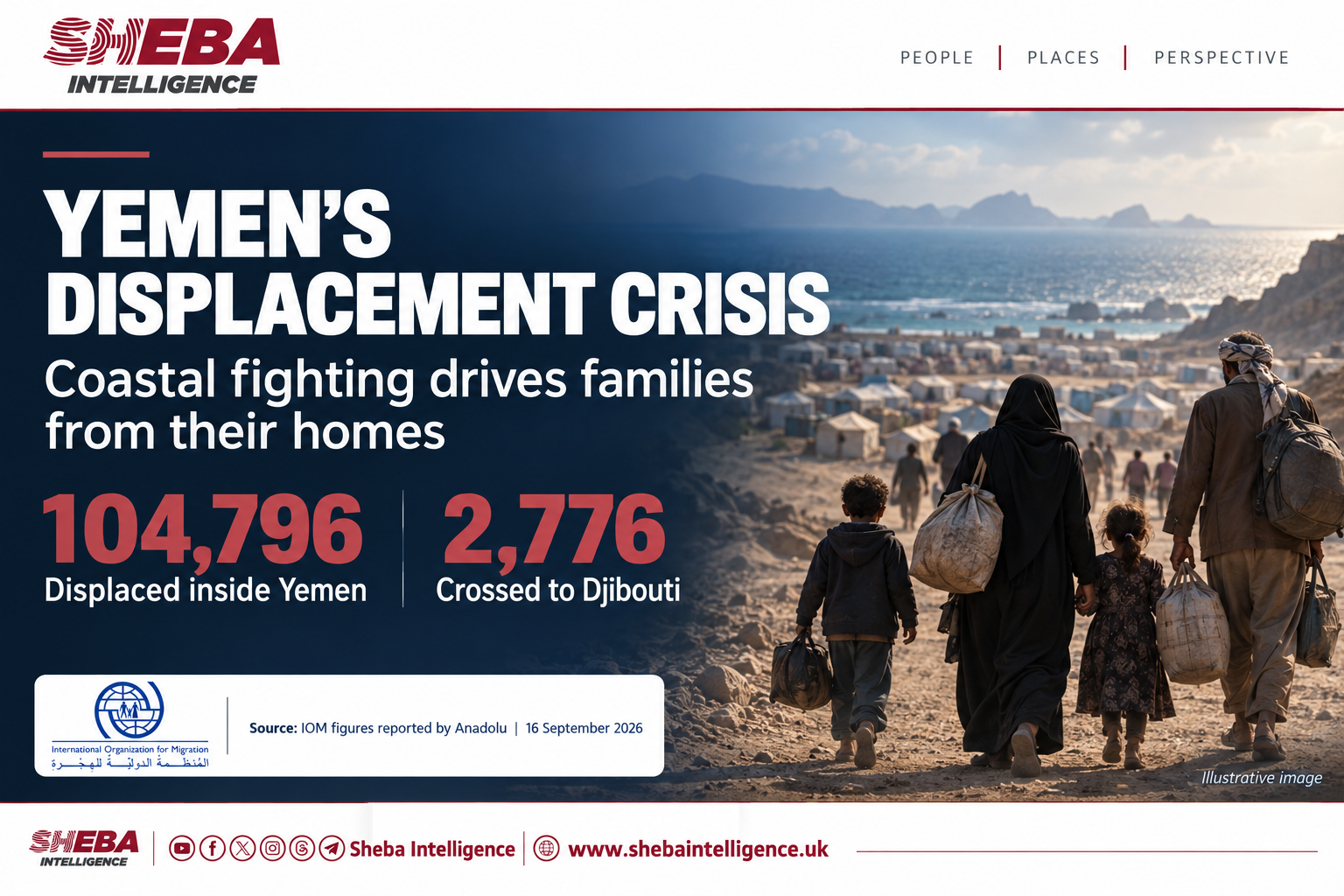
Displacement inside Yemen has reached 104,796 people from 17,461 households, while another 2,776 people have crossed to Djibouti, according to International Organization for Migration figures reported by Anadolu on September 16, as fighting continues along the western coast.
Taiz accounted for the largest number of displaced people, with more than 63,000, followed by Lahj with approximately 26,400 and Aden with more than 3,500. Rising displacement was also reported in Abyan, Hadramout and Marib.
Anadolu cited the organization as saying that displacement was moving faster than humanitarian workers could track in real time. Families were fleeing fighting at night, often carrying few belongings. IOM Director General Amy Pope warned against overlooking civilian suffering in a country already burdened by war, poverty, displacement and climate impacts.
Across the sea, IOM said it was providing emergency assistance, including hot meals, to people arriving in Djibouti since the beginning of September. The crossings highlight the growing humanitarian consequences of the conflict beyond Yemen’s borders.
The figures follow successive waves of displacement covered by Sheba Intelligence. On September 10, the platform reported that Yemen’s Executive Unit for the Management of IDP Camps had recorded 40,710 displaced people from 5,799 families in Taiz between September 3 and 10.
That assessment showed overlapping displacement patterns within the governorate, with some districts serving as both places of departure and destinations. Al-Ma’afer received the largest number of arrivals—14,591 people—placing additional demands on host communities for shelter, food, water and basic services.
On September 13, Sheba Intelligence reported preliminary figures from Yemen’s Human Rights Ministry indicating that nearly 85,000 people had been displaced since September 3 across parts of Taiz, Hodeidah and Marib. The ministry also reported 150 civilians killed and more than 200 wounded. The same article cited an earlier IOM update, dated September 12, which put cumulative displacement since July at at least 76,000 people.
These assessments cover different reporting periods and geographical areas and were compiled by different bodies. They cannot be added together, nor can the differences between them be treated as a net increase in displacement.
The spread of displacement across Taiz, Lahj and Aden, alongside departures for Djibouti, points to a widening humanitarian response. Continued fighting threatens to keep families away from their homes for longer and increase pressure on receiving communities, while constant population movements complicate efforts to locate displaced families and assess their needs.